
Last Updated: September 26, 2026
Working out the pressure cleaning cost in Perth for 2026 starts with understanding that no single rate exists. Every quote reflects the size of the job, the surface type, how much grime has built up, and how easily the crew can access the area. This guide from Spray Pave Pro breaks down what moves the number up or down.
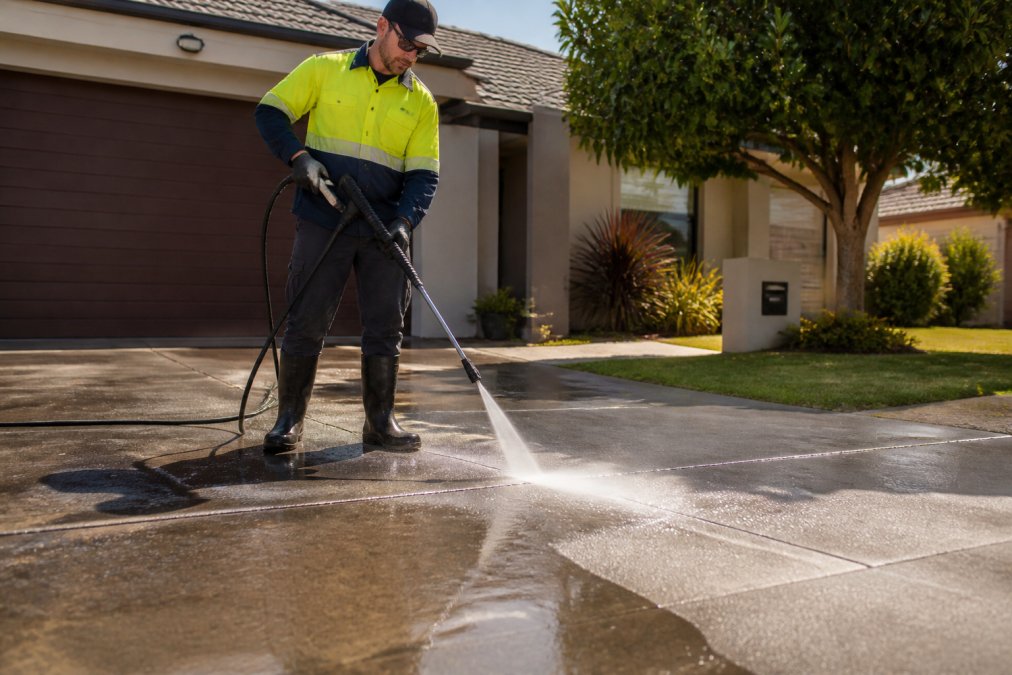
Most established operators quote per square metre rather than by the hour, because it gives you a fixed number to compare. Square metre pricing bundles labour, equipment, water, and detergents into one rate, so a larger driveway costs more but the rate per square metre often drops as the job scales.
| Pricing Method | Best For | Watch Out For |
|---|---|---|
| Per square metre | Driveways, patios, large flat areas | Minimum charges on small jobs |
| Hourly rate | Stain removal, tight access, unknown scope | Costs can creep if the job runs long |
| Fixed-price quote | Most residential and commercial work | Make sure inclusions are in writing |
A fixed-price quote locks in your total before work starts. A thorough quote should list the areas covered, the cleaning method, whether stain treatment or sealing is included, and how runoff will be managed.
Most guides still quote 2024 or 2025 figures, which understate what a contractor must now charge because every major input into an exterior cleaning job has moved. Understanding the drivers lets you sanity-check a quote instead of guessing.
The figures below are typical ranges for a standard single-storey residential job with reasonable access, quoted per square metre. They are indicative only, every operator's minimum charge, travel zone, and inclusions differ, and a firm quote depends on an on-site assessment.
| Surface / Job Type | Typical 2026 Range (per m²) | Notes |
|---|---|---|
| Concrete driveway or path (light soiling) | Lower end of the residential band | Fastest job; surface cleaner does most of the work |
| Concrete driveway (heavy or oil-stained) | Mid to upper residential band | Pre-treatment and repeat passes add time |
| Exposed aggregate or pavers | Mid residential band | Joint sand and loose aggregate need care |
| Limestone or sandstone paving | Upper residential band | Requires soft wash or reduced pressure |
| Painted render or timber | Upper residential band | Soft wash only; detergent dwell time |
| Roof (tiled or metal, soft wash) | Quoted per roof, not per m² | Access, height, and runoff control dominate |
| Commercial hardstand or loading dock | Quoted per site | Frequency, after-hours access, and runoff plan |
Treat the ranges as a filter, not a quote. If a figure sits well below the band for your surface, ask what is excluded, pre-treatment, stain removal, sealing, and runoff management are the usual omissions. If it sits well above, ask what extra work is included, such as crack treatment, re-sanding of joints, or a post-clean sealer.
Water Corporation, waterwise and outdoor water use guidance
Soft washing and pressure washing are not interchangeable, and choosing wrong is how surfaces get damaged. Soft washing is a low-pressure method that relies on specialised detergents to break down mould, algae, and grime, then rinses them away gently. Pressure washing uses high-pressure water to blast away dirt mechanically.
| Method | Pressure Level | Best For | Avoid On |
|---|---|---|---|
| Soft washing | Low | Render, painted walls, timber, aged stone | Heavy oil or deep-set stains |
| Pressure washing | High | Concrete, pavers, brick, driveways | Soft stone, painted or cracked surfaces |
When a surface cannot handle high pressure, several gentler options still deliver a clean result. Soft washing is the primary alternative, but not the only one.
Different surfaces fail in different ways under pressure, and knowing the risks prevents an expensive mistake.
Sealing is the step most homeowners skip, and it determines how long a clean actually lasts. The concrete sealing cost per square metre depends on the sealer type, the surface condition, and whether preparation is needed.
Hiring a machine and doing it yourself looks cheaper on paper, and for a small, lightly soiled path it genuinely can be. The maths changes once you price the full job, not just the hire fee.
The repair bill is where DIY stops being cheap. Common outcomes:
A professional job bundles commercial-grade equipment, the correct detergent for each surface, the judgement to know what pressure a surface can take, insurance cover, and a result you can hold the operator to. It also includes runoff containment and disposal, which DIY rarely does properly.
DIY is reasonable when the job is small, the surface is hard-wearing concrete or brick, the soiling is light, and you already own or can cheaply hire the right machine. A single concrete path or small paved courtyard fits that description.
Professional cleaning wins on ROI when any of the following apply:
Getting the pressure cleaning cost right comes down to matching the method and quote to your actual surface, not chasing the lowest number. The cheapest quote is rarely the best value once inclusions, sealing, and surface risk are factored in.
Pressure cleaning cost in Perth depends on the surface area, level of grime, and accessibility. Most providers quote per square metre or offer a fixed price after a site inspection. Larger driveways, heavy oil stains, and delicate surfaces requiring soft washing will sit at the higher end. Request a free quote for an accurate figure based on your property.
Key factors include total square metres, surface type (concrete, pavers, brick), severity of stains or mould, access for equipment, and whether sealing is added. A simple concrete driveway with light grime costs less than a paver surface with oil stains and moss. Water consumption and eco-friendly detergent use also affect the final quote.
No. High-pressure cleaning can damage delicate surfaces like rendered walls, timber decking, and aged mortar. For these, soft washing or chemical treatments are safer alternatives. A professional site inspection determines the correct method to protect surface integrity while still removing grime and mould effectively.
Standard pressure cleaning uses high-pressure water to blast away dirt, ideal for concrete and pavers. Soft washing uses low pressure with specialised detergents to kill mould and algae at the root, making it safer for render, timber, and painted surfaces. The right choice depends on the material and the type of buildup.
Sealing is recommended after pressure cleaning to protect against future stains, UV damage, and moisture. Concrete sealing cost per square metre varies with the sealer type and surface condition, but it typically extends the life of the clean and reduces long-term maintenance. It also enhances curb appeal and property value.
Most residential driveways benefit from professional cleaning every 12 to 18 months, depending on tree cover, traffic, and weather exposure. Commercial premises with high foot traffic may need quarterly or half-yearly servicing. Regular cleaning prevents grime and mould from bonding to the surface, which keeps costs lower over time.
