
Last Updated: August 26, 2026
Commercial concrete resurfacing restores worn, damaged, or deteriorated concrete surfaces through specialised coatings and protective systems. Rather than replacing the entire concrete substrate, resurfacing applies a protective layer directly over existing concrete to restore structural integrity, aesthetic appeal, and functional performance.
At Spray Pave Pro, we understand that resurfacing transforms properties damaged by heavy foot traffic, vehicle wear, chemical exposure, and weather. The process involves surface preparation, crack repair, and application of durable protective coatings such as epoxy, polyurethane, or specialised sealants. This cost-effective alternative to replacement provides superior durability and customisable finishes whilst eliminating surface imperfections, creating moisture barriers, enhancing slip resistance, and dramatically improving visual presentation.
Complete concrete replacement is disruptive, expensive, and unnecessary when the underlying substrate remains structurally sound. Resurfacing preserves the existing concrete base whilst addressing surface-level damage.
Resurfacing typically takes days rather than weeks, keeps your facility operational with minimal downtime, and costs significantly less than full removal and reinstallation. The environmental impact is considerably lower, you're not sending tonnes of concrete to landfill or manufacturing new concrete from scratch.
Resurfacing allows you to specify custom protective coatings tailored to your facility's exact needs. A warehouse requiring heavy abrasion resistance receives different coating than a retail environment prioritising aesthetic appeal. The durability of properly applied resurfacing systems often exceeds that of new concrete poured on-site, as professional-grade epoxy and polyurethane coatings create chemically bonded protective layers that resist wear, chemicals, moisture, and UV degradation far more effectively than bare concrete.
Commercial concrete resurfacing solves distinct challenges across different facility types.
Retail environments benefit from resurfacing's aesthetic transformation. High-traffic retail floors accumulate stains and visible wear that damage customer perception. Freshly resurfaced floors with decorative finishes immediately enhance curb appeal and create a more professional appearance. Slip resistance is critical in wet entry areas where customer safety depends on proper surface treatment.
Warehouses and logistics facilities demand heavy-duty protective coatings that withstand constant forklift traffic, pallet impacts, chemical spills, and abrasion. Diamond grinding during preparation removes surface contaminants and creates optimal substrate profile for coating adhesion. The resulting protective layer resists chemical attack and impact damage typical of high-volume material handling.
Manufacturing and processing plants require moisture barriers to prevent rising damp, chemical resistance for industrial fluids, and sometimes thermal tolerance for heated environments. Polyurethane finishes and epoxy coatings designed for industrial applications provide required durability.
Hospitality venues, cafes, hotels, and restaurants require flooring balancing safety, hygiene, and aesthetic appeal. Pool surrounds and outdoor entertaining areas present particular challenges due to constant moisture exposure. Non-slip additives and moisture-resistant coatings ensure both safety and longevity.
Each application requires the concrete resurfacing system to be specified and installed correctly to deliver promised performance.
The quality of your final resurfaced floor depends entirely on substrate preparation and application precision.
Surface preparation determines coating adhesion and longevity and cannot be rushed.
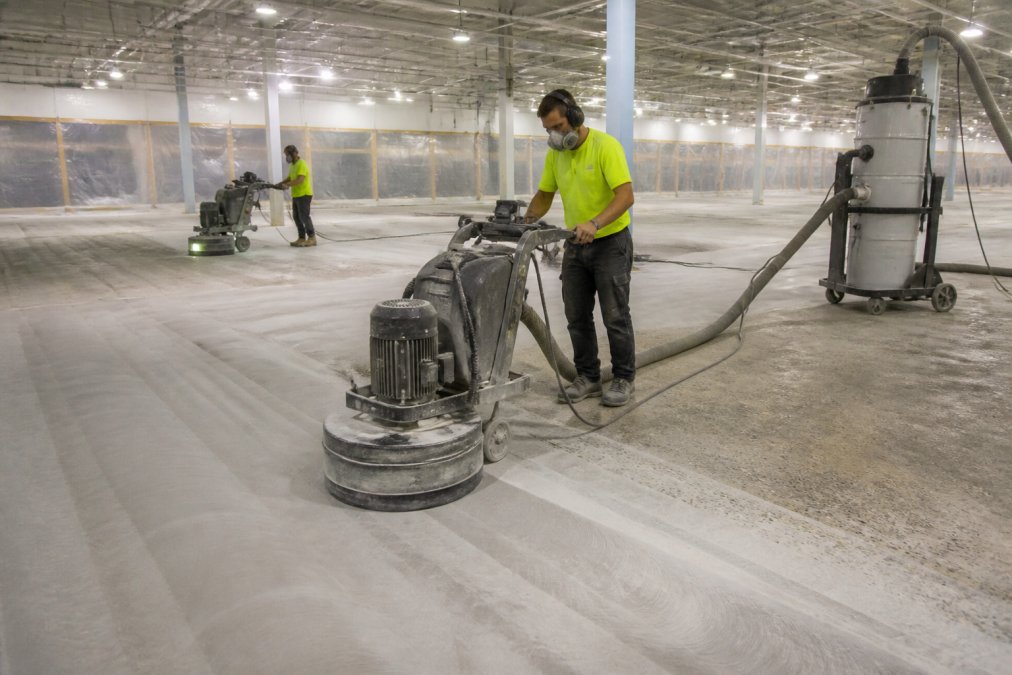
Professional preparation begins with high-pressure cleaning to remove dirt, grease, oils, and loose contaminants. Diamond grinding follows, removing the top 1-3mm of concrete surface to eliminate weak outer layers, surface sealers, paint residue, or previous failed coatings (peer-reviewed research). This process creates the optimal surface profile, a microscopically textured finish allowing epoxy or polyurethane coatings to bond chemically rather than merely adhere mechanically.
Substrate restoration addresses structural issues: filling voids, levelling high spots, and ensuring the concrete surface is plane and true. A final cleaning with industrial vacuum and damp cloth removes all dust and debris.
Existing cracks must be repaired before coating application, as cracks allow moisture to penetrate beneath the coating, causing failure and structural damage.
Crack repair typically involves routing the crack to consistent width, cleaning out debris, and filling with compatible repair compound. For structural cracks, epoxy injection systems seal the crack and restore structural continuity. For non-structural surface cracks, polyurethane or epoxy fillers provide adequate repair.
Once cracks are sealed, a moisture barrier is applied, particularly critical in facilities with rising damp, high humidity, or below-grade concrete. Moisture barriers prevent water vapour transmission through concrete, protecting both the coating and the concrete itself from water damage, freeze-thaw cycles, and salt attack.
Coating application must follow strict environmental and procedural guidelines. Temperature, humidity, and substrate moisture content all affect coating performance.
Epoxy coatings are typically applied in two coats: a primer coat bonding to the prepared substrate, followed by a topcoat providing colour, gloss, and final durability. Application method matters, spray application of epoxy systems in high-traffic commercial environments achieves uniform thickness and optimal performance.
Curing time is non-negotiable. Most epoxy systems require 24-48 hours before light foot traffic is permitted, and 7 days before full operational loading (peer-reviewed research). Polyurethane systems may cure faster, but full chemical cure still requires several days.
Outdoor commercial concrete surfaces face additional challenges: UV degradation, weathering, freeze-thaw cycles, and constant moisture exposure.
Standard epoxy coatings break down under UV exposure within 12-24 months outdoors (peer-reviewed research). Polyurethane topcoats offer superior UV resistance, with aliphatic polyurethane systems maintaining colour and gloss for 5-7 years or longer. Protective sealants designed for outdoor use provide another option, absorbing into concrete rather than forming a surface film whilst protecting against water penetration, chemical attack, and salt damage.
For pool surrounds and constantly wet environments, non-slip additives become essential. Aggregate particles or specialised grit additives mixed into the coating create textured, slip-resistant surfaces that maintain safety when wet, a safety and compliance requirement, not merely cosmetic.
The choice between epoxy, polyurethane, or sealant depends on your specific application, environmental exposure, aesthetic preferences, and performance requirements.
Evaluating resurfacing purely on upfront price misses the true financial picture.
Resurfacing cost depends on area size, concrete substrate condition, crack repair complexity, coating system selected, and required curing time. Rather than asking "What does resurfacing cost?", ask "What's the return on this investment?"
A properly resurfaced floor extends concrete infrastructure operational life by 10-15 years or more, deferring the much larger expense of complete replacement. Full concrete replacement closes your facility for weeks; resurfacing typically takes days, allowing business continuity. For retail, warehouse, or hospitality venues, avoiding weeks of closure represents substantial financial benefit.
Improved aesthetics and safety also drive ROI. Freshly resurfaced retail floors enhance customer perception and influence purchasing behaviour. Slip-resistant coatings reduce liability exposure and worker injury risk. Maintenance costs drop after resurfacing, as properly sealed and coated concrete requires minimal maintenance compared to constant patching of deteriorated bare concrete.
A properly installed resurfacing system requires minimal maintenance, but neglecting basic care shortens its lifespan significantly.
Regular cleaning is foundational. Sweep regularly to remove abrasive dirt and debris. Damp mop with neutral pH cleaner, avoiding acidic or alkaline cleaners that damage the coating. For industrial environments, pressure wash monthly at moderate pressure.
Spill management matters. Whilst properly applied epoxy and polyurethane coatings resist most chemicals, allowing spills to sit for extended periods increases damage risk. Clean spills promptly using appropriate solvents.
Avoid mechanical damage by using protective pads under furniture legs and equipment. Forklift traffic should maintain proper tyre maintenance.
Resealing schedule: Protective sealants require reapplication every 2-3 years depending on traffic levels. Epoxy and polyurethane topcoats typically last 5-10 years before requiring a maintenance coat.
Moisture management: Maintain reasonable humidity levels and ensure adequate ventilation. Address water intrusion issues promptly.
Professional inspection: Annual inspection by a qualified specialist identifies early signs of coating failure or substrate damage, preventing small problems from becoming expensive failures.
Commercial facilities have a legal duty to provide safe working and customer environments. Slippery concrete surfaces create liability exposure and genuine safety risk.
Slip resistance is measured using the coefficient of friction (CoF). The Australian Standard AS 4586 defines slip resistance classifications for pedestrian surfaces. Most commercial environments should meet at least P3 classification (moderate slip resistance) with P4 or P5 required for areas with frequent moisture exposure like pool surrounds, kitchens, or bathrooms.
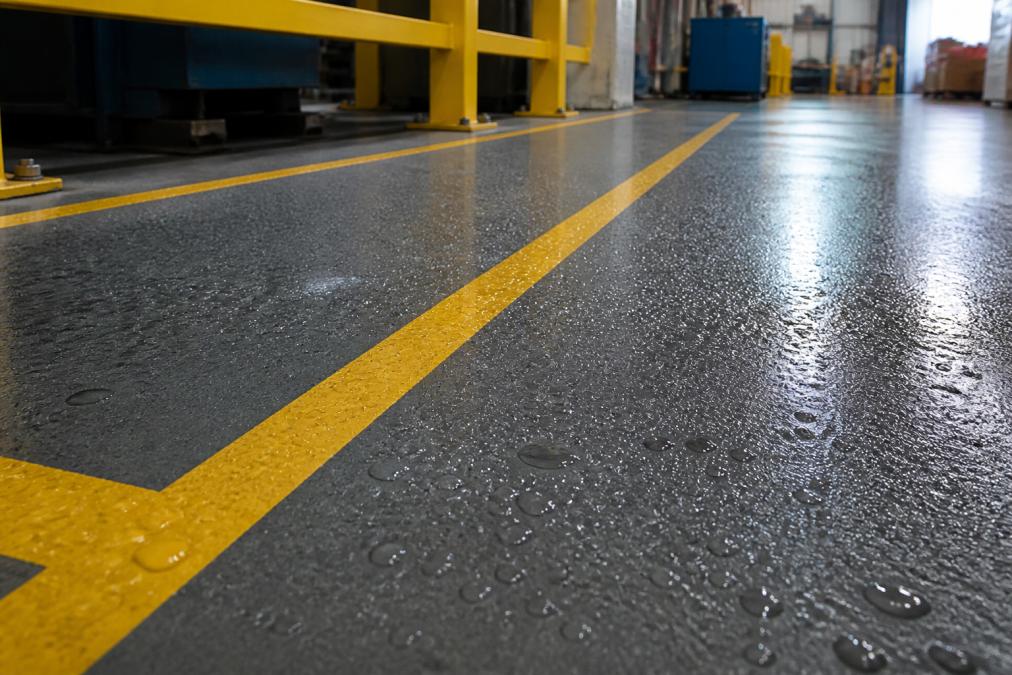
Non-slip additives, typically aluminium oxide or silica aggregate particles, are mixed into epoxy or polyurethane coatings to achieve required slip resistance. The Work Health and Safety Act 2011 (Commonwealth) and corresponding state-based legislation require workplaces to maintain safe conditions, including slip-resistant flooring where appropriate.
Regulatory compliance extends beyond slip resistance. Food handling facilities must use coatings meeting food safety standards. Industrial facilities handling hazardous materials must use coatings resistant to specific chemicals. Healthcare facilities require antimicrobial or easily sanitised surfaces.
Professional concrete resurfacing specialists understand these regulatory requirements and specify coating systems accordingly.
Commercial concrete resurfacing transforms deteriorated, unsafe, or outdated concrete surfaces into durable, compliant, and aesthetically appealing flooring. The process is faster and more cost-effective than replacement whilst delivering superior long-term performance when properly installed and maintained. Spray Pave Pro brings over 23 years of experience to every commercial resurfacing project, delivering professional-grade results tailored to your facility's specific requirements. Whether you're managing a retail environment, warehouse, industrial facility, or hospitality venue, properly specified concrete resurfacing extends infrastructure life, improves safety and compliance, and enhances property presentation. Get a free quote from Spray Pave Pro and discover how resurfacing can transform your commercial concrete surfaces.
| Application Type | Key Performance Need | Coating System | Expected Lifespan |
|---|---|---|---|
| Retail Environment | Aesthetic appeal + slip resistance | Epoxy with decorative finish | 7-10 years |
| Warehouse/Logistics | Heavy abrasion resistance | Industrial-grade epoxy | 8-12 years |
| Manufacturing Plant | Chemical resistance + moisture barrier | Polyurethane or specialist epoxy | 10-15 years |
| Hospitality/Pool Area | Non-slip + moisture tolerance | Polyurethane with aggregate | 5-8 years |
| Outdoor Surfaces | UV resistance + weathering protection | Aliphatic polyurethane | 5-7 years |
Properly applied concrete resurfacing with quality epoxy or polyurethane finishes typically lasts 7-10 years in high-traffic commercial environments, depending on foot traffic intensity, maintenance practices, and environmental exposure. Heavy-duty protective coatings with non-slip additives maintain abrasion resistance longer than basic sealants. Regular maintenance, including sweeping and pH-neutral cleaning, extends floor longevity significantly. Factors like moisture barriers and substrate quality at installation directly affect durability and wear and tear resistance.
Yes. Concrete resurfacing avoids the expense and disruption of removing and replacing the entire concrete substrate. By restoring the existing substrate through crack repair, diamond grinding, and protective coating application, resurfacing delivers cost savings compared to replacement. The process also minimises downtime, allowing commercial facilities to remain operational during installation. Pricing depends on substrate condition, floor area, and coating type. Contact Spray Pave Pro for a free quote tailored to your commercial property.
Absolutely. Concrete resurfacing is specifically designed to address damaged substrates. The process includes thorough surface preparation, crack repair using epoxy or polyurethane injections, and substrate leveling before final coating application. Spalling, wear and tear, and structural cracks are all repaired during substrate restoration. However, severely compromised concrete with deep structural damage may require professional assessment. Spray Pave Pro's team evaluates your floor to determine whether resurfacing or replacement is the best solution.
Resurfaced commercial floors require minimal maintenance to preserve their protective sealants and aesthetic finish. Weekly sweeping removes dirt and debris, while monthly pH-neutral cleaning prevents chemical damage to epoxy or polyurethane coatings. Avoid harsh acidic cleaners that degrade the surface. Address spills promptly, especially oils and solvents. In high-traffic areas, reapply protective sealants every 2-3 years to maintain abrasion resistance and slip resistance. Regular maintenance extends floor longevity and reduces long-term facility management costs.
This article was written using GrandRanker
