
Last Updated: September 3, 2026
When your driveway shows signs of wear, cracking, spalling, or surface staining, you face a fundamental choice: repair the existing concrete or replace it entirely. Resurfacing applies a fresh layer of decorative concrete over the existing substrate, while replacement removes the old slab entirely and pours new concrete from the ground up.
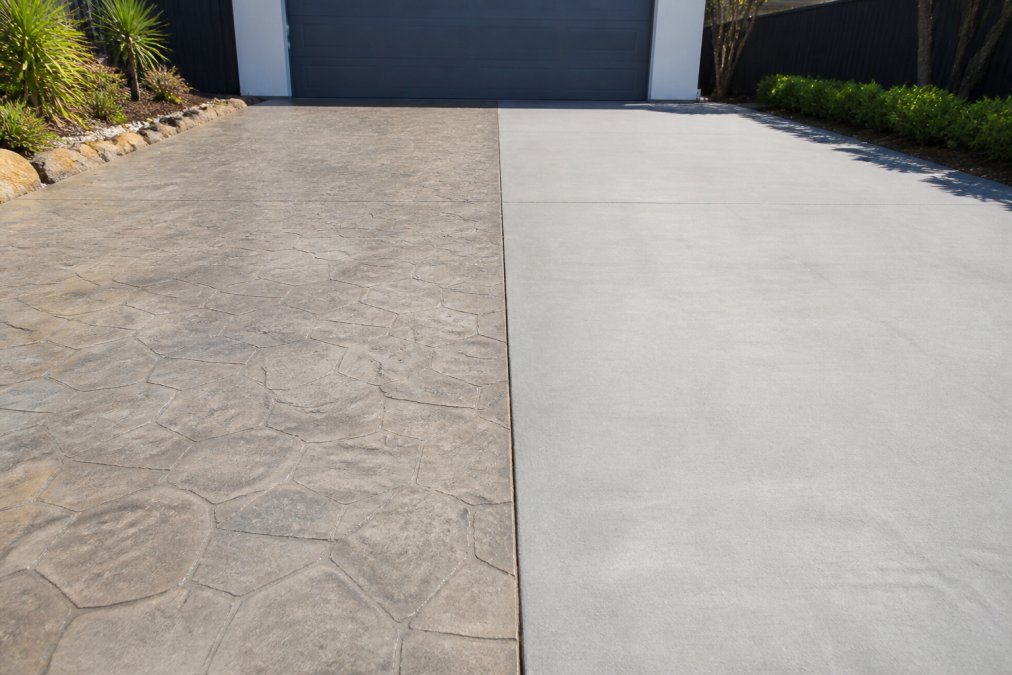
Resurfacing works best when the underlying concrete substrate remains structurally sound with no major settlement, minimal deep cracking, or shifting. Replacement becomes necessary when the base layer has failed, the sub-base has eroded, or structural damage makes patching futile. At Spray Pave Pro, we assess each driveway's structural integrity before recommending a path forward, because choosing the wrong option wastes money and creates frustration.
Resurfacing typically takes 3-7 days from start to finish, including surface preparation, curing time, and sealing (the CDC). Replacement requires excavation, sub-base work, and concrete curing, stretching to 2-4 weeks depending on site conditions. The timeline matters if you need your driveway functional quickly; resurfacing minimises disruption to your household or business operations.
Spray-on concrete resurfacing is the most popular resurfacing method because it delivers a seamless finish, durable protection, and decorative options at a reasonable cost.
According to research from concrete resurfacing specialists across Western Australia, spray-on resurfacing typically ranges from around $50-$80 per square metre for exposed aggregate or standard finishes. Decorative options like stamped concrete or custom colouring sit at the higher end of this range. A 30 square metre driveway at $65 per square metre would cost approximately $1,950 in material and labour, significantly less than full replacement.
Surface condition is the primary cost driver: a driveway with minimal cracks and sound concrete requires less prep work than one with spalling, deep cracks, or poor adhesion. Access and site complexity matter too, a sloped driveway or one with landscaping obstacles takes longer to prepare and spray. Weather conditions in your region also influence labour scheduling and curing times.
Professional spray-on application ensures even coverage, proper curing, and a finish that lasts, whereas DIY kits require skill and equipment most homeowners lack. Mistakes are costly to fix, making professional application the better investment.
A direct cost comparison reveals why resurfacing appeals to most homeowners. Resurfacing costs 40-60% less than replacement in most scenarios.
Resurfacing costs typically include surface preparation, spray-on concrete application, decorative finish if chosen, and sealing. For a 30 square metre driveway with moderate preparation needs, resurfacing ranges from approximately $1,500-$2,500 depending on finish complexity.
Replacement costs encompass excavation and removal of old concrete, sub-base preparation or repair, new concrete pouring and finishing, and sealing. The same 30 square metre driveway, replaced entirely, typically costs $4,000-$7,000 or more.
| Aspect | Resurfacing | Replacement |
|---|---|---|
| Material cost (per m²) | $50-$80 | $120-$200+ |
| Preparation labour | Moderate | Extensive |
| Excavation required | No | Yes |
| Sub-base work | Minimal | Full assessment & repair |
| Timeline | 3-7 days | 2-4 weeks |
| Disruption to property | Low | High |
| Longevity | 10-15 years | 20-30 years |
The cost gap widens as driveway size increases. A 50 square metre driveway resurfaced costs roughly $3,000-$4,000; replaced, it costs $6,500-$10,000+.
Beyond the base cost per square metre, several variables shift the final invoice up or down.
Surface condition is the primary cost driver. A driveway with minor surface staining and hairline cracks needs only light pressure cleaning and crack filling before spray application. Deep cracks, spalling concrete, or poor adhesion require extensive preparation: grinding, filling, acid etching, or partial concrete removal.
Structural integrity of the base layer determines whether resurfacing is viable. If the concrete substrate has shifted, settled unevenly, or shows signs of sub-base failure, resurfacing will fail. The resurfacing compound cannot bond to unstable concrete, and the new surface will crack and peel within months.
Finish complexity directly affects cost. A single-colour, smooth spray-on finish is the baseline. Stamped concrete, stencilled designs, and coloured concrete can increase the per-square-metre cost by 30-50%.
Site access and conditions influence labour scheduling and efficiency. A driveway in a tight courtyard or adjacent to landscaping takes longer to prepare and spray than an open, easily accessible one. Weather also plays a role: humid conditions slow curing, and rain can delay work.
Regional labour rates vary by location. Established, experienced teams like Spray Pave Pro, with 23 years in the market, typically command a premium over newer operators, but that premium reflects quality, reliability, and warranty backing.
Most professionally applied spray-on concrete resurfacing lasts 10-15 years before showing significant wear or requiring resealing (peer-reviewed research). This timeline assumes the underlying concrete substrate remains structurally sound. If the base concrete is cracking, settling, or shifting, the resurfacing layer will crack and peel prematurely, sometimes within 2-3 years.
Modern polymer-modified resurfacing materials bond well to prepared concrete and resist weathering, UV damage, and moisture penetration. Proper surface preparation, pressure cleaning, crack repair, and acid etching to roughen the substrate, ensures strong adhesion.
Maintenance extends the life significantly. Regular sealing (typically every 2-3 years) protects the surface from moisture, staining, and UV degradation. Pressure cleaning removes dirt and algae. Prompt repair of small cracks prevents them from spreading. Driveways that receive regular care often last 15+ years; neglected ones may fail by year 10.
Full concrete replacement typically lasts 20-30 years or longer with proper maintenance. However, the significantly higher upfront cost means resurfacing remains the more economical choice for driveways with sound structural foundations.
Resurfacing is the right choice when the concrete substrate is structurally sound but cosmetically worn or damaged.
Choose resurfacing if:
Choose replacement if:
A structural integrity assessment is the deciding factor. A professional inspector can identify whether the base layer is sound by examining crack patterns, testing for movement, and assessing drainage.
Resale value considerations also influence the choice. A freshly resurfaced driveway improves curb appeal and signals that the property is well-maintained. A newly replaced driveway offers buyers peace of mind with decades of life remaining. If you're selling within 2-3 years, resurfacing adds appeal and cost-effectiveness. If you're selling in 5+ years, replacement may deliver better ROI.
The final decision balances three factors: how quickly you need the work done, how long you want the solution to last, and what you're willing to invest.
Timeline favours resurfacing. A 30 square metre driveway can be resurfaced in 3-7 days, including curing time. Replacement requires 2-4 weeks. If you need your driveway functional quickly, resurfacing wins.
Durability favours replacement. A new concrete slab lasts 20-30 years; resurfacing lasts 10-15 years. If you plan to stay in your home for decades, replacement offers better long-term value. If you're likely to move within 10 years, resurfacing's shorter lifespan is less of a concern.
Value for money depends on your driveway's condition. A structurally sound driveway with cosmetic damage gets exceptional value from resurfacing. A driveway with structural problems must be replaced; resurfacing would be money wasted.
Spray Pave Pro's approach is to assess your driveway's structural integrity first, then recommend the option that delivers the best long-term value for your situation. We've spent 23 years helping Perth homeowners and businesses avoid costly mistakes by choosing the right solution the first time.
The environmental impact also deserves consideration. Resurfacing reuses the existing concrete base, reducing waste and the embodied carbon of concrete production. If environmental impact matters to you, resurfacing is the greener choice, provided the base concrete is sound enough to support it.
Choosing between concrete resurfacing and driveway replacement isn't just about price; it's about making an informed decision that protects your investment. A professional structural assessment costs little but prevents expensive mistakes. Spray Pave Pro offers free quotes and inspections to help you understand your driveway's condition and the best path forward. Our 23 years of experience, combined with our 100% satisfaction guarantee, means you'll get honest advice and quality workmanship regardless of which option you choose. Contact us today for a free assessment and discover how we can transform your driveway, whether through expert resurfacing or complete replacement tailored to your needs and budget.
Resurfacing is worth considering if your driveway has cosmetic damage, minor cracks, or staining but remains structurally sound. The decision depends on your timeline, budget, and how long you plan to keep the property. Resurfacing typically costs significantly less than replacement and requires minimal downtime. However, if your concrete substrate shows severe structural issues or deep cracking, replacement may offer better long-term value despite higher upfront costs.
Concrete resurfacing generally costs 30-50% less than full driveway replacement, though exact pricing depends on surface area, site conditions, and finish type. Resurfacing avoids excavation, sub-base work, and concrete removal, which are major cost drivers in replacement projects. For a detailed quote tailored to your driveway's specific requirements, contact a specialist who can assess surface preparation needs and structural integrity.
Key cost factors include driveway size (measured in square metres), existing surface condition (pressure cleaning and acid etching requirements), decorative finish type (stamped or stencilled concrete costs more than standard), structural integrity assessment findings, and labour availability. Regional variations, site access, and curing time during unfavourable weather also influence final pricing. A professional inspection identifies which preparation steps your surface actually needs.
A properly applied concrete resurfacing typically lasts 7-10 years or longer, depending on climate exposure, traffic volume, and maintenance. Quality surface preparation, appropriate sealing, and regular cleaning extend driveway longevity significantly. Resurfaced driveways in protected areas or with light use may last 15+ years. Full replacement concrete slabs often last 25-30 years, making them more durable long-term, though resurfacing offers faster results and lower immediate cost.
This article was written using GrandRanker
