Why Driveway Resurfacing Beats Replacement for Worn Concrete
Driveway resurfacing is the process of applying a new decorative or protective layer over an existing concrete slab, restoring its appearance and surface integrity without demolishing the original structure. For most worn driveways, it can cost less than replacement and often finishes in days rather than weeks. At Spray Pave Pro, we've spent 23 years restoring driveways across Perth, and homeowners who resurface early often avoid the excavation, skip-bin and re-pour cycle entirely.
Signs Your Driveway Needs Resurfacing, Not Replacing
The decision comes down to what's happening beneath the surface. If the slab is structurally sound, resurfacing wins. If it's moving, replacement is the honest answer.
Hairline cracks, surface staining or faded colour
Spalling, where the top layer flakes away
A chalky, porous surface that soaks up oil and water
Sun damage and discolouration across large areas
Deep structural cracking, sinking sections or a failed sub-base point to replacement instead. A site inspection settles it quickly.
Concrete Resurfacing vs Replacement: Which One Makes Sense?
Concrete resurfacing beats replacement when the slab is intact and the damage is cosmetic. Replacement makes sense when the base has failed. That's the whole decision in two sentences.
Replacement means breaking out the old slab, removing it, re-compacting the sub-base and pouring fresh concrete. Expect heavy machinery, a skip bin and days of curing before you can park on it. Resurfacing skips all of that. The existing slab stays put, and a new bonded layer goes over the top.
The trade-off is honest: resurfacing won't fix a slab that's sinking or heaving. If the sub-base integrity is gone, no coating will hold.
DIY Patching vs Professional Resurfacing: The Real Cost-Benefit
DIY patching looks cheaper on the receipt. It rarely is over time.
A bag of patching compound and a weekend gets you a cosmetic fix. But most patch jobs fail at the edges, where the new material meets the old.
Watch Out Skipping surface preparation is the single most common reason resurfacing fails early. A coating applied over a dirty, chalky or damp slab won't adhere, and it will peel within months regardless of product quality.
Spray-On Concrete Cost Per Square Metre: What Drives the Price
There's no single figure for spray-on concrete cost per square metre, and any website quoting one flat rate is guessing. Pricing depends on the surface area, the condition of the existing slab, the finish you choose and how much preparation is required.
Basic spray-on finish over a sound, clean slab. The lowest end of the range. Minimal prep, single colour, standard sealer.
Mid-range with crack repair and a stencil pattern. Adds preparation labour and pattern materials.
Premium with aggregate, exposed finish or extensive prep. The top of the range, usually where oil staining, spalling or poor drainage has to be corrected first.
The main cost drivers:
Area size. Larger driveways cost more overall but often less per square metre, because setup and travel are spread across more surface.
Slab condition. Cracked, oil-stained or spalling surfaces need more prep, and prep is labour.
Finish type. A plain finish costs less than stencil patterns or an aggregate finish, which use more material and more time.
Access. Tight or obstructed sites slow the crew down, and slow crews cost more.
Sealing. A quality acrylic sealer adds cost but extends the finish's life, so it's rarely worth skipping.
Drainage corrections. If water pools against the slab, that has to be addressed before any coating goes down.
Pro Tip When comparing quotes, ask each contractor to break the price into preparation, coating and sealing. A quote that's one lump sum makes it impossible to tell whether prep has been skipped to hit a lower number, and skipped prep is the most common cause of early failure.
The Driveway Resurfacing Process, Step by Step
Most resurfacing jobs follow the same sequence, and understanding it helps you judge any quote you receive.
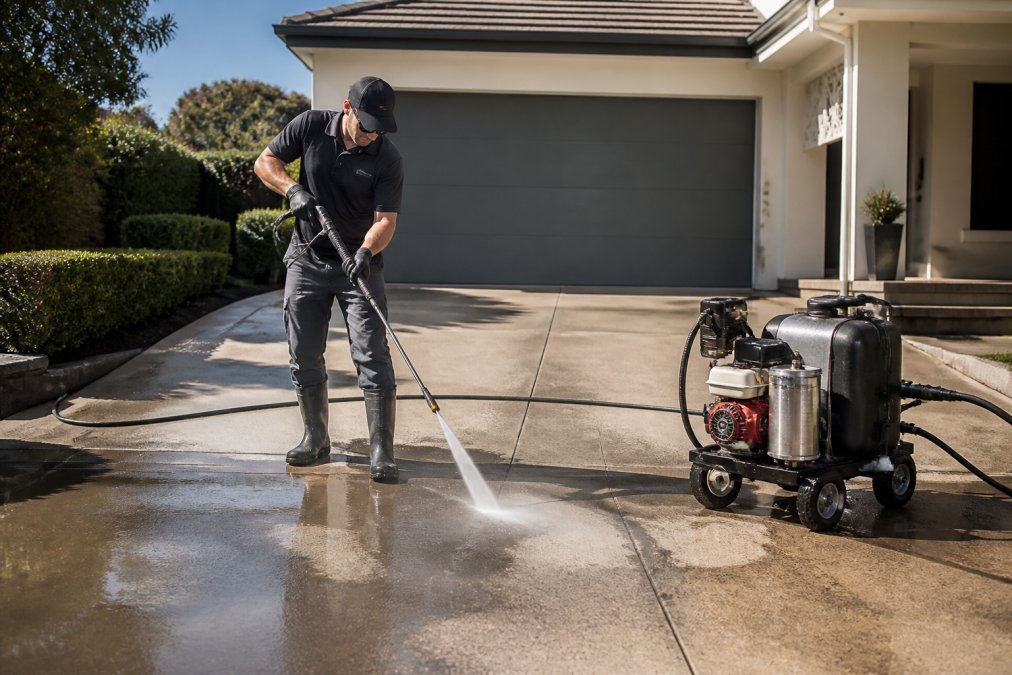
Contractor using a pressure washer to clean a concrete surface before driveway resurfacing begins.
Site inspection. Assess slab condition, drainage and sub-base integrity.
Surface preparation. High-pressure cleaning strips dirt, oil and loose material.
Crack repair. Structural cracks are filled and stabilised.
Priming. A bonding primer goes down to help the coating adhere.
Application. The resurfacing layer is sprayed on evenly.
Finishing. Stencil patterns or an aggregate finish are added if chosen.
Sealing. A protective sealer goes on for weatherproofing and stain resistance.
How Long Does the Whole Job Take?
A typical residential driveway takes one to three days from start to finish, depending on size and finish. Curing time before you drive on it usually adds another day or two. That's the honest timeline, and it's why resurfacing can be a suitable option for busy households.
Finishes, Styles and Materials That Last
The finish you choose decides how the driveway looks and how long it lasts. There's no single best option, only the right one for your home and climate. Understanding what each material actually is, not just what it's called, is what separates a finish that lasts a decade from one that fails in two summers.
What the materials actually are
Spray-on paving with stencil patterns. A cementitious overlay sprayed over a stencil, then sealed. It mimics brick, tile or stone at a fraction of the cost of the real thing because the pattern is surface-deep, not structural. The overlay bonds mechanically to a prepared slab, which is why surface prep matters more here than with any other finish.
Aggregate finishes. A resin or cement binder with stone aggregate broadcast or mixed through. The texture comes from the stone itself, so grip is inherent rather than added. Useful on slopes and around pool surrounds where a glossy surface would be hazardous when wet.
Epoxy coatings. A two-part resin that cures to a hard, seamless, chemical-resistant surface. Suits garages, patios and indoor-outdoor areas where easy cleaning matters. The trade-off is UV sensitivity, standard epoxy can yellow in direct sun, so exterior use needs a UV-stable topcoat.
Acrylic sealers. Not a finish on their own but a protective layer over one. They block UV, repel water and resist staining. Acrylic is breathable, which matters on concrete because trapped moisture has to escape or it lifts the coating from below.
Design trends worth knowing
Most local service pages show the same three stencil patterns and call it a day. The finishes actually gaining traction are more considered:
Large-format stencil patterns that read as poured stone rather than faux brick, which suits contemporary facades better than traditional herringbone.
Warm neutral palettes, sand, bone, charcoal and soft grey, replacing the stark reds and creams of the 2000s.
Border detailing, where a contrasting band frames the driveway edge or marks the apron, adding definition without a full pattern.
Exposed-aggregate strips used as a design feature rather than a full-surface finish, often down the centre or along the edges.
Pro Tip A non-slip finish matters most where water sits: slopes, pool surrounds and shaded areas that stay damp. Ask specifically about the slip rating of the topcoat, not just the colour, because a glossy decorative finish can be genuinely hazardous when wet.
Key Takeaway The material determines the maintenance. Epoxy needs re-coating sooner in full sun; acrylic-sealed overlays need re-sealing every few years; aggregate is the most forgiving but the hardest to patch invisibly. Choose the finish you're willing to maintain, not just the one that photographs best.
Driveway Maintenance Tips to Extend Your Resurfaced Finish
A resurfaced driveway needs very little, but the little it needs matters. These driveway maintenance tips keep the finish looking new for years.
Pressure clean once or twice a year to lift dirt and grime.
Re-seal every few years, or sooner if the surface starts to look dull.
Clean spills quickly. Oil and rust stain a porous surface faster than a sealed one.
Avoid harsh chemicals that can break down the coating.
Fix cracks early, before water gets underneath.
Choosing a Driveway Resurfacing Contractor Near You
Searching for driveway resurfacing near me returns plenty of options. The filter that actually matters is proof of past work, not the lowest quote.
Ask every contractor for:
Photos of completed jobs, ideally a year or more old
References from past customers you can contact
A written quote itemising preparation, application and sealing
Clear answers on curing time and aftercare
Evidence of insurance and proper licensing
Frequently Asked Questions
How much does driveway resurfacing cost in Australia?
Pricing depends on the driveway size, surface condition, and finish you choose, so there is no single figure that applies to every home. Factors like crack repair, pressure cleaning, and the number of coats all affect the final amount. Spray Pave Pro offers a free on-site quote, and getting one lets you compare the resurfacing price against a full replacement before deciding.
Is it worth resurfacing a driveway instead of replacing it?
For most driveways with surface-level cracking, staining, or fading, resurfacing is the more cost-effective option. Replacement means breaking up and removing the old slab, which adds demolition, disposal, and new concrete costs on top. Resurfacing keeps the existing sub-base, so you avoid that expense and the job is usually finished far faster, with less disruption to your household.
Can you resurface a driveway that has cracks?
Yes, provided the cracks are in the surface layer rather than the slab itself. A professional contractor will inspect the driveway first, pressure clean it, and fill or bridge cracks before applying the resurfacing coat. If the sub-base has moved or the slab is structurally failing, resurfacing alone will not hold, and the contractor should tell you that during the site inspection.
How long does professional driveway resurfacing last?
A properly applied resurfacing system can last many years when the surface is prepared correctly and maintained. Longevity depends on the coating used, traffic levels, and how well you keep the surface clean and sealed. Ask your contractor about the expected lifespan of the specific product they use, and follow their driveway maintenance tips, such as regular cleaning and resealing, to get the most out of it.
Most driveways don't need replacing. They need the right surface preparation, a bonded coating and a proper seal, and that's a job for a specialist rather than a weekend patch. Spray Pave Pro handles the full process, from high-pressure cleaning and crack repair through to spray-on concrete, epoxy flooring and professional sealing. Get your free quote and see what your driveway can look like again.
When it comes to your concrete resurfacing, do you want the job done right? If so then look no further than Spray Pave Pro in Perth! We are dedicated not only to uncompromising standards of quality but also craftsmanship and excellence.