
Last Updated: August 16, 2026
Choosing the wrong outdoor floor coating results in peeling, yellowing, or cracking within 12 to 18 months. The Spray Pave Pro team has spent over 23 years applying outdoor floor coatings, and coating failures consistently trace back to two causes: the wrong product for exposure conditions and poor surface preparation. This guide breaks down the six most effective durable outdoor floor coatings, what each does well, and where each falls short.
Quick Picks:
Outdoor floor coatings are evaluated on six criteria: UV stability, slip resistance, chemical and stain resistance, surface preparation requirements, curing time, and substrate suitability. Each coating was assessed against these factors based on product specifications, application requirements, and real-world performance. Third-party certifications, such as AS 4586 slip resistance testing standards, are noted where applicable. Pricing varies by area size, substrate condition, and installation requirements; contact suppliers for current quotes.
| Coating Type | UV Stability | Slip Resistance | Best Application | DIY Friendly |
|---|---|---|---|---|
| Epoxy Flake Flooring | Low (needs UV topcoat) | High (with additives) | Garages, patios, workshops | No |
| Polyaspartic Resin | Excellent | High | Exposed outdoor areas | No |
| UV-Stable Polyurethane | Good | Moderate | Patios, pathways, driveways | Yes |
| Penetrating Concrete Sealer | N/A (no film) | Unchanged | Driveways, pavers, polished concrete | Yes |
| Non-Slip Clear Coating | Good | Excellent (P3-P5 rated) | Pool surrounds, steps, wet zones | Yes/Pro |
| Water-Based Acrylic Sealer | Moderate | Low-moderate | Limestone, pavers, driveways | Yes |
Outdoor floor coatings fall into two categories: film-forming systems that sit on top of the substrate and create a protective layer, and penetrating sealers that absorb into the concrete. Film-forming systems offer decorative options, colour, and higher surface protection. Penetrating sealers prioritise breathability and invisible protection.
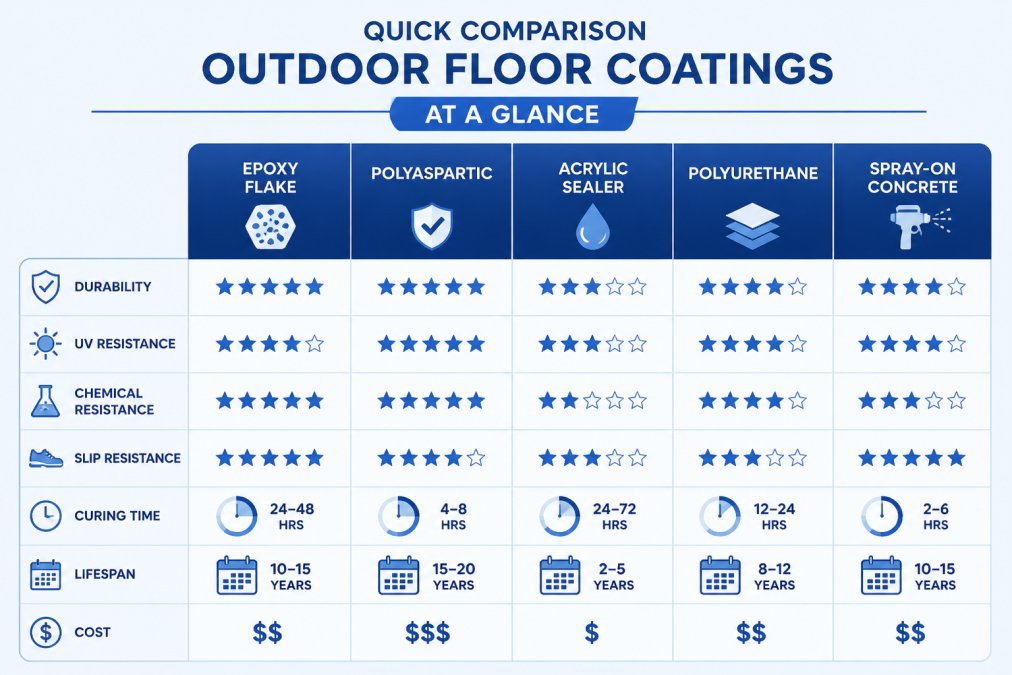
The critical distinction for outdoor applications is UV stability. Epoxy resin without a UV-stable topcoat will yellow and chalk under direct sunlight. Polyaspartic and polyurethane coatings are formulated with UV inhibitors that prevent this degradation. Substrate condition matters equally; a moisture-compromised slab will cause delamination regardless of coating choice. Moisture testing before installation is non-negotiable.
Epoxy flake flooring combines an epoxy resin base coat, decorative polymer flakes, and a protective topcoat, creating a seamless, hard-wearing finish ideal for garages, patios, and workshops. The system resists chemical spills, tyre marks, and heavy foot traffic without staining or degrading. Anti-slip additives can be incorporated into the topcoat for pool surrounds and outdoor living areas.
Standard epoxy resin is not UV stable. Without a UV-resistant topcoat, typically polyurethane or polyaspartic, the epoxy base will yellow and lose gloss under prolonged sun exposure.
What works well:
What to watch:
Contact a qualified applicator for a current quote based on your specific site.
Polyaspartic resin coating is a fast-curing, high-performance floor coating offering superior UV stability compared to standard epoxy systems. It is the correct choice for outdoor areas with full sun exposure, driveways, pool decks, and alfresco areas where UV degradation would compromise standard epoxy within two to three years.
Polyaspartic is an aliphatic polyurea, meaning its molecular structure resists the UV-induced breakdown that causes epoxy to yellow and chalk. Fast curing time is a genuine operational advantage; most systems are trafficable within hours rather than days, reducing downtime.
Pros:
Cons:
A UV-stable polyurethane topcoat is a single-component clear coating designed to protect outdoor concrete from UV degradation, weathering, and surface wear. Single-pack polyurethane coatings are formulated for straightforward application via roller or brush over a clean, prepared surface. According to Epoxy Warehouse's product documentation for UltraKote UVSEAL, this coating provides UV stability and protection against wear while maintaining the concrete's natural appearance.
Single-pack polyurethane does not offer the same impact or chemical resistance as a two-pack epoxy or polyaspartic system. For a lightly used patio or pathway, that is a reasonable trade-off for ease of application. For a driveway with regular vehicle traffic or a workshop floor with chemical exposure, a two-pack system is the correct specification.
Best for: Patios, pathways, and driveways where a clear, low-maintenance finish is preferred.
What works: Easy DIY application, good UV resistance, maintains natural appearance, lower entry cost.
What doesn't: Not suited to high-impact or high-chemical-exposure environments. Requires thorough surface preparation; applying over contaminated or damp concrete causes delamination.
Penetrating concrete sealers absorb into the concrete substrate and react chemically to create a moisture barrier within the material itself. The surface looks unchanged, but the concrete is protected against water intrusion, dissolved salts, oil staining, mould, and efflorescence. This is the correct choice for unsealed driveways, pavers, and polished concrete surfaces where the goal is protection without altering appearance.
The breathability of penetrating sealers is their key technical advantage. Because the sealer sits inside the surface rather than on top, water vapour can still escape. Film-forming coatings that trap moisture beneath them will blister and delaminate. Penetrating sealers avoid this failure mode entirely.
Pros:
Cons:
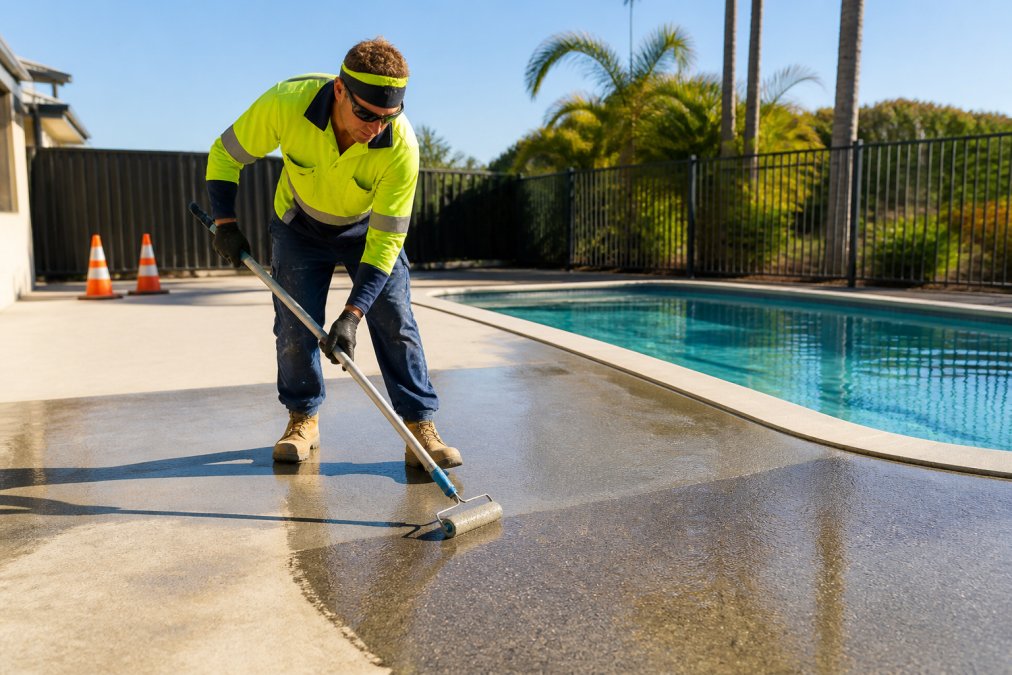
Non-slip clear coating is the correct specification for any outdoor surface where slip hazard is the primary concern: pool surrounds, steps, wet entry areas, and commercial pathways. What separates a properly specified non-slip coating from a generic sealer is third-party certification. Products tested to AS 4586 slip resistance classification for pedestrian surfaces carry verified P-ratings (P3, P4, or P5) corresponding to specific wet pendulum test results. These ratings matter for liability in commercial settings and for compliance with the National Construction Code requirements for slip resistance in Australia.
Pros:
Cons:
Water-based acrylic sealer uses a self-crosslinking acrylic emulsion to create a durable, low-sheen protective layer over concrete, pavers, and limestone surfaces. It is the lowest-VOC option in this comparison, making it the preferred choice where environmental impact, low odour, and easy cleanup are priorities. This coating is particularly well suited to limestone pavers, surfaces common in residential outdoor areas that benefit from protection against staining, wear, and weathering without a high-gloss finish that looks out of place on natural materials.
Water-based systems have significantly lower VOC levels than solvent-based sealers, a consideration that aligns with Safe Work Australia guidance on hazardous chemicals in the workplace for commercial applicators and a practical benefit for residential applications near living areas.
Pros:
Cons:
Best for: Limestone pavers, driveways, and patios where a low-VOC, low-maintenance protective coating is preferred.
Concrete floor coating lifespan varies depending on the system chosen, surface preparation quality, exposure conditions, and maintenance applied after installation. Professionally installed polyaspartic and epoxy flake systems on well-prepared substrates tend to last longest in outdoor conditions.
Surface preparation is the single biggest determinant of coating lifespan. Diamond grinding opens the concrete substrate to create mechanical adhesion for film-forming coatings. Moisture testing before application is equally important; a slab with high moisture vapour emission will cause film-forming coatings to blister and delaminate within months.
Factors that extend coating lifespan:
Epoxy vs Polyaspartic for Outdoors: The Real Difference
The epoxy vs polyaspartic comparison comes down to UV stability and cure time. Epoxy provides excellent adhesion, impact resistance, and chemical resistance, but is not UV stable as a standalone system. Polyaspartic offers comparable mechanical properties with genuine UV resistance built into the chemistry. For fully exposed outdoor areas with no shade, polyaspartic is the technically correct specification. For covered patios or areas with partial shade, an epoxy flake system with a UV-stable polyurethane or polyaspartic topcoat is a cost-effective alternative.
Maintaining outdoor floor coatings is straightforward, but consistency matters more than effort. The most common cause of premature wear is abrasive grit left on the surface; fine particles act like sandpaper under foot traffic and vehicle tyres, gradually degrading the topcoat.
Regular sweeping or blowing removes surface grit before it causes damage. For film-forming coatings, a periodic wash with mild detergent and low-pressure rinse removes chemical contamination and biological growth. Avoid high-pressure cleaning on film-forming coatings unless specifically designed for it; high pressure can lift coating edges and introduce moisture beneath the film.
For penetrating sealers, maintenance is simpler. When water no longer beads on the surface and instead absorbs into the concrete, the sealer has depleted and recoating is due.
Maintenance checklist for outdoor floor coatings:
Deteriorating outdoor surfaces affect safety, curb appeal, and the long-term condition of underlying concrete. Spray Pave Pro has delivered concrete resurfacing and coating solutions for over 23 years, with a 100% satisfaction guarantee and a team that handles everything from surface preparation through to final topcoat. Whether the project is a cracked driveway, a stained patio, or a pool surround that has become a slip hazard, the approach is the same: correct surface preparation, the right coating system for the conditions, and professional installation that lasts. Get a free quote from Spray Pave Pro and find out what the right outdoor floor coating will do for your property.
Polyaspartic resin is widely regarded as the most durable outdoor floor coating for exposed areas. It offers superior UV stability, high chemical resistance, and a fast curing time. For areas with heavy foot traffic or vehicle use, a two-coat system combining an epoxy resin base with a polyaspartic topcoat gives the best combination of adhesion, hardness, and weatherproof protection. Surface preparation, particularly diamond grinding, is the single biggest factor in how long any coating lasts.
Standard epoxy resin can work on outdoor patios, but it has one significant limitation: UV exposure causes it to yellow and chalk over time. For outdoor floor coatings exposed to direct sun, epoxy should always be finished with a UV-stable polyurethane or polyaspartic topcoat. Epoxy flake flooring with the right topcoat is a popular choice for patios and pool surrounds because it adds slip resistance and holds up well against moisture and stains when professionally installed.
Concrete floor coating lifespan varies by product and how well the substrate was prepared. A professionally applied polyaspartic system can last 10 to 15 years or more. Epoxy flake systems typically last 7 to 12 years with proper care. Penetrating sealers and water-based acrylics need re-application every 2 to 5 years depending on traffic and weather exposure. Moisture testing before application and proper diamond grinding or acid etching of the substrate are the two factors that most affect longevity.
Polyaspartic coatings cure faster than epoxy, often allowing foot traffic within a few hours of application. They resist UV light without yellowing, making them ideal for full-sun driveways, patios, and pool decks. They also handle a wider temperature range during application, which matters in variable climates. Chemical resistance is high, so oil, fuel, and cleaning products cause minimal damage. The main trade-off is cost: polyaspartic systems generally cost more than standard epoxy per square metre.
Concrete paint sits on the surface and tends to peel, chip, and fade within a few years, especially outdoors. A quality sealer or resin-based outdoor floor coating bonds to the substrate and performs far better over time. Penetrating sealers protect from within without changing the look. Film-forming coatings like epoxy or polyaspartic add both protection and aesthetic appeal. For most driveways, patios, and pool surrounds, a proper coating system will outlast paint by many years and require less ongoing maintenance.
This article was written using GrandRanker
