
Last Updated: August 30, 2026
How long does concrete resurfacing take? Most homeowners expect a single number, but the reality is more nuanced. The total timeline spans from initial surface preparation through final curing and sealing, typically 5 to 10 days from start to finish, though full durability takes longer to develop. Understanding each phase helps you plan your project, manage expectations, and know when your surface is genuinely ready for use.
At Spray Pave Pro, we've guided hundreds of Perth homeowners and business owners through this process. The timeline isn't arbitrary, it's driven by chemistry, weather, and the specific demands you'll place on your resurfaced concrete. Whether you're restoring a cracked driveway, upgrading a pool surround, or preparing a commercial space for reopening, knowing what happens at each stage removes the guesswork.
Preparation determines success more than any other phase. Rush this, and the resurfacing compound won't bond properly. This phase typically takes 1 to 3 days depending on the condition of your existing concrete.
Your contractor must understand what they're working with. A thorough inspection identifies structural issues, moisture problems, and surface defects that affect how the resurfacing compound will perform. The inspection looks for active cracks, spalling concrete, areas of delamination, and moisture infiltration. Deep cracks or structural damage may require repair before resurfacing can proceed. Most inspections take 30 minutes to 2 hours depending on the area's size.
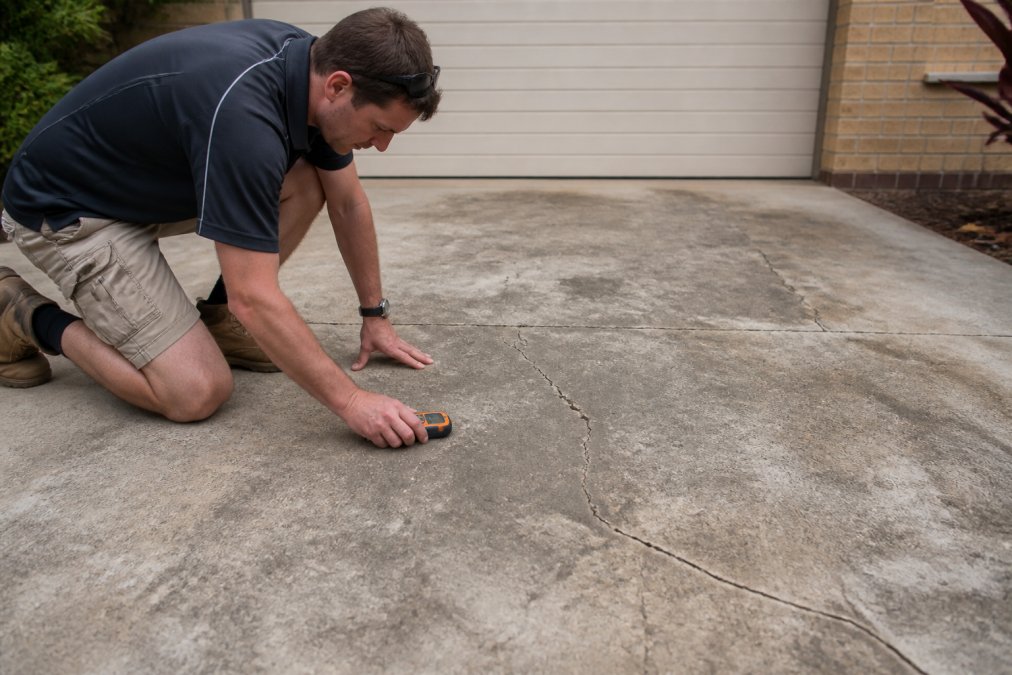
Cleanliness is non-negotiable. Dirt, algae, mould, old sealant residue, and oil stains prevent the bonding agent from adhering to the concrete substrate. High-pressure cleaning removes these contaminants in 2 to 4 hours. After cleaning, the surface must dry completely, 24 hours in dry weather, 48 hours in humid conditions. Moisture content in the concrete substrate directly affects how the resurfacing compound sets.
Cracks wider than 3 mm typically need repair before resurfacing. A concrete repair compound or polyurethane sealant fills these gaps, taking 2 to 4 hours depending on crack extent. The repair material must cure for 24 hours minimum. Once cracks are repaired and the surface is clean and dry, a bonding agent is applied to ensure the resurfacing compound adheres firmly to the existing concrete. Application takes 1 to 2 hours, with 4 to 8 hours curing time before spray application can begin.
The spray application itself is fast, typically 1 to 3 hours for a standard driveway. What happens immediately after determines the timeline for the rest of the project.
The resurfacing compound is applied as a thin layer, usually 3 to 6 mm thick. The spray equipment applies the compound in overlapping passes to ensure even coverage. A standard 50-square-metre driveway takes 2 to 3 hours. Once sprayed, do not touch or walk on the surface, the compound is still in its initial set phase.
The first 24 hours after application are critical. During this period, the resurfacing compound begins its chemical reaction, hardening and bonding to the substrate. Temperature, humidity, and air circulation all influence this phase.
In optimal conditions (18 to 25 degrees Celsius, 40 to 60 percent humidity), the compound sets reliably (peer-reviewed research). In colder weather, curing slows significantly. Below 10 degrees Celsius, the chemical reaction nearly stops. Protect the surface during this phase, keep foot traffic off and prevent water from pooling on the surface.
Light foot traffic is typically safe after 24 to 48 hours. At 48 hours, the surface is firm underfoot but still developing its final hardness. At 72 hours (3 days), foot traffic can be normal. Full cure, when the compound reaches maximum hardness, typically takes 5 to 7 days. During this period, avoid activities that place sustained pressure on specific areas.
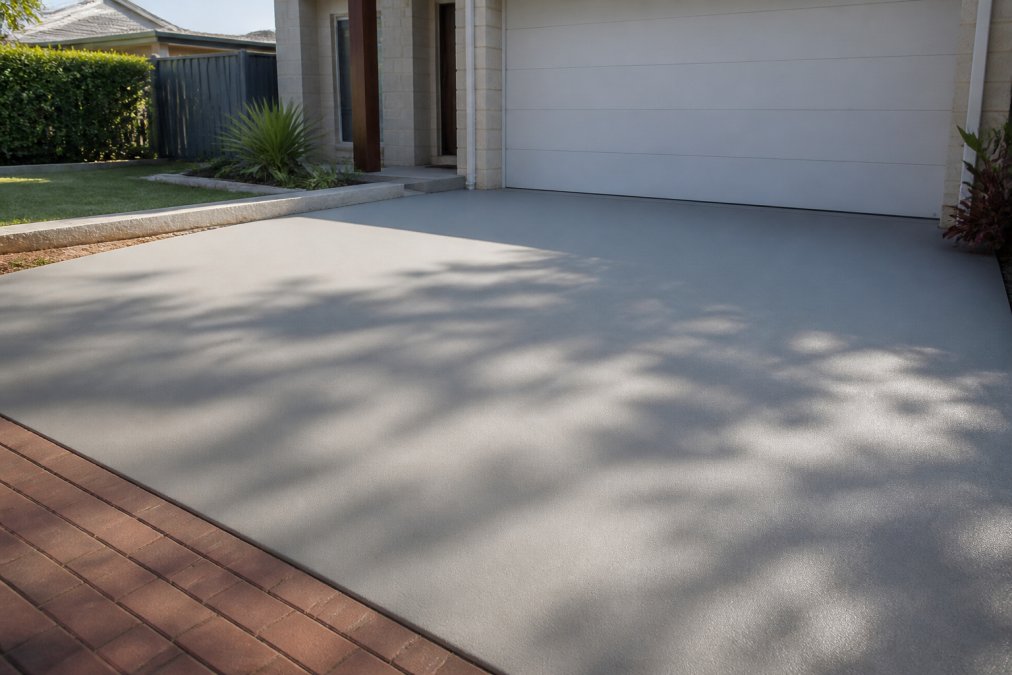
Vehicle traffic requires waiting 7 days before driving on resurfaced concrete. Some high-performance compounds may allow vehicle traffic after 5 to 6 days, but 7 days is the safer standard. Heavy trucks or machinery should wait 10 to 14 days for full load-bearing readiness. Temperature affects this timeline significantly, in cool weather, add 2 to 3 days to all timelines.
Temperature is the single most influential factor. The resurfacing compound cures through a chemical reaction that accelerates in warmth and slows in cold. At 20 degrees Celsius, curing proceeds at a predictable rate. At 10 degrees Celsius, curing slows by 50 percent or more (peer-reviewed research). Below 5 degrees Celsius, curing may stall entirely.
Rain during the curing period is problematic. Water interferes with the chemical reaction and can create surface defects. Most contractors will not apply resurfacing if rain is forecast within 24 hours of application. Wind accelerates surface drying but can create uneven curing. Calm, mild conditions are ideal.
High humidity (above 80 percent) slows the curing process (peer-reviewed research). Humidity between 40 and 60 percent is optimal. If the substrate retains moisture from recent rain or high groundwater, curing is delayed. This is why the preparation phase emphasises drying time.
Thicker applications take longer to cure. A 6 mm application takes longer than a 3 mm application. Different resurfacing compounds have different cure rates. Acrylic-based compounds typically cure faster than polyurethane-modified compounds. Always follow the manufacturer's recommendations and your contractor's guidance.
Cost depends on surface condition, area size, and the specific services required. Preparation-intensive projects cost more than straightforward applications. Decorative finishes or specialised coatings add to the price. Budget planning should account for the full project timeline, preparation takes 1 to 3 days, application takes 1 day, and curing takes 5 to 7 days before normal use.
For accurate pricing tailored to your specific project, contact Spray Pave Pro for a free quote. We assess your surface condition, recommend the best approach for your needs, and provide transparent pricing based on square metres and the preparation required.
A protective sealant should be applied after the resurfacing compound has fully cured, typically 7 to 14 days after application. Applying sealant too early can trap moisture in the compound and prevent complete curing. The sealant creates a barrier against water, UV light, oil, and stains, extending the lifespan of the resurfaced concrete significantly. Without sealing, the surface is vulnerable to degradation within 1 to 2 years. With proper sealing, the resurfaced concrete can last 10 years or longer.
Maintenance is straightforward but essential. Regular cleaning removes dirt and prevents mould growth. High-pressure cleaning twice per year keeps the surface fresh. Resealing is needed every 2 to 3 years depending on traffic and weather exposure. Regular maintenance extends the life of your resurfaced concrete and keeps it looking like new.
How long does concrete resurfacing take? From start to finish, the full project spans 5 to 10 days. But the real measure is durability. A properly prepared surface, correctly cured, and maintained with a regular sealing schedule will serve your home or business for a decade or more. At Spray Pave Pro, we've spent over 23 years perfecting this process. Our team handles every phase, preparation, application, curing guidance, and sealing, to ensure your resurfaced concrete delivers lasting value. Get a free quote today and discover how resurfacing can transform your concrete surfaces.
| Phase | Timeline | Key Actions | Weather Sensitivity |
|---|---|---|---|
| Inspection & Assessment | 30 mins-2 hours | Identify damage, moisture, cracks | Low |
| Cleaning | 2-4 hours | High-pressure wash, remove contaminants | Low |
| Drying | 24-48 hours | Allow substrate to dry completely | High (humidity delays) |
| Crack Repair | 2-4 hours | Fill cracks, apply bonding agent | Moderate |
| Bonding Agent Cure | 4-8 hours | Primer sets before spray application | Moderate |
| Spray Application | 1-3 hours | Apply resurfacing compound | Moderate (no rain) |
| Initial Set (24 hrs) | 24 hours | Compound hardens, protect from traffic | High (temperature critical) |
| Foot Traffic Ready | 48-72 hours | Light walking permitted | Moderate |
| Vehicle Traffic Ready | 5-7 days | Normal driveway use safe | Moderate |
| Full Cure | 5-7 days | Maximum strength achieved | Moderate |
| Sealing Application | 7-14 days after cure | Apply protective sealant | Low |
Frequently Asked Questions
How much is this actually going to cost me?
Cost varies based on your surface condition and area size. Heavily damaged concrete requiring extensive crack repair costs more than straightforward resurfacing. Rather than guessing, contact Spray Pave Pro for a free quote. We assess your specific situation and provide transparent pricing with no hidden costs.
My driveway has deep cracks. Can spray pave actually fix something like that, or is it just a cosmetic cover-up?
Deep cracks require repair before resurfacing. We fill cracks wider than 3 mm with concrete repair compound or polyurethane sealant, allowing them to cure fully before applying the resurfacing compound. However, if the concrete slab itself is structurally compromised, resurfacing may not be appropriate, we'll identify this during inspection.
How disruptive is this going to be? I can't have my driveway unusable for weeks.
The application itself takes 1 to 3 days. You can walk on the surface after 48 to 72 hours and drive on it after 5 to 7 days. The full project is typically completed within 10 days. We'll provide a clear timeline upfront so you can plan accordingly.
Do you have references or photos from other Perth homes where you've done this work?
Yes. We have extensive portfolios of completed residential and commercial projects across Perth. Contact us to request references and photos of similar work. You'll see real results from homes and businesses in your area.
My pool area gets wet constantly. Can your epoxy flooring handle that kind of moisture and actually make it safer?
Epoxy flooring is specifically designed for wet environments. It provides slip resistance, resists moisture infiltration, and is easy to clean. Pool surrounds, bathrooms, and kitchens are ideal applications. We can discuss slip-resistance grades and finishes that suit your specific needs.
I'm selling my house in a few months and need to improve curb appeal. Will a spray pave resurface actually add real value?
Resurfaced concrete dramatically improves curb appeal. A fresh, clean driveway and patio create an immediate positive impression. Most homeowners find that the improvement in appearance justifies the investment. We've helped many Perth homeowners prepare properties for sale with excellent results.
Most resurfaced concrete reaches sufficient strength for vehicle traffic within 7 to 10 days under normal conditions, though light foot traffic is typically safe after 48 to 72 hours. Curing time depends on ambient temperature, humidity, and the thickness of the resurfacing compound applied. Cooler, damper weather extends curing periods. Always follow your contractor's specific guidance, as polymer-modified compounds and application thickness affect the set time significantly.
Project duration depends on surface preparation (slab inspection, grinding, crack repair), application time, and curing conditions. Larger areas take longer to prepare and spray. Weather plays a critical role: cold temperatures and high moisture content slow curing dramatically. The resurfacing compound type and application thickness also matter. Most projects, from preparation through initial cure, take 5 to 10 days before full use is safe, though the actual spray application may take only 1 to 2 days.
Yes, but only if the underlying substrate is structurally sound. Concrete resurfacing works by bonding a new layer (typically 3 to 6 mm thick) to the existing slab using a bonding agent. Deep cracks must be repaired first to restore structural integrity and ensure the overlay adheres properly. If the base concrete is severely deteriorated or unstable, resurfacing becomes a cosmetic fix rather than a durable solution. Professional slab preparation and substrate assessment determine whether resurfacing is viable or if replacement is necessary.
Yes, weather significantly affects curing time and project success. Cold ambient temperatures slow the curing agent's activation, extending set times by days. High humidity and moisture content in the air or substrate prevent proper drying and bonding. Rain during application ruins the surface finish. Ideal conditions are mild temperatures (15-25°C), low humidity, and dry weather. Projects scheduled during cooler months may require longer for full cure, while warmer, drier seasons can reduce timelines.
This article was written using GrandRanker
