
Last Updated: October 27, 2026
Quick Summary
To maintain epoxy flooring for commercial spaces, establish a regular cleaning routine with daily dry sweeping using a flat mop or soft-bristled broom, followed by weekly wet mopping. Use pH-neutral cleaners (pH 7-10) and inspect the floor monthly for wear patterns, with annual professional assessments of coating thickness and adhesion.
To maintain epoxy flooring for commercial spaces, the foundation is simple: regular cleaning helps keep the floor clean. Daily and weekly routines can form part of a maintenance plan.
Start with dry cleaning. Use a flat mop or soft-bristled broom to sweep away dust, dirt, and debris. Grit left on the surface can affect its appearance.
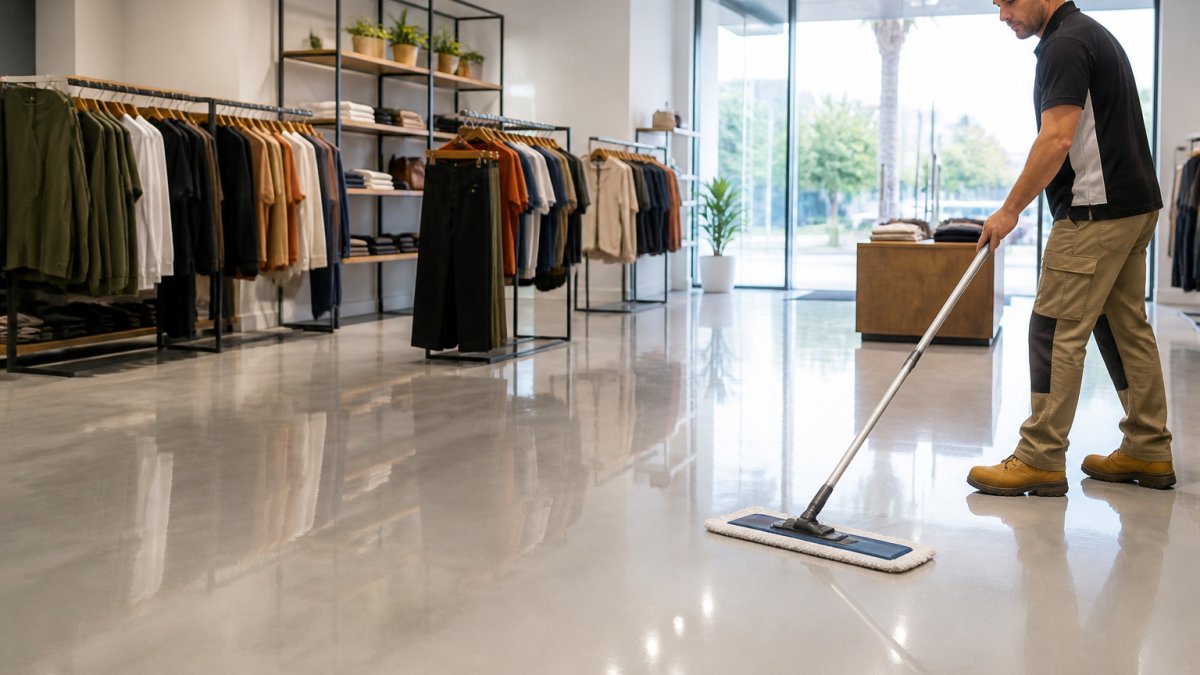
Wet mopping can follow sweeping. Cleaning methods and frequency depend on the floor and its use.
A maintenance schedule can take account of how a facility operates. Traffic level and facility type are factors to consider when planning cleaning and documentation.
| Facility type | Key adjustment |
|---|---|
| Warehouse and logistics | Sweep multiple times daily on forklift routes; use tyre-pressure checks and designated lanes to concentrate wear; scrub weekly in loading zones. |
| Retail | Prioritise appearance zones at entrances and aisles; damp-mop daily in peak season; use entry matting aggressively. |
| Commercial kitchen | Degrease daily in cooking zones with an epoxy-safe degreaser; manage grease tracking from kitchen to dining areas; inspect for hot-oil and chemical damage monthly. |
| Healthcare | Use facility-approved disinfectants compatible with the coating; verify with the product supplier that the disinfectant does not attack the topcoat; increase spill response frequency. |
| Office | Light daily sweep; weekly damp mop; monthly inspection is usually sufficient unless there is a café or heavy entry traffic. |
These schedules address cleaning frequency in relation to traffic. Best Concrete Overlay for High Traffic Areas offers guidance on epoxy solutions for heavy-use environments.
Choosing a cleaner for epoxy floors involves considering the floor and the cleaning product.
Epoxy topcoats resist a defined range of chemicals. As a working rule, most manufacturers specify neutral to mildly alkaline cleaners, typically pH 7-10, for routine cleaning. Strong acids (below pH 4) and strong alkalis (above pH 11) are most likely to attack the topcoat, dull the gloss, or leave chalky residue. Always check the data sheet for the specific coating installed, a cleaner safe on one epoxy may not be safe on another.
| Product type | Suitability | Notes |
|---|---|---|
| pH-neutral epoxy floor cleaner | Routine use | The default choice for daily and weekly cleaning. |
| Mild dish soap diluted in water | Light cleaning | Budget option for small areas; rinse well to avoid film. |
| Mildly alkaline degreaser (epoxy-safe) | Oil and grease zones | Use sparingly, dwell 5-10 minutes, rinse thoroughly. |
| Facility disinfectants | Healthcare and food areas | Confirm with the supplier that the active ingredient is compatible with the topcoat; some disinfectants are oxidising and can dull the finish with repeated use. |
| Acidic cleaners (vinegar, bathroom cleaners) | Avoid | Can etch or dull the topcoat. |
| Bleach and ammonia-based cleaners | Avoid | Can discolour and degrade the finish. |
| Wax-based polishes | Avoid | Build up a film that traps dirt and becomes slippery. |
| Abrasive scrubbing powders | Avoid | Scratch the gloss. |
| Oil-based and solvent-based products | Avoid | Can soften or attack the coating. |
Safe cleaning practices for epoxy surfaces recommend checking product labels and testing new cleaners on a small, inconspicuous area first. For commercial facilities, document which products you use, this creates a maintenance record and helps identify what works best for your specific epoxy system.
Epoxy Floor Coating vs Paint for Concrete Floors explains how epoxy differs from other coatings, which helps you select cleaners that match your floor type and avoid products designed for paint or wax finishes.
Spills can happen in commercial spaces. Cleaning approaches may depend on the spill and the floor.
Scratches and abrasion can affect the appearance of epoxy flooring in commercial spaces.
Inspection can help identify visible changes in an epoxy floor.
Repair decisions depend on the condition of the floor.
Commercial flooring maintenance standards provide guidance on when to escalate issues to professionals. Epoxy Floor Installation Process: Step-by-Step Guide explains how epoxy is installed properly, which helps you recognise when installation defects or deterioration require professional repair rather than routine maintenance.
Maintaining epoxy flooring for commercial spaces involves considering the floor, its use, and its cleaning needs.
Spray Pave Pro has over 23 years of experience in concrete resurfacing and offers epoxy flooring.
Get Free Quote to discuss your facility's epoxy flooring.
Cleaning frequency depends on the floor and how the space is used.
Cleaning products and methods depend on the floor and the products used.
Cleaning approaches for oil and grease stains depend on the floor and the spill.
Cleaning equipment and methods depend on the floor and its condition.
Maintaining epoxy flooring requires consistency more than complexity. Daily sweeping, regular wet mopping with the right cleaner, immediate spill response, and monthly inspections form the foundation of a successful maintenance program. When you need professional guidance or want to explore epoxy solutions for your commercial space, Spray Pave Pro delivers expert advice and quality service backed by decades of experience in Perth's commercial property sector.

