
Last Updated: August 15, 2026
Spray on concrete is a polymer-modified cementitious coating applied at 2-3mm thickness directly over an existing concrete slab, transforming worn, cracked, or stained surfaces without demolition or replacement. At Spray Pave Pro, with over 23 years of experience in concrete resurfacing, we've seen firsthand what separates a job that lasts a decade from one that fails within two years: surface preparation and product selection.
The process works by spraying a cement-based slurry across the substrate using a hopper spray gun. Once cured, the coating bonds to the existing concrete and creates a fresh, decorative overlay that looks new, accepts colour and texture finishes, and resists daily wear. What it doesn't do is fix structural problems, spray on concrete is a resurfacing solution, not a structural repair.
The adhesion mechanism separates a quality spraycrete system from a product that peels within months. Polymer-modified coatings contain acrylic or other polymer additives that improve flexibility and tensile strength, allowing the coating to bridge cracks as concrete expands and contracts with temperature changes.
Proper bonding requires the substrate to be clean, structurally sound, and free of contaminants including oil, sealers, and loose material. The concrete must also be slightly porous so the coating can mechanically key into the surface. According to Cement Concrete & Aggregates Australia's guidance on concrete surface preparation, surface preparation accounts for the majority of coating failures in resurfacing projects.
Resurfacing achieves aesthetic rejuvenation in a fraction of the time required for replacement. Most residential driveways and patios can be completed in one to two days, with the surface ready for foot traffic within 24 hours and vehicle traffic within 48-72 hours. For surfaces that are structurally sound but cosmetically degraded, replacement is unnecessary and significantly more expensive.
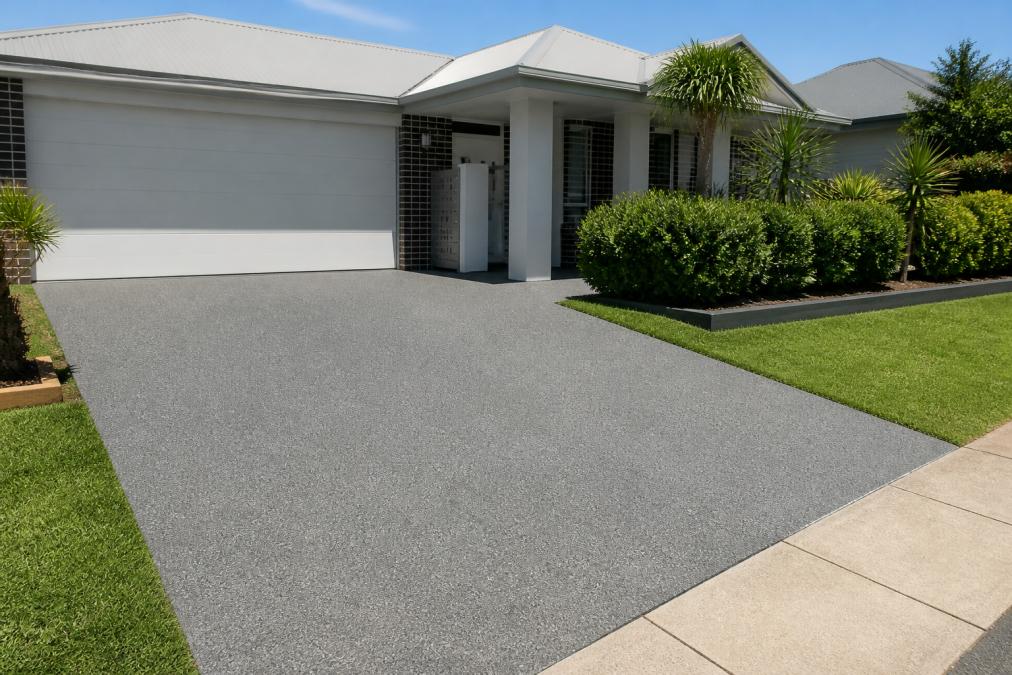
A driveway or verandah coated with quality spraycrete looks nothing like the tired, oil-stained surface underneath. Contractors can apply custom stencils, fleck finishes, and a broad palette of colours to create a surface that complements the home's architecture. For homeowners preparing to sell, a fresh, well-finished driveway signals that the home has been maintained and significantly improves buyer perception.
Non-skid texture is built into the spray on concrete application process. The hopper spray gun creates a natural aggregate surface profile that significantly improves traction compared to a smooth concrete slab, particularly when wet. A properly applied spraycrete finish consistently achieves slip resistance ratings suitable for wet pedestrian areas under the Australian Standard AS 4586 for slip resistance classification of pedestrian surfaces. For commercial premises and hospitality businesses, this is a compliance issue under the National Construction Code.
Once sealed, a spray on concrete surface requires very little ongoing attention. Regular sweeping and occasional washing with a garden hose keeps it looking sharp. The sealer application creates low permeability, so water, oils, and contaminants sit on the surface rather than penetrating it. The polymer content gives the coating enough flexibility to absorb minor substrate movement without cracking, which is a common failure point in older cementitious coatings.
Spray on concrete cost per square metre varies based on area size, substrate condition, finish complexity, and preparation work required. Larger areas generally attract a lower per-square-metre rate because setup and mobilisation costs are spread across more surface area. Surface preparation also affects price significantly, a slab with deep cracks, oil staining, or previous coating failures requires more work before resurfacing can begin.
The honest answer is: get a proper quote based on a site inspection. Spray Pave Pro offers a free quote, which is the only way to give an accurate figure for your specific surface and chosen finish. Even at the higher end of resurfacing costs, the comparison to full concrete replacement still favours resurfacing by a significant margin for structurally sound slabs.
| Factor | Impact on Cost |
|---|---|
| Area size | Larger areas = lower per m² rate |
| Surface condition | Cracks, staining, old coatings increase prep cost |
| Finish complexity | Stencils and custom patterns add to labour |
| Number of coats | Two-coat systems cost more, last longer |
| Sealer type | Premium sealers add upfront cost, reduce maintenance |
A well-applied spray on concrete system on a properly prepared substrate lasts between 10 and 20 years under normal residential conditions. Commercial surfaces with heavy foot traffic will see wear at the lower end of that range, particularly if maintenance is deferred. Rushing foot traffic or vehicle access before the coating has fully cured compromises the bond and reduces durability.
Delamination is the primary failure mode in spray on concrete, and it's almost always preventable. It occurs when the coating separates from the substrate, typically appearing as bubbling, hollow spots, or lifting edges. The cause is almost always inadequate surface preparation, application over a contaminated or sealed substrate, or using a product without sufficient polymer content.
Oil contamination is particularly problematic. Even a small amount of residual oil in the concrete pores prevents proper adhesion. Applying spray on concrete over an existing sealer is another common error, the coating cannot bond to a sealed surface and must be mechanically removed first. Moisture in the substrate at the time of application also causes delamination.
A proactive maintenance schedule extends the life of a resurfaced surface significantly. The sealer is the protective layer, and it wears over time. Resealing every two to three years is the standard recommendation for residential surfaces, and annually for high-traffic commercial areas.
A practical schedule looks like this:
DIY concrete resurfacing products are available at hardware stores, but the gap between a DIY outcome and a professional result is wider than most people expect. A hopper spray gun produces the characteristic non-skid texture of spray on concrete. Without it, you're applying a decorative overlay by roller or squeegee, which produces a different finish and generally less durable result.
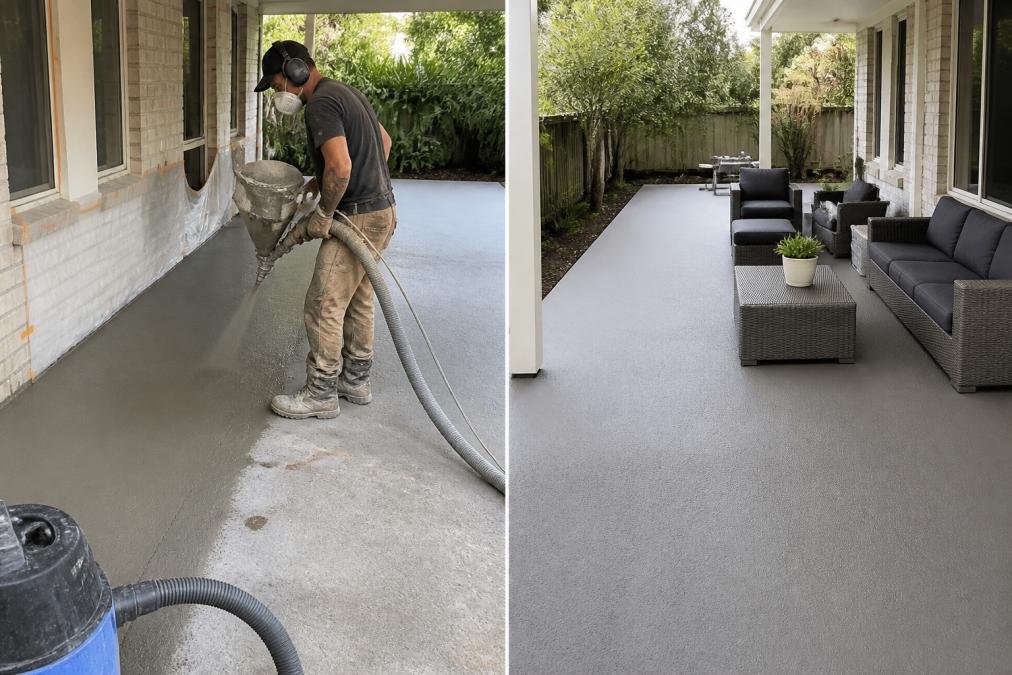
Surface preparation is where most DIY projects fall short. A professional contractor assesses the substrate, addresses cracks with appropriate crack-bridging products, degrease contaminated areas, and pressure-washes to the correct profile. A homeowner who skips or underperforms any of these steps is building in failure.
| Consideration | DIY | Professional |
|---|---|---|
| Upfront cost | Lower | Higher |
| Equipment | Hire or improvise | Specialist grade |
| Surface prep | Often incomplete | Thorough and assessed |
| Finish quality | Variable | Consistent |
| Longevity | 3-7 years typical | 10-20 years typical |
| Warranty | None | Often guaranteed |
| Risk of delamination | Higher | Lower with experienced contractor |
For a small, flat, lightly trafficked area in good condition, DIY is viable. For driveways, pool surrounds, commercial surfaces, or any area with existing damage, the risk of a failed DIY job outweighs the savings.
Spray on concrete is not a universal solution. Structurally compromised slabs are the clearest example. If the concrete beneath is cracked through its full depth due to ground movement, tree root intrusion, or inadequate base preparation, a 2-3mm overlay will not fix the problem. Very heavily deteriorated surfaces may require too much preparation work to make resurfacing cost-effective.
The coating also adds a small amount of height to the surface. At doorways, garage entries, or where the surface meets tiling, the transition needs to be managed carefully to avoid a trip hazard or water ingress point.
Hot, dry climates create specific challenges for spray on concrete application. In high-temperature conditions, the coating can cure too quickly if applied in direct sun, reducing adhesion and causing surface cracking. Experienced contractors schedule application for early morning or overcast days during summer.
UV exposure over many years will degrade any surface coating without adequate UV stabilisers in the sealer. Premium sealers with UV inhibitors are essential in high-UV environments. Resurfacing is the more sustainable choice compared to full replacement, as concrete production is a significant source of carbon emissions. Water-based sealers and polymer systems have also reduced the solvent content of resurfacing products significantly compared to older formulations.
Spray on concrete is worth it for the right surface and the right application. For a structurally sound slab that has become cosmetically degraded, it delivers genuine aesthetic rejuvenation, improved slip resistance, and a durable finish at a fraction of the cost of replacement.
Where it fails to deliver is when it's applied to the wrong substrate, by an under-equipped applicator, or without adequate surface preparation. Those failures are not a product problem, they're a process problem, and they're entirely avoidable with the right contractor.
The questions to ask before committing are straightforward: Is the existing slab structurally sound? Has the contractor assessed the surface and identified any preparation requirements? What is the warranty on the finished work? What sealer system is being used, and what is its UV rating? A contractor who answers those questions confidently, with specifics, is one worth trusting with the job.
For homeowners and facility managers weighing up the decision, spray on concrete is one of the most cost-effective surface upgrades available for existing concrete. Done properly, it transforms a property's appearance, improves safety, and requires minimal ongoing maintenance. Done poorly, it's an expensive lesson in the importance of substrate preparation.
A properly applied spraycrete overlay is designed to bridge minor surface cracks in the existing concrete slab. Because it is a thin polymer-modified cementitious coating, it will flex slightly rather than fracture under normal foot traffic and vehicle loads. However, if the substrate has deep structural cracks or ongoing movement, those issues must be repaired before resurfacing. Skipping substrate preparation is the most common reason an overlay develops new cracks prematurely.
Yes, provided the existing concrete slab is structurally sound. Surface damage such as staining, weathering, and minor cracking is exactly what concrete resurfacing is designed to address. Deep structural cracks, spalling, or areas with poor adhesion need to be repaired and the surface high-pressure cleaned before the decorative overlay goes down. Attempting to resurface over a compromised substrate is the leading cause of delamination and premature coating failure.
Spray on concrete resurfacing consistently costs significantly less than full concrete removal and replacement. Demolition, disposal, formwork, and new concrete pours all add up quickly. Resurfacing avoids those costs entirely. The exact spray on concrete cost per square metre varies based on area size, surface condition, and the finish selected, so the best approach is to request a quote specific to your project rather than relying on generic estimates.
Spray on concrete is well suited to pool surrounds and driveways because the finish incorporates a non-skid texture that improves slip resistance on wet surfaces. The sealed, low-permeability surface also resists chlorine splash and UV exposure better than bare concrete. For heavy commercial foot traffic or vehicle areas, a professional contractor will recommend the appropriate coating thickness and sealer grade to ensure the durable finish holds up over time.
With correct substrate preparation, professional application, and routine maintenance, a spray on concrete overlay typically lasts 10 to 15 years or more. The sealer applied over the cementitious coating is the first line of defence and generally needs reapplication every 3 to 5 years depending on traffic and weather exposure. UV stability and adhesion are the two biggest factors affecting longevity, which is why surface preparation and quality sealer application are non-negotiable steps.
Deteriorating driveways, unsafe pool surrounds, and stained patios are exactly the surfaces Spray Pave Pro has been transforming for over 23 years. With a 100% satisfaction guarantee, highly professional staff, and a process that covers thorough surface preparation through to sealer application, the team delivers results that hold up over time. Get a free quote from Spray Pave Pro and find out what your surface can look like.
This article was written using GrandRanker
