
Last Updated: October 13, 2026
Before committing to any repair method, understand what you're dealing with. Not all cracks in a cracked concrete pool are equal, and misidentifying the problem wastes money on the wrong fix.
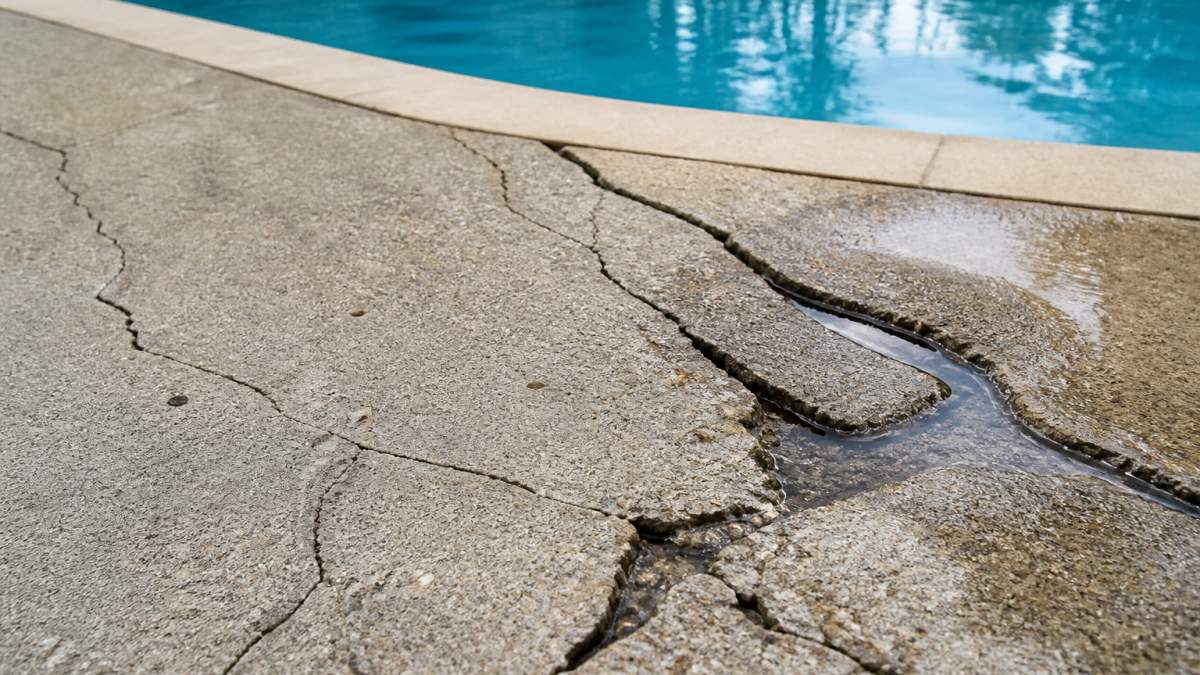
A hairline crack is typically less than 3mm wide, barely wide enough for a credit card. These are usually cosmetic, not structural, and are common around pools due to minor settling and temperature fluctuations.
Wide cracks, anything over 6mm, allow water to penetrate deeper into the concrete. They widen over time if the cause isn't addressed, and water infiltration accelerates deterioration that can eventually compromise the pool structure.
The repair method you choose depends heavily on crack width:
This distinction matters because it determines whether you can DIY or need professional help.
Pool-shell cracks occur in the pool basin itself, the structure holding water. These are serious: they can lead to water loss, structural failure, and expensive repairs.
Deck cracks are in the concrete surrounding the pool. Most homeowners can address these themselves, the deck doesn't hold water, so a cracked deck is an aesthetic and safety issue, not a structural emergency.
To tell the difference: look at where the crack is. Is it in the pool basin or on the surrounding concrete?
Some cracks indicate deeper problems. Watch for:
Vertical displacement or repeated cracking means the concrete around your pool is settling unevenly, and a simple patch won't hold. You'll need a resurfacing solution that bridges the movement or a professional assessment of whether the soil needs stabilisation.
You have several options for fixing cracked concrete pool decks. The best choice depends on crack width, severity, and desired longevity.
For hairline cracks and narrow cracks up to 3mm, crack injection forces a liquid sealant deep into the crack to prevent water infiltration.
The process is straightforward:
Polyurethane resin is flexible, ideal for cracks that move slightly with temperature changes. It bonds to concrete and blocks water, typically lasting 5-10 years depending on exposure and traffic.
This works best for stable cracks that aren't widening. If the crack is actively growing, injection alone won't solve the problem.
Wider cracks (3-6mm) need more aggressive treatment, which polyurethane and epoxy injection systems are designed for.
Polyurethane resin expands slightly as it cures, filling the crack's full depth and width. It's water-reactive, so it cures on contact with moisture, useful for slightly damp cracks.
Epoxy resin creates a rigid, strong bond. It doesn't expand and requires a completely dry crack. Epoxy is stronger than polyurethane but less forgiving if the concrete shifts, so use it only on stable concrete that won't move.
For either material, preparation is critical:
Expect these repairs to last 7-15 years with proper application.
Spalling is when chunks of concrete break away, leaving a rough, uneven surface, common around pools due to freeze-thaw cycles, water intrusion, and salt exposure.
For small spalls (less than 50mm across):
For larger damaged areas, use a concrete resurfacer rather than patch compound. Resurfacer bonds to existing concrete, applies in thicker layers, and is more durable for high-traffic areas.
These repairs typically hold 3-7 years. If spalling returns in the same spot, water is still entering the concrete from above, address the root cause (poor drainage, lack of sealing, ongoing moisture intrusion) or the problem will repeat.
Preparation determines whether your repair lasts or fails prematurely, skipping it is the most common homeowner mistake.
Remove all loose concrete, dirt, and debris from the crack or damaged area.
Next, clean thoroughly, concrete dust, algae, and dirt prevent proper bonding. A pressure washer at 2,000-3,000 psi, nozzle at least 300mm away, works well.
For injection repairs, you may need to widen the crack slightly with a concrete saw or chisel.
Finally, prime if needed. Some repair materials benefit from a concrete primer or bonding agent; check the product instructions, as using primer when recommended significantly improves adhesion and durability.
If your concrete has extensive cracking, multiple damaged areas, or severe spalling, patching individual cracks becomes inefficient. Resurfacing the entire pool deck is often the better choice.
Resurfacing covers the existing concrete with a new layer, addressing cosmetic damage, sealing cracks, and providing a fresh, durable surface. For pool areas it also improves slip resistance and water drainage, both important for safety.
Spray-applied resurfacing is popular: a specialised concrete overlay is sprayed onto the existing deck, bonding to the old concrete, filling cracks, and creating a smooth, uniform finish.
The process involves:
Spray application is fast, most residential pools can be resurfaced in a day or two. The finish can be customised with colour and texture options. Durability is typically 10-15 years depending on maintenance and exposure.
Our spray-applied concrete system bonds directly to existing damage, eliminating the need to remove the old concrete. We deliver a durable, attractive finish that transforms worn pool decks without the cost and disruption of full replacement.
Concrete overlays are thicker resurfacing solutions, a full new concrete layer bonded to the existing surface rather than a thin spray coat.
Overlays suit heavily damaged concrete or profile changes, such as raising or lowering sections for drainage. The new layer is typically 25-50mm thick, applied by spreading and trowelling rather than spraying.
Overlay installation takes longer than spray application, usually 3-5 days depending on area size. The concrete must cure for 7 days before heavy use. Once cured, overlays last 15-20 years or longer.
Pricing for pool deck resurfacing depends on area size, damage severity, location, and the resurfacing method chosen.
For a rough estimate, consider these variables:
Rather than guess, get a project-specific quote. The cost difference between a patch repair and full resurfacing is often smaller than homeowners expect once you factor in longevity: a resurfaced deck lasts 10-15 years, while patched cracks often need re-repair within 3-7 years.
Contact Spray Pave Pro for a free quote. We'll assess your pool deck, discuss your options, and provide transparent pricing based on your specific situation. Our team has over 23 years of experience, and we guarantee 100% satisfaction with every project.
Once you've repaired your cracked concrete, sealing protects your investment. A good sealer prevents water infiltration, reduces staining, and extends the life of your repair.
Penetrating sealers soak into the concrete and protect from within without changing its appearance, letting it breathe.
Topical sealers sit on the surface as a protective barrier, enhancing colour with a slight sheen.
Membrane sealers create a thick, extremely durable layer lasting 5-7 years or longer, but they're more expensive and noticeably change the concrete's appearance. Best for pool decks without constant foot traffic.
For pool areas, a penetrating sealer is usually the best choice. It protects against water damage without creating slip hazards.
Apply sealer after repairs fully cure: at least 48 hours for injection repairs, the full cure time (typically 24-48 hours) for patching compounds, and 7 days for resurfaced decks.
Application is straightforward:
Reapply penetrating sealer every 2-3 years to maintain protection. Set a reminder when you seal, most homeowners forget and then wonder why their repaired concrete is deteriorating again.
Learning from others' mistakes saves time and money.
Skipping surface preparation is the biggest error. Dirt, algae, and loose concrete prevent proper bonding, so the repair fails quickly.
Ignoring the root cause means the problem returns.
Applying repair materials to wet concrete causes failure. Water prevents bonding.
Rushing the curing process is tempting but costly. Allow full cure time before exposing the repair to water or traffic.
Neglecting to seal after repair leaves your work unprotected.
Cracked concrete around your pool doesn't mean full replacement is your only option.
If your pool deck has extensive cracking, spalling, or you're unsure which repair approach suits your situation, Spray Pave Pro can help.
Yes. Hairline and narrow cracks respond well to injection sealing with polyurethane or epoxy resin. Wider cracks and spalling can be patched with concrete resurfacer or filled with hydraulic cement. For extensive damage across the deck, spray-applied concrete resurfacing covers the entire surface without full replacement. The method depends on crack width, depth, and whether movement is ongoing.
Pool-shell cracks occur in the concrete structure holding water and pose structural and leak risks. Deck cracks are in the surrounding surface and typically affect appearance and safety. Pool-shell cracks require immediate professional assessment; deck cracks can often be repaired with sealants or resurfacing. If water is leaking from the pool or the deck is sinking, seek professional inspection to rule out shell damage.
Quality concrete sealers typically last 2-5 years, depending on foot traffic, weather exposure, and UV intensity. Reapplication extends the life of your repair and prevents water intrusion that causes new cracks. High-traffic pool areas may need resealing every 2 years. Proper surface preparation and application technique significantly affect durability.
Ground settlement, freeze-thaw cycles, water intrusion, and concrete shrinkage during curing are common causes. Pools also create unique stresses: constant moisture exposure weakens concrete, thermal movement from temperature swings creates expansion and contraction, and soil movement beneath the deck shifts the surface. Addressing the root cause prevents cracks from returning after repair.
