
Last Updated: October 23, 2026
Quick Summary
A non-slip patio coating is worth the money in most cases, because the cost of a coated patio is far lower than the cost of a fall. It is worth it when your patio gets wet, sits in shade, or hosts children and older visitors, provided the slab is sound.
A non-slip patio coating is a textured surface layer applied over concrete, tile or timber to raise friction when the surface is wet.
The short version is that a non-slip patio coating solves two problems at once. It reduces slip risk on a wet surface, and it protects the concrete underneath from staining, cracking and wear. Most guides treat those as separate purchases.
Here is what most guides get wrong: they quote a single "best" product without asking what your patio is made of, how it drains, and who walks on it.
Four coating families dominate the market, and each suits a different patio. The right pick depends on your surface, your climate and how much maintenance you will tolerate.
| System | Slip Resistance | Durability | Best For | Watch Out For |
|---|---|---|---|---|
| Acrylic textured | Good when new | Moderate | Tight budgets, low traffic | Frequent recoating |
| Polyaspartic | Good with additive | High | High-traffic, full sun | Higher upfront cost |
| Rubberized | Excellent | Moderate | Pool surrounds, families | Heat softening |
| Epoxy + additive | Good with additive | High | Pool decks, commercial | UV yellowing if not stabilised |
The best anti-slip coating for patio slabs is a polyaspartic or UV-stabilised epoxy system with a graded non-slip additive, applied over a properly prepared slab.
What separates a good result from a failed one is rarely the product tin. It is the surface preparation and the additive grade.
For most patios, a medium-grade additive is the sensible middle. If the area is a pool deck or a slope, step up to a coarser grade and accept the extra cleaning.
You can make a concrete patio less slippery in four ways: apply a textured coating, mechanically roughen the surface, improve drainage, or remove the contaminant causing the slickness. The last one is the most overlooked. Moss, algae and soap residue cause most patio slips, and a coating will not bond to a dirty surface.
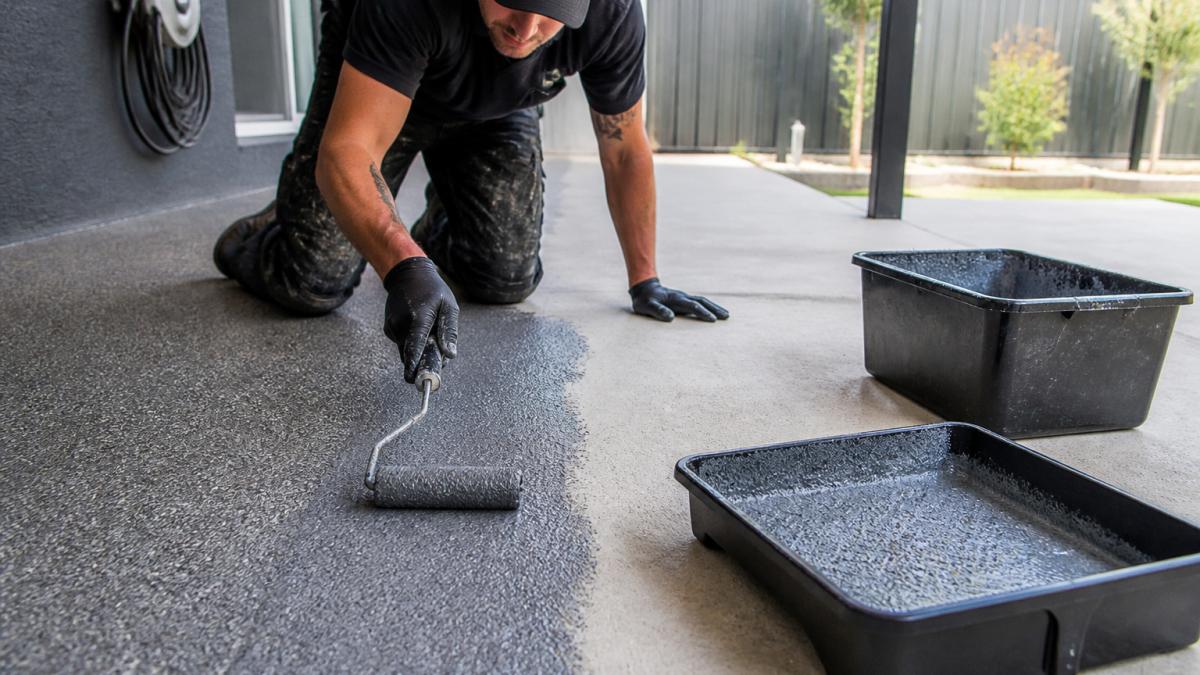
Work through these steps:
A common mistake is coating over a damp slab. Trapped moisture pushes the coating off within months.
Proper preparation is what makes a non-slip coating for outdoor concrete last. The slab must be clean, dry, sound and slightly profiled so the coating can key into the surface.
Preparation usually involves high-pressure cleaning, grinding or acid etching to open the surface, crack repair, and a moisture check. Only then does the primer, base coat and non-slip topcoat go down.
Non-slip coating durability depends on the system, the traffic and the weather it faces. A well-applied polyaspartic or epoxy system on a prepared slab can hold its grip and finish for years, while a thin acrylic coating in a busy area may need recoating far sooner.
What most guides miss is that grip fades before the coating fails visually. The surface can still look intact while the texture has worn smooth in the busiest walkways.
Durability is easier to judge when you know how these systems fail:
Expect a maintenance topcoat well before a full recoat. A common pattern is a texture refresh in the busiest zones every few years, with a full recoat at a longer interval that depends on the system and exposure.
The good news is that most failures are repairable without stripping the whole patio. Worn texture can be refreshed with a new non-slip topcoat over a sound base. Localised peeling can be cut back, prepared and patched.
A few habits stretch the interval between recoats: clean with a pH-neutral cleaner rather than harsh solvents, rinse off pool chemicals and fertiliser promptly, keep drainage clear so water does not pond, and avoid dragging heavy abrasive objects across the surface. Check the high-traffic zones by hand each season and book a maintenance topcoat at the first sign of smoothing, rather than waiting for the surface to look worn.
The investment is justified when the coating protects both people and the slab, and when the total cost over its service life is lower than the alternatives. Most guides stop at 'it depends on the quote'. That is not useful. What you actually need is a cost structure you can sanity-check a quote against, and a like-for-like comparison with the other ways to make a patio safer.
Professional pricing is usually quoted per square metre and is built from four components:
Because rates move with local labour and product supply, treat any per-square-metre figure as a starting point and ask for a written quote that itemises prep, system and topcoat separately. A quote that bundles everything into one number hides where the risk is.
The honest way to judge worth is to divide the installed cost by the years of service you realistically get before recoating. A cheap acrylic coating that needs recoating every few years can cost more per year than a polyaspartic system that lasts considerably longer, even though the sticker price is lower. Ask the applicator two questions: what recoating interval they expect for your traffic and sun exposure, and what a maintenance topcoat will cost compared with a full recoat.
Coating is not the only way to reduce patio slip risk, and it is not always the cheapest. Weigh it against:
Coating earns its place when you want grip and surface protection in one spend, across the whole patio, without replacing the slab. It is poor value when the slab is failing: money spent coating a cracked or poorly draining patio is money spent twice.
Set the spend against what a slip can cost: medical treatment, time off work, and for a rental or commercial patio, liability exposure. Add the cost of restoring a stained, unsealed slab, or resurfacing it in a few years because wear was never checked.
Spray Pave Pro offers spray-on concrete, high-pressure cleaning, epoxy flooring and professional sealing, backed by a 100% satisfaction guarantee and quick installation.
A non-slip patio coating is worth it when your patio is wet, shaded, sloped or busy, and when the slab is sound enough to take a coating. It is not worth it if the concrete is badly cracked, draining poorly, or holding rising damp, because the coating will fail regardless of quality. Fix the substrate first, then coat.
The most reliable way is to apply a dedicated non-slip patio coating. Start by cleaning the surface thoroughly, then apply a primer if needed. Choose a coating with a micro-texture or add a non-slip additive to the final coat. Roll it on evenly, maintaining a consistent gritty feel. For existing concrete, you can also etch the surface or use a concrete resurfacer before coating. Avoid oily or glossy sealers that reduce traction when wet. Regular cleaning with a stiff brush helps maintain grip over time.
The best anti-slip coating for patio slabs depends on the slab material and your climate. For concrete patios, a polyaspartic or epoxy coating with a non-slip additive offers strong durability and traction. Acrylic options provide a textured finish at a lower cost but may need more frequent recoating. For a clear finish that retains the slab's appearance, clear products are an option. Always check compatibility with your specific slab and ensure proper surface preparation.
Non-slip coating durability varies by product type and site conditions. High-quality polyaspartic coatings can last 5 to 10 years, while acrylic coatings may need recoating every 2 to 3 years. Factors like foot traffic, UV exposure, and regular cleaning affect lifespan. Proper surface preparation and application are critical; poorly applied coatings can fail within a year. To extend life, clean regularly and avoid harsh chemicals. Some manufacturers offer warranties, so check the terms before buying.
A textured non-slip surface can trap dirt more than a smooth finish, but it is not difficult to clean. Use a stiff broom or a low-pressure washer to remove debris. Avoid harsh acid cleaners that may degrade the coating. Most quality coatings resist mould and mildew, especially when they include a fungicide. Regular sweeping and occasional gentle washing keep the surface looking good and maintain slip resistance. If stains occur, mild detergent and a soft brush usually suffice.
Yes, you can apply non-slip coating to existing concrete, but surface preparation is essential. The concrete must be clean, dry, and free of cracks, oil, and previous sealers. Repair any cracks or spalls first. Etching or grinding may be needed to create a profile for adhesion. Apply a primer if recommended, then roll on the coating. If the concrete is severely damaged, resurfacing may be required before coating. Always follow the manufacturer's instructions for best results.
If your patio has become a slip risk, the fix starts with a proper assessment of the slab. Spray Pave Pro brings 23 years of experience, a 100% satisfaction guarantee and quick installation to every resurfacing and sealing job, with durable finishes built for wet outdoor areas. Get a free quote from Spray Pave Pro and turn a slippery patio into a safer, better-looking surface.

