
Last Updated: September 8, 2026
A concrete overlay system is a resurfacing layer applied directly over your existing pool deck to restore its appearance and function without tearing out the old slab. For Australian homeowners facing cracked, stained, or dated pool surrounds, the choice usually comes down to full replacement or an overlay, and the latter wins on nearly every practical measure.
The value case is straightforward. Replacement means demolition, disposal, new formwork, and weeks of curing before you can swim again. Resurfacing with a concrete overlay typically takes days rather than weeks, costs a fraction of the full job, and keeps the structural slab that is already sound. Standards Australia guidance on concrete repair and protection notes that repairing and protecting existing concrete is often the preferred engineering approach when the substrate retains its structural integrity.
Three concrete overlay systems dominate the Australian pool market: exposed aggregate, spray-on concrete, and stamped concrete. Each delivers a different balance of slip resistance, texture, and aesthetic, so the right pick depends on how your pool area is used.
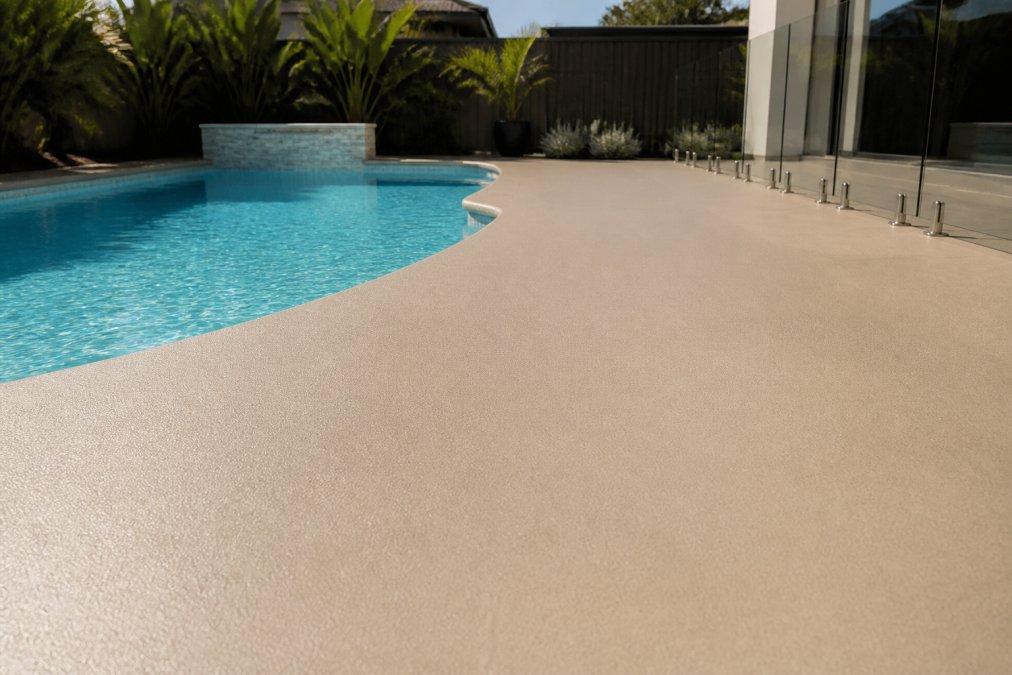
The finish matters less than the preparation beneath it. A quality overlay, regardless of type, will fail if the substrate has not been cleaned, repaired, and primed correctly.
Slip-resistant pool surround coatings are a safety feature first and an aesthetic choice second. Wet pool decks are among the most common sites for household slips, which is why the surface texture of your overlay is not a stylistic detail.
The key specification to look for is skid resistance, which measures how much grip a surface retains when wet. A coating with a coarser surface texture, such as a spray-on system mixed with anti-slip aggregate, will perform markedly better than a smooth sealed finish. Australian Building Codes Board guidance on slip resistance sets out the classification system used to rate flooring for wet areas, and your installer should be able to explain where your chosen finish sits within it.
A common mistake is assuming a glossy, sealed surface is the safest because it looks clean. In practice, the opposite is true around pools. A honed or textured finish that retains grip when wet, combined with a water-based sealant that does not create a slick film, is the safer specification for a family pool.
The decision between resurfacing and full replacement is rarely about aesthetics, it is a financial calculation with a 10-to-15-year horizon. The real value emerges when you model the total cost of ownership, including maintenance, resealing, and the opportunity cost of downtime.
A practical way to compare options is to project costs over a decade, the realistic service life of a quality overlay before it needs refreshing. The following model uses typical Australian trade pricing and assumes a 50 m² pool surround, a common size for Perth homes. Actual figures vary by region and site conditions, but the ratios hold.
| Cost Item | Full Replacement (Concrete) | Concrete Overlay |
|---|---|---|
| Initial installation | $8,000-$15,000 (demolition, disposal, new slab, curing) | $4,000-$8,000 (preparation, overlay, sealing) |
| Downtime | 2-4 weeks (demolition to full cure) | 2-5 days |
| Year 1-5 maintenance | $0-$500 (minor crack filling) | $0-$300 (occasional re-seal of high-wear areas) |
| Year 5-10 maintenance | $500-$2,000 (crack repairs, potential re-slab if subsidence occurs) | $800-$1,500 (one full re-seal at year 5-7) |
| Total 10-year cost | $8,500-$17,500 | $4,800-$9,800 |
Note: Figures are indicative ranges based on common trade quotes for Perth residential projects. Obtain itemised quotes for your specific site.
Replacement introduces a risk that overlays avoid: new concrete shrinks as it cures. In Australian climates with high summer temperatures, rapid curing can cause shrinkage cracking within the first 12 months. A well-installed overlay, by contrast, is applied in thin layers (typically 6-12 mm) that cure evenly and are less prone to shrinkage stress.
The overlay model collapses when the substrate is structurally compromised. Key indicators that replacement is unavoidable include:
For many Australian families, the pool is the centre of summer entertaining. A full replacement that takes three weeks in peak season means losing the pool for the entire school holidays. An overlay completed in three days means missing a single weekend.
For structurally sound slabs, a concrete overlay delivers a 50-60% lower 10-year cost compared to replacement, with significantly less disruption. The decision only flips to replacement when the substrate is moving or severely compromised.
Spray-on concrete pool deck cost varies widely because every job is measured and priced on its own conditions. It is more useful to understand the factors that drive the estimate.
The primary cost drivers are the surface area to be covered, the condition of the existing concrete, and the level of preparation required. A deck with deep cracks, old sealant build-up, or oil stains will need more substrate preparation, which adds labour time.
Australian Government business guidance on getting quotes for home improvements recommends obtaining multiple itemised quotes so you can compare preparation work, materials, and warranties directly. For current pricing on spray-on concrete, visit our website or request a free quote.
A professional concrete overlay installation follows a disciplined sequence, and skipping any step compromises the finished result. Expect this from a reputable installer:
The entire process is far less disruptive than replacement. There is no demolition, no heavy machinery, and no weeks of dust. Most pool surrounds are completed within days.
Australian pool surrounds endure some of the harshest conditions in the world, intense UV radiation, extreme heat, tropical downpours, and coastal salt spray. The longevity of your concrete overlay depends on matching the system, the sealer, and the maintenance schedule to your specific climate zone.
Tropical North (Darwin, Cairns, Broome)
Hot, Dry Interior (Perth, Adelaide, inland NSW)
Coastal and Humid Subtropical (Sydney, Brisbane, Gold Coast)
The environmental footprint of your pool surround matters for eco-conscious homeowners. Here is how to reduce it:
| Frequency | Task |
|---|---|
| Weekly | Sweep or blow debris. Rinse with a hose in coastal areas to remove salt. |
| Monthly | Spot-clean stains with a pH-neutral cleaner. Check for algae in shaded areas. |
| Quarterly | Inspect sealant for wear, especially in high-traffic paths and around pool edges. |
| Annually | Deep-clean with a diluted bleach solution. Apply a fresh coat of sealer to high-wear areas if needed. |
| Every 3-5 years | Full re-seal according to manufacturer recommendations and climate zone. |
Water-based sealers are the default recommendation for Australian pool surrounds. They are lower in VOCs, easier to apply, and less likely to yellow under UV. Solvent-based sealers offer higher gloss and chemical resistance but are more prone to UV degradation and require careful handling.
DIY installation of concrete overlay systems is tempting, particularly with the abundance of rental equipment and online tutorials, but the risks are substantial. The margin for error in substrate preparation and sealing is slim, and mistakes often void any product warranty.
The most common DIY failure is inadequate surface preparation. Overlay products require a clean, sound, and properly profiled substrate to bond. Miss this step, and the overlay will delaminate within months. Applying a sealant too thick, too thin, or in the wrong humidity can cause similar failures that are expensive to rectify.
Professional installers bring equipment and experience that most homeowners do not possess, from commercial-grade mixers to the knowledge of how temperature and humidity affect curing. When you consider the cost of a failed DIY attempt, which means paying for materials twice plus professional remediation, the value of getting it right the first time is clear.
Yes, in most cases a concrete overlay can be applied directly over existing concrete, provided the substrate is sound. Cracks wider than hairline fractures need to be repaired and filled first. The surface must be thoroughly cleaned, often via high-pressure washing, to remove oils, algae and loose material. A professional installer will assess the extent of the damage during a site visit. If the existing slab has major structural issues, such as significant sinking or heaving, replacement may be the more reliable option.
Concrete overlay systems improve safety by adding surface texture that increases traction when wet. Unlike smooth poured concrete or glazed tiles, finishes like exposed aggregate, spray-on concrete and stamped patterns create a skid-resistant profile. For extra peace of mind, a slip-resistant coating additive can be mixed into the sealer. These systems meet Australian slip-resistance standards for pool surrounds, reducing the risk of falls for children and adults. The texture remains effective for the life of the overlay, even with regular exposure to pool water and chlorine.
A professionally installed and properly sealed concrete overlay system typically lasts 10 to 15 years before it needs resealing or refreshing. The lifespan depends on several factors: the quality of the substrate preparation, the type of finish chosen, the sealer used, and how much direct sun and chlorine exposure the surface receives. Annual cleaning and resealing every 3 to 5 years will extend the life significantly.
A spray-on concrete overlay is applied as a thin coating, typically 5 to 15 mm thick, directly over your existing concrete slab. Traditional paving requires removing the old surface, levelling the ground, laying a base and then installing individual pavers with joints. The overlay creates a seamless, joint-free finish that eliminates weed growth and paver movement. Installation is far quicker, often completed in one to two days, and costs less because no demolition or removal is involved. The result is a durable, low-maintenance surface that looks like premium concrete without the premium price.
Concrete pool surrounds in harsh Australian climates need regular rinsing with fresh water to remove chlorine residue, leaf litter and dirt that can stain the surface. A soft-bristle broom or a pressure washer on a low setting works well for weekly cleaning. Avoid harsh acidic cleaners, which can break down the sealer. Reseal the surface every 3 to 5 years to maintain its water resistance and colour. In areas with intense UV exposure, choose a UV-stable sealer to prevent yellowing. These simple habits keep the overlay looking new for over a decade.
The best option for pool surrounds depends on your priorities. Exposed aggregate offers excellent slip resistance and a textured, natural look. Spray-on concrete provides a smooth, seamless finish that is comfortable underfoot and easy to clean. Stamped concrete mimics the appearance of stone or tiles at a lower cost. For safety, any finish should include a slip-resistant additive. Consider your climate, how much maintenance you are willing to do, and your budget. A professional consultation can help you match the right system to your pool area and usage patterns.
Choosing the right concrete overlay for your pool surrounds is about balancing slip resistance, durability, and aesthetic appeal against your budget and climate. The team at Spray Pave Pro has spent over 23 years helping Perth homeowners transform their outdoor living areas with durable, low-maintenance finishes that enhance curb appeal and safety. Get started with Spray Pave Pro and request your free quote today to bring your pool surrounds back to life.
