
Last Updated: October 10, 2026
Spray-on concrete slippery surfaces are a real safety concern, especially in wet conditions. The problem comes down to two main factors: surface smoothness and the type of sealer used.
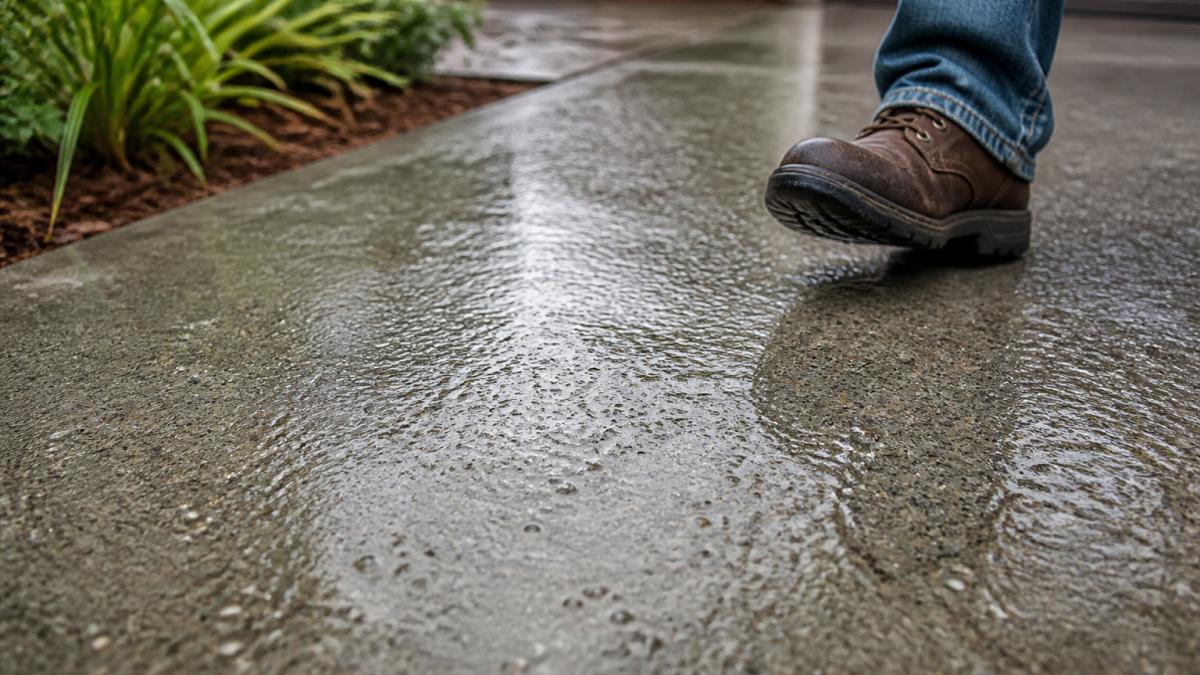
The smoother the concrete surface, the less grip your feet have when it's wet. Water forms a film between your shoe and the concrete. This film reduces friction.
High-gloss sealers make this problem worse. They're designed to give concrete a shiny, attractive look. But that glossy finish is essentially a smooth, water-resistant coating.
At Spray Pave Pro, we've worked with homeowners who've experienced this issue firsthand.
A smooth concrete surface is the first reason spray-on coatings become slippery when wet. Concrete naturally has tiny pores and texture.
Water doesn't absorb into smooth surfaces. Instead, it pools on top. Your shoe makes contact with water, not concrete. Water is slippery. Concrete with texture grips your shoe better because the rough surface breaks up that water film.
The smoother your concrete was before sealing, the more slippery it will be after. This is why freshly polished or stained concrete can be particularly hazardous when wet.
High-gloss sealers are the main culprit behind slippery spray-on concrete. They create a shiny, reflective finish that looks beautiful. But that shine comes from a smooth, water-resistant surface.
Glossy finishes shed water instead of letting it soak in. Water sits on top in beads and puddles. Your shoe slides on the water layer, not the concrete underneath. This is especially dangerous on driveways, pool areas, and other places where water exposure is constant.
A glossy sealer can make even textured concrete slippery when wet. The sealer fills the texture and creates that smooth, reflective surface.
Sealing a driveway absolutely can make it slippery, but it depends on the type of sealer you choose. Not all sealers create the same level of slip hazard. The finish matters more than the sealing itself.
The difference between glossy and matte finishes is dramatic when it comes to slip resistance. Glossy sealers look stunning but sacrifice safety. Matte sealers maintain better traction.
Matte finishes don't shed water the way glossy ones do. They allow water to spread across the surface rather than bead up. This gives your shoe more contact with the concrete texture underneath.
If you're sealing your driveway, choose a matte or satin finish over high-gloss. The curb appeal difference is minimal, but the safety improvement is significant.
Pool surrounds are the highest-risk areas for slip hazards. These spaces stay wet constantly. A glossy sealer around a pool is genuinely dangerous.
Water never dries on pool decking. Swimmers step from wet pool water onto wet concrete. Add a glossy sealer to that scenario and you've created a serious slip hazard. Children, elderly people, and anyone moving quickly are at real risk of falls.
For pool areas, anti-slip coatings are essential, not optional. We recommend skipping the glossy finish entirely in these spaces. A textured, non-slip coating is the only safe choice.
Making spray-on concrete less slippery involves three steps: test the current surface, prepare the concrete properly, and apply the right sealer with consistent technique. Each step matters.
You can test how slippery your concrete is without professional equipment. Wet the surface and try walking on it in socks or smooth-soled shoes. If you slide easily, you have a slip hazard.
A more reliable test uses a simple object. Drop a piece of chalk or a small rubber ball on the wet surface. If it slides easily, the surface is too slippery. If it stops quickly, you have reasonable traction.
These basic tests tell you whether you need to address the problem. If you're concerned about safety, test before and after any sealing work.
Preparation determines how well any sealer will perform. Start with a clean surface. High-pressure clean your concrete to remove dirt, algae, and old sealer residue. A clean surface allows the new sealer to bond properly.
Let the concrete dry completely before sealing. Moisture trapped under the sealer causes adhesion problems and reduces effectiveness. In Perth's climate, allow at least 24 hours of dry weather after cleaning.
Repair any cracks or damage before sealing. Cracks let water underneath the sealer, which causes peeling and reduces slip resistance.
Uneven sealer application creates uneven slip resistance. Some areas will be slippery, others less so. Apply sealer in thin, even coats rather than one thick coat.
Spray application works best for even coverage. Use overlapping passes to ensure no missed spots. Let each coat dry fully before applying the next. Most spray-on sealers need two coats for durability.
Pay extra attention to high-traffic areas. These spots wear faster and lose slip resistance sooner. A slightly thicker coat in these areas extends the life of your sealer.
Not all spray-on concrete coatings perform the same way when wet. The type of coating, its finish, and its formulation all affect slip resistance. Understanding these differences helps you choose a product that balances safety, durability, and appearance.
Acrylic sealers are the most common spray-on option for residential concrete. They form a thin film on the surface and are available in glossy, satin, and matte finishes.
Glossy acrylic: Creates a shiny, attractive finish but offers poor wet slip resistance. Water beads on the surface, and your shoe slides on the water film rather than gripping concrete.
Matte and satin acrylic: Provide better traction than glossy finishes because they don't shed water as aggressively. Water spreads across the surface rather than pooling, giving your shoe more contact with the concrete texture.
Polyurethane and epoxy coatings are thicker and more durable than acrylics. They bond chemically to concrete rather than sitting on top, making them more resistant to peeling.
Polyurethane: Available in matte, satin, and glossy finishes. Polyurethane is more water-resistant than acrylic and lasts 3-5 years.
Epoxy: Forms a hard, plastic-like coating that is highly water-resistant and durable (5-10 years).
Both polyurethane and epoxy require careful surface preparation and are best applied by professionals. They are less forgiving than acrylic if application is uneven.
Penetrating sealers soak into concrete rather than forming a surface film. They offer minimal slip hazard because they don't create a glossy or smooth layer.
Penetrating sealers protect concrete from water and staining but don't change the surface texture or appearance significantly. They're ideal if you want water protection without altering how the concrete looks or feels. However, they offer less durability than film-forming sealers and typically last 1-2 years.
Penetrating sealers are a good choice for textured or stamped concrete where you want to preserve the original appearance while adding water resistance.
Textured coatings are specifically designed for slip resistance. They contain aggregate particles (silica sand, glass beads, or ceramic) mixed into the sealer.
Fine-grit textured coatings: Use small aggregate particles for a subtle texture. They provide better traction than smooth sealers while maintaining a more refined appearance.
Coarse-grit anti-slip coatings: Use larger aggregate particles for maximum grip. They're essential for pool surrounds, commercial kitchens, and other high-risk wet areas.
Textured coatings cost 20-40% more than smooth sealers but provide superior safety. They also require more frequent cleaning because dirt and algae settle into the texture.
For a residential driveway with moderate traffic and occasional water exposure, a matte or satin acrylic sealer offers a good balance of cost, appearance, and safety. For a pool surround or commercial space, a textured anti-slip coating is essential.
If you're unsure which coating suits your needs, consider the level of water exposure, foot traffic, and how important appearance is relative to safety. High-risk wet areas should always prioritize slip resistance over aesthetics.
Anti-slip additives can be mixed into standard sealers to improve traction. These additives contain grit or aggregate particles that create texture on the surface.
Grit additives are small particles mixed into the sealer. They sit on the surface and create texture. Finer grit creates a subtle texture that looks better but provides less grip.
Aggregate options include glass beads, silica sand, and ceramic particles. Each type offers different looks and performance levels. Glass beads create a sparkly appearance. Silica sand is more subtle. Ceramic particles offer maximum durability.
The choice depends on your priorities. If appearance matters most, choose fine grit or glass beads. If safety is paramount, choose coarser grit or ceramic particles.
Anti-slip additives work by breaking up the smooth surface. Instead of your shoe sliding on a glossy layer, it grips the grit particles. This dramatically improves slip resistance.
Additives also help water drain faster. Instead of pooling on a smooth surface, water flows around the grit particles. This further reduces slip hazard.
The improvement is immediate and significant. A glossy sealer with anti-slip additive performs far better than the same sealer without it.
Anti-slip additives wear down over time. High-traffic areas lose texture faster. You'll need to reapply sealer with additives every 2-3 years in heavily used areas.
Regular cleaning helps extend the life of anti-slip coatings. Dirt and algae can fill in the texture and reduce grip. High-pressure cleaning removes these contaminants and restores traction.
When reapplying, use the same grit size and type. Mixing different additives creates inconsistent texture and appearance.
If your spray-on concrete is already slippery, you have options. You don't need to strip everything and start over. Several fixes can restore safety and appearance.
Reapplying sealer is the simplest fix for a slippery surface. Clean the existing sealer thoroughly first. High-pressure cleaning removes algae and dirt that reduce adhesion.
Let the surface dry completely. Apply a new sealer coat with anti-slip additives. This adds texture and improves grip without removing the old sealer.
Reapplication works best if the existing sealer is still bonded well. If the old sealer is peeling or flaking, remove it first before applying new sealer.
Sometimes a slippery surface just needs cleaning. Dirt and algae reduce grip even if the sealer is sound. High-pressure cleaning can restore traction significantly.
Use a pressure washer with 2000-3000 PSI for concrete. Too much pressure damages the sealer. Too little won't remove algae and buildup.
After cleaning, let the surface dry for 24 hours before using it. Wet concrete is always slippery, even after cleaning. Once dry, you'll notice the improvement immediately.
Slippery spray-on concrete is a common problem, but it's preventable and fixable. At Spray Pave Pro, we specialise in spray-on concrete solutions that enhance your property's safety and appearance. Get a free quote from Spray Pave Pro today and transform your concrete surfaces into safe, beautiful spaces.
Yes, spray-on concrete can become slippery when wet, especially if it has a high-gloss sealer or smooth finish. The glossy coating reduces friction between your shoe and the surface, creating a slip hazard. Matte or satin finishes, and those treated with anti-slip additives, offer better traction in wet conditions.
Sealing can increase slipperiness if you choose a high-gloss sealer. Glossy finishes create a smooth, water-resistant layer that reduces grip. To avoid this, select matte or satin-finish sealers, or use products containing anti-slip additives like grit or aggregate that improve traction on wet surfaces.
Grit and aggregate additives are the most effective for improving slip resistance. These materials are mixed into the sealer before application, creating a textured surface that maintains traction even when wet. The size and type of grit matter: finer grit suits aesthetic areas, while coarser aggregate works better for high-traffic or pool-area applications where safety is paramount.
Test traction by walking on the wet surface in clean shoes or socks to feel the grip. A simple test: spray the area with water and try to slide your shoe across it. If it slides easily, the surface lacks adequate slip resistance.
