
Last Updated: September 1, 2026
A slippery pool deck isn't just uncomfortable, it's a liability. Water, chlorine, and constant foot traffic create conditions where standard concrete becomes genuinely dangerous, especially for children and older adults. The solution lies in non-slip pool deck coating systems that bond permanently to existing surfaces, creating textured finishes that maintain grip even when wet.
The coating market has evolved significantly. Rather than settling for basic paint-over solutions that peel within months, homeowners and facility managers now have access to polymer-modified systems, epoxy resins, and rubberised coatings engineered specifically for wet environments. Each category addresses different priorities: durability, barefoot comfort, chemical resistance, and maintenance demands.
At Spray Pave Pro, we've worked with dozens of pool surrounds across Perth, and the choice of coating system fundamentally determines how long your investment lasts and how safe the surface actually performs. Below, we've mapped out the leading non-slip pool deck coating options available, what separates them, and how to match the right system to your specific needs.
| Coating Type | Best For | Slip Rating | Durability | Barefoot Feel | Maintenance |
|---|---|---|---|---|---|
| Water-Based Acrylic | Budget-conscious residential | P4-P5 | 3-5 years | Moderate texture | Low |
| Epoxy/Solventless | High-traffic commercial | P5 | 7-10 years | Firmer texture | Moderate |
| Polymer-Modified Cement | Premium residential/commercial | P5 | 8-12 years | Smooth-textured | Low |
| Chlorinated Rubber | Pool resurfacing | P4 | 3-4 years | Moderate texture | Low |
| Seamless Rubber | Barefoot-priority areas | P5 | 10+ years | Soft, cushioned | Low |
Water-based systems dominate the residential market because they're straightforward to apply, eco-friendly, and deliver solid slip resistance without excessive cost (the EPA). These coatings cure to a rubberised, textured finish that bridges minor cracks and flexes with concrete movement, critical in climates with temperature fluctuations.
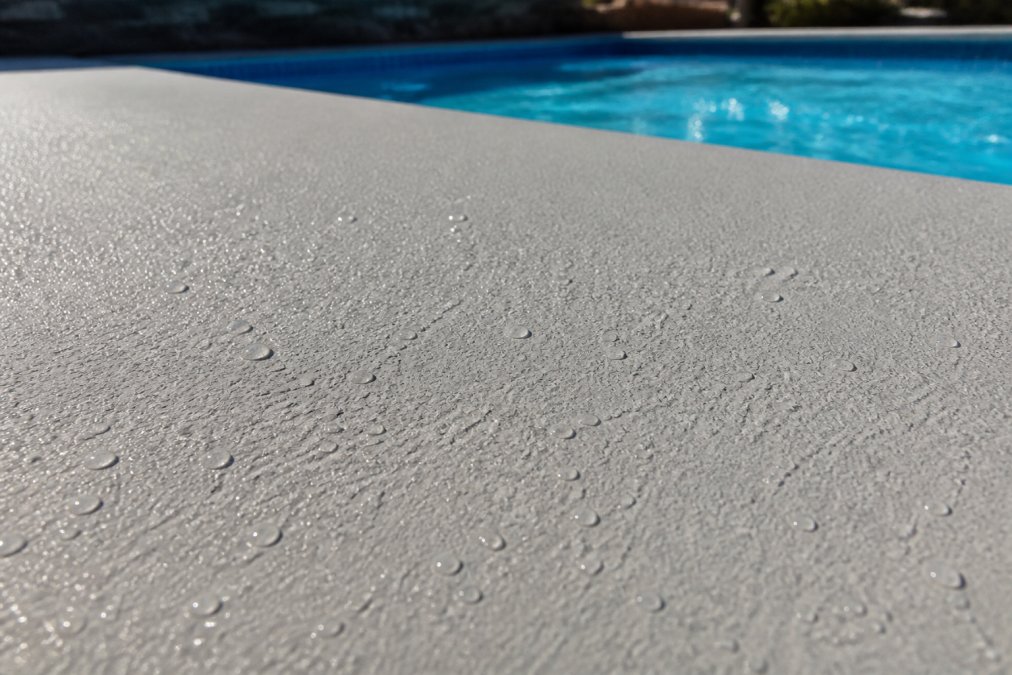
LUXAPOOL delivers a P5-rated non-slip finish in a water-based, rubberised formula. The system includes 15 designer colours, many matching COLORBOND® palette options, which matters if you're coordinating with fencing or architectural features. Application works on concrete, pebblecrete, masonry, and tile, essentially any porous substrate.
The real advantage here is accessibility. DIY applicators can handle it with a roller and primer, though professional application guarantees uniform texture and optimal adhesion. The coating flexes enough to bridge hairline cracks without cracking itself, and cleanup is water-based (no solvent disposal headaches).
The catch: you need primer on unpainted surfaces for lasting adhesion, and batch-to-batch colour variation is real. Order extra to ensure consistency across the full deck.
Resene's offering is a high-quality acrylic loaded with graded silicas, the tiny particles embedded in the film create the actual traction. Starting from around $70.90 per litre, it's competitively priced for a premium acrylic. The system bonds to concrete and bitumen, making it versatile for mixed-surface pool areas.
What separates this from budget alternatives is durability. Resene's formulation resists UV degradation and weathering better than single-coat systems, though you'll likely need two coats for optimal coverage. The colour range is broad, and application is straightforward, roller or spray application both work.
The limitation: silica-based systems require multiple coats to achieve full slip resistance, which increases labour and material cost.
Tredgrip positions itself as the flexible solution. Its rubberised finish actively bridges small cracks without damage, important if your deck shows early stress fractures. Water-based, low-sheen, and suitable for timber, concrete, fibreglass, and steel, it's genuinely versatile.
The texture is smoother underfoot than broadcast-aggregate systems, which appeals to barefoot users who find aggressive grit uncomfortable. It's durable and weather-resistant, holding up well in variable climates.
The trade-off: Tredgrip is designed for foot traffic and light commercial use. It's not rated for vehicle loads, so if your pool area includes a driveway or parking zone, you'll need a different solution for those surfaces.
Epoxy coatings represent a step up in durability and chemical resistance. These solventless systems cure harder and thicker than water-based alternatives, resisting oils, salts, chlorine, and abrasion. They're the default choice for commercial pools, aquatic centres, and high-traffic hospitality venues where the coating must outlast heavy use.
Hychem's SupaFloor T is a roller-applied, thixotropic epoxy that achieves P4-P5 slip ratings when modified with broadcast aggregates. The system is solventless, so application produces minimal VOC emissions, important in enclosed or semi-enclosed pool areas. It's formulated to resist mineral acids, caustic solutions, and salt, the exact chemical load a chlorinated pool creates.
The stippled finish can be adjusted by aggregate size and broadcast density, giving you control over texture and barefoot comfort. Adhesion is exceptional on properly prepared concrete, and the cured film resists both abrasion and impact, it won't chip or flake under heavy poolside activity.
Application requires surface preparation discipline. Concrete must be clean, dry, and properly profiled. Moisture barriers are essential in areas with high water table or capillary rise. If substrate prep is rushed, adhesion fails catastrophically.
Nutech's single-pack, solvent-based system is specifically engineered for pools with existing chlorinated rubber coatings. It provides performance comparable to two-pack epoxy systems while being simpler to apply, no mixing required, just open and apply.
The formulation resists oils, salts, fats, and grease, plus bacteria and mould growth. It's self-priming on properly prepared chlorinated rubber, which saves a prep step. The system delivers good adhesion and durability, typically lasting 3-4 years on actively used pool surfaces.
The limitation is significant: it's not suitable for epoxy-coated pools or marblesheen finishes. If you're overcoating an existing system, verification of the substrate is non-negotiable. Also, lifespan is shorter than epoxy alternatives, you're looking at recoating cycles every 3-4 years rather than 7-10.
When standard coatings aren't enough, when you need barefoot comfort, extreme durability, or a completely fresh surface, specialist resurfacing systems offer transformative results. These systems don't just coat; they rebuild the top layer of the deck.
Elite Crete manufactures polymer-modified cement coatings that permanently resurface pool decks. Unlike paint-over systems, these create a new structural layer that's resistant to pool chemicals, stains, and saltwater. The finish is slip-resistant even when saturated, and UV-stable for outdoor exposure.
The real selling point is customisation. You can specify patterns, colours, and finishes, everything from smooth to heavily textured. The coating is stronger than standard concrete, which matters in high-traffic areas. It resists freeze-thaw cycles, so it performs well across varied climates.
The drawback: Elite Crete systems demand professional application. This isn't a DIY product. Pricing requires consultation, but expect premium costs reflecting the durability and customisation involved.
Rubber Stone creates seamless resurfacing using premium GEZOLAN® EPDM rubber. The system covers deteriorated concrete, asphalt, wood, and other substrates, creating a unified, non-slip surface that's genuinely soft underfoot, important for barefoot pool areas where comfort matters.
The porous nature of the rubber means water drains rather than puddling, eliminating slip hazards from standing water. It's flexible and durable, resisting cracking even in temperature extremes. The surface is cooler underfoot than concrete or asphalt, which is a genuine comfort advantage in hot climates.
Application requires professional installation, this is specialist work. Pricing is quote-based, reflecting the custom nature of the job. Durability easily exceeds 10 years with minimal maintenance.
Stellmann's systems are independently tested by CSIRO, achieving verified P4-P5 slip ratings. The coatings form a durable bond to existing surfaces, tile, concrete, natural stone, vinyl, metal, glass, and timber. Both clear and coloured options are available.
The certification is the differentiator. Rather than claiming slip resistance, Stellmann provides third-party verification. The coatings are UV-stable and weatherproof, suitable for indoor and outdoor use. Application is fast and non-invasive, which matters for facilities that can't tolerate downtime.
The limitation: professional assessment is required before pricing. DIY kits are available for smaller projects, but commercial applications demand consultation.
Australia's AS 4586 standard defines slip resistance ratings for pedestrian surfaces (standards.org.au). The rating scale runs from P1 (low slip resistance) to P5 (high slip resistance), with P4-P5 required for wet areas like pool surrounds. Understanding this standard is essential when selecting a coating system.
A P5 rating means the surface maintains grip even when saturated with water and detergent, the harshest realistic condition (standards.org.au). Manufacturers must test coatings under controlled conditions to claim a rating. Not all "non-slip" products actually meet AS 4586 standards, so verification matters.
The standard also addresses barefoot safety. Texture levels matter, too aggressive and barefoot users experience discomfort; too smooth and slip risk increases. Compliant systems balance texture for grip with comfort for prolonged barefoot contact.
When selecting a coating, ask for AS 4586 certification or independent test results. Stellmann and Hychem SupaFloor T both conform to these guidelines. Budget systems may claim non-slip properties without formal verification, a red flag for commercial or high-liability applications.
Maintenance determines how long your coating investment actually lasts. Most systems fail prematurely not from material defects but from neglect or incorrect cleaning.
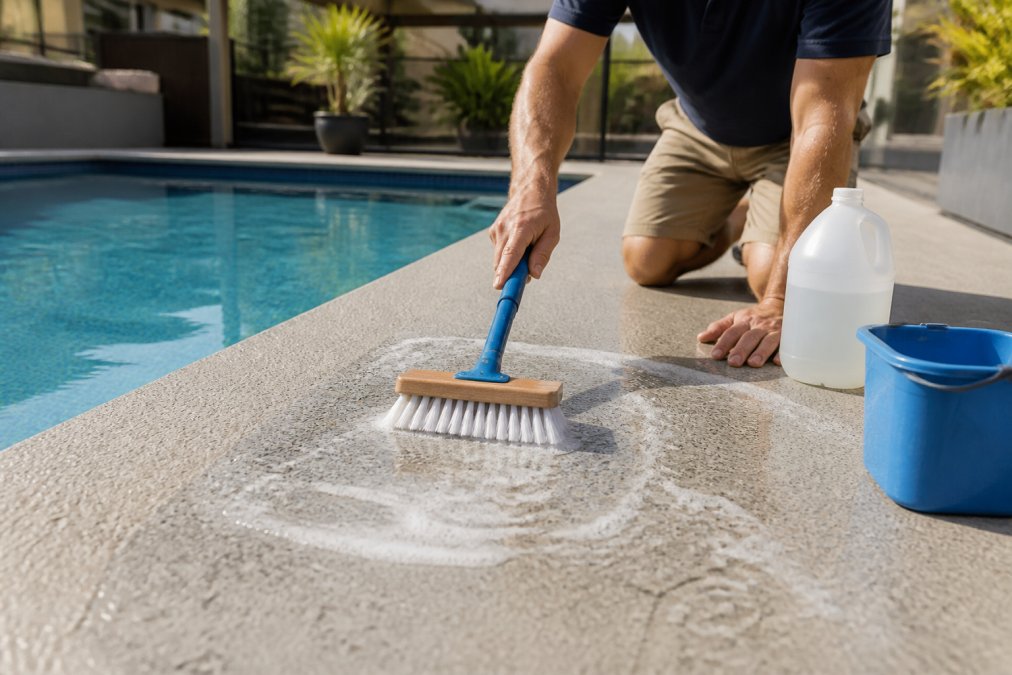
Regular cleaning prevents chemical buildup. Weekly sweeping removes debris. Monthly washing with mild detergent and soft-bristled brushes removes algae and mineral deposits. Avoid high-pressure cleaning on acrylic systems, the force can damage the texture. Epoxy and rubber systems tolerate higher pressure, but even these benefit from gentler treatment.
Chlorine and salt accelerate degradation. Rinse the deck after heavy chlorine treatment or saltwater splash. Mineral deposits from salt water create a slippery film that makes the non-slip texture ineffective. A quick rinse prevents this buildup.
Inspect for damage quarterly. Small cracks, peeling edges, or discoloured patches indicate early failure. Address these immediately, water penetration underneath the coating spreads damage rapidly. Most systems can be spot-repaired if caught early.
Recoating cycles vary by system. Water-based acrylics typically need refreshing every 3-5 years. Epoxy and polymer systems last 7-10 years. Rubber resurfacing exceeds 10 years. Plan recoating before the surface fails completely, applying new coating over degraded film produces poor adhesion.
Avoid chemical cleaners on certain systems. Check manufacturer guidance. Some coatings resist oils and grease solvents; others degrade under harsh chemicals. Stick to mild detergent and water for routine maintenance.
Cost varies dramatically based on system choice, deck size, substrate condition, and whether you hire professionals or attempt DIY application.
Water-based acrylic systems are the most affordable entry point. Material costs are modest, and application is accessible to competent DIYers. Expect to spend less on materials but potentially more on labour if hiring professionals, since the application is straightforward and doesn't command premium rates.
Epoxy and solventless systems cost more upfront but deliver longer intervals between recoating. Professional application is strongly recommended, substrate preparation is critical, and mistakes are expensive. Material costs are higher, and labour reflects the skill required.
Specialist resurfacing systems (polymer-modified cement, seamless rubber) represent the premium tier. These deliver durability and aesthetic results that justify the investment, but they're not budget options. Pricing is always quote-based because each project is custom.
Substrate condition drives cost. Sound concrete requires cleaning and priming. Damaged concrete, deep cracks, spalling, or structural issues, may require repair before coating. Addressing these problems upfront prevents premature coating failure.
At Spray Pave Pro, we assess each deck individually. Our team has 23 years of experience identifying which systems deliver real value for your specific situation. We provide a free quote that includes substrate assessment, system recommendation, and timeline. The goal is matching the right coating to your budget and durability expectations, not overselling a premium system when a solid mid-range option serves your needs.
DIY vs. Professional Application
DIY application works for water-based acrylics on small decks (under 30 square metres) with sound substrate. You save labour costs but invest time and risk uneven coverage or poor adhesion. If the job goes wrong, professional remediation costs more than hiring professionals from the start.
Professional application is essential for epoxy, solventless systems, and any deck with substrate issues. The expertise ensures proper preparation, correct mixing ratios, optimal curing conditions, and warranty coverage. For most homeowners, professional installation delivers better long-term value.
Selecting a non-slip pool deck coating is fundamentally about matching durability to your use case and budget. Water-based acrylics deliver excellent value for residential decks with moderate traffic. Epoxy systems suit commercial venues and high-traffic hospitality spaces. Specialist resurfacing transforms deteriorated decks into premium surfaces.
At Spray Pave Pro, we've transformed hundreds of Perth pool surrounds with coatings tailored to climate, usage patterns, and aesthetic goals. Our team provides professional assessment, system recommendations, and expert installation with a 100% satisfaction guarantee. Get a free quote today and discover how the right coating system can enhance both safety and curb appeal.
The best non-slip pool deck coating depends on your climate, budget, and aesthetic preferences. Water-based acrylic systems like LUXAPOOL and Resene Non-Skid offer affordability and ease of application. Epoxy coatings such as Hychem SupaFloor T provide superior durability and chemical resistance. For maximum slip resistance verified against AS 4586 standards, Stellmann Anti-Slip Coatings offer CSIRO-tested ratings. Rubber systems like Rubber Stone Australia excel in barefoot-friendly comfort and flexibility. Professional spray-on concrete solutions from specialists like Spray Pave Pro deliver comprehensive resurfacing for severely deteriorated decks.
Reapplication frequency varies by coating type and climate exposure. Water-based acrylic coatings typically last 2-4 years before requiring recoating. Epoxy systems can last 5-7 years with proper maintenance. Chlorinated rubber coatings generally last up to three years. UV-stable systems like Stellmann coatings and Rubber Stone products extend durability in high-sun climates. Regular cleaning and inspection help identify wear early. Factors affecting lifespan include foot traffic intensity, chemical exposure, freeze-thaw cycles, and surface preparation quality before initial application.
Transform a slippery pool deck by applying a slip-resistant coating system. Water-based rubberised coatings like Tredgrip bridge minor cracks while providing textured grip. Epoxy systems with broadcast aggregates create durable traction. For immediate results on existing surfaces, Stellmann Anti-Slip Coatings form a clear, durable bond without invasive preparation. Rubber resurfacing completely replaces the surface with a non-slip, porous material. Ensure proper substrate preparation, cleaning and drying, before application. Professional installation from experienced contractors like Spray Pave Pro guarantees optimal adhesion and slip resistance that meets AS 4586 safety standards.
Spray-on concrete pool deck systems like those offered by Spray Pave Pro provide complete resurfacing rather than a thin coating layer. They repair deep cracks, uneven surfaces, and severe deterioration while creating an integrated, durable new surface. Traditional coatings sit atop existing concrete and depend on substrate quality. Spray-on systems cure to create a monolithic, long-lasting finish with superior adhesion. They accommodate design customisation, colour options, and texture levels for barefoot comfort. Although initial investment is higher than paint-based coatings, the longevity and structural restoration justify the cost for severely compromised decks.
This article was written using GrandRanker
