
Last Updated: August 19, 2026
The cost of concrete driveway restoration varies significantly based on several interconnected factors. Understanding what drives pricing helps you make an informed decision and avoid unexpected expenses.
The condition of your existing concrete is the primary cost driver. A driveway with minor surface staining requires less intervention than one with deep cracks, structural damage, or extensive spalling. The depth and pattern of cracks determine whether simple crack injection will suffice or if comprehensive resurfacing becomes necessary.
Site assessment is critical before any restoration work begins. Professionals evaluate the concrete slab's thickness, underlying sub-base condition, moisture barriers, and drainage issues. A site with poor drainage or moisture problems requires additional remediation work that increases overall project costs. Surface preparation intensity also matters, pressure cleaning removes surface contaminants, but acid etching may be necessary for proper adhesion of new coatings or overlays.
The size of your driveway measured in square metres directly affects labour costs and material quantities. A 50-square-metre driveway costs substantially less to restore than a 150-square-metre one, all else being equal.
Geographic and seasonal factors influence pricing. Access to your property, weather conditions during installation, and local labour availability all play roles. Projects requiring site preparation work, removal of landscaping obstacles, or difficult access points typically cost more.
Choosing between resurfacing your existing concrete and full replacement depends on the extent of damage, your budget, and long-term durability goals. Resurfacing typically costs less upfront but works only when the underlying concrete structure remains sound.
Resurfacing involves applying a new layer over existing concrete through spray-on concrete, epoxy coatings, or bonded overlays. This approach works when cracks are surface-level, the concrete slab hasn't shifted significantly, and the sub-base remains stable. The process begins with thorough pressure cleaning and surface preparation, followed by application of the resurfacing material. Most spray-on applications cure within 24-48 hours, allowing faster return to normal use.
Full replacement removes the old concrete entirely and pours a new slab. This approach becomes necessary when structural damage is severe, the concrete has settled unevenly, or moisture problems stem from failed sub-base construction. Replacement requires excavation, sub-base preparation, and new concrete installation, making it significantly more labour-intensive than resurfacing.
The decision hinges on damage assessment. Surface cracks, minor spalling, and staining favour resurfacing. Deep structural cracks, significant settling, or repeated failures indicate that full replacement offers better long-term value despite higher immediate costs.
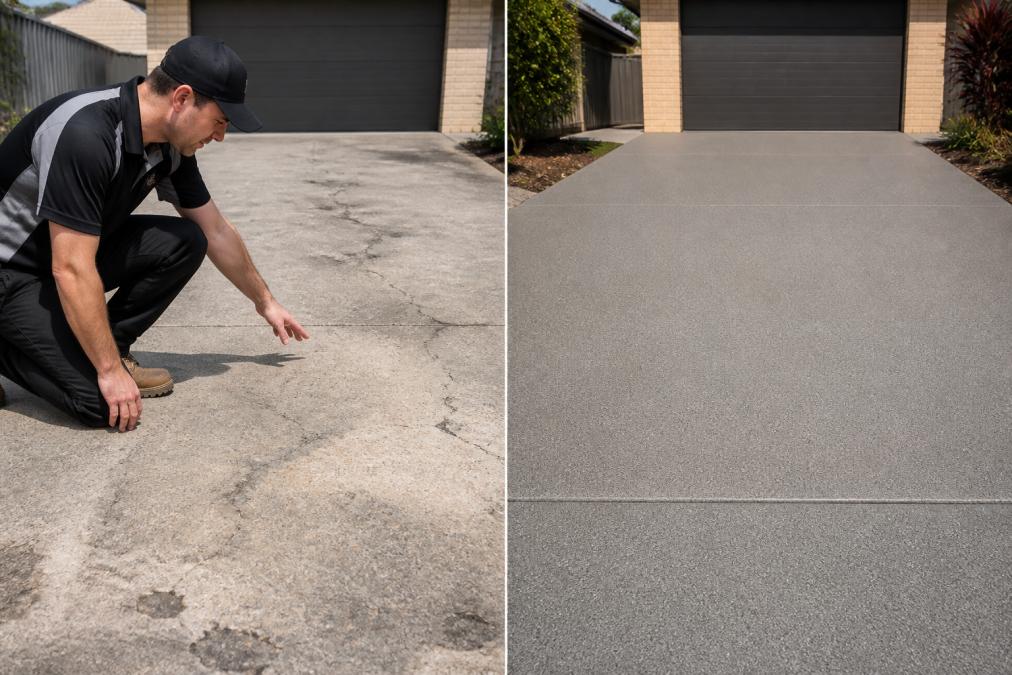
Resurfacing typically delivers faster project completion, most jobs finish within 1-3 days depending on driveway size. Replacement projects often require 5-7 days or longer when accounting for excavation, site preparation, and curing time.
A properly executed resurfacing can last 10-15 years with appropriate maintenance. Full replacement provides a fresh start with new concrete designed to last 25-30 years or longer. If you plan to stay in your home for decades, replacement may offer better value despite higher initial cost.
Spray-on concrete offers a fast, cost-effective resurfacing solution that transforms deteriorated driveways into durable, visually appealing surfaces. Understanding pricing per square metre helps you estimate total project costs for your specific driveway size.
Spray-on concrete applications vary in thickness and composition, affecting per-square-metre costs. Standard applications typically range from 10-25 millimetres thick, with thicker applications providing greater durability and better crack-bridging capability. The product formulation, whether using decorative aggregates, pigments, or specialized sealants, influences material costs per square metre.
Labour costs per square metre depend on surface preparation requirements and application complexity. Straightforward applications on relatively clean, flat surfaces cost less than projects requiring extensive crack repair, grinding, or acid etching beforehand. Decorative finishes like stencilled patterns or stamped textures require skilled application and cost more per square metre than standard coloured concrete.
Material quality significantly impacts pricing. Premium spray-on products with superior UV protection, enhanced slip resistance, and longer-term durability cost more per square metre than basic formulations. However, better materials often justify the investment through reduced maintenance and longer service life.
Additional factors affecting per-square-metre costs include site access difficulty, weather conditions during application, and whether multiple coats are required. Projects in challenging weather may require protective coverings or extended curing times, increasing overall expenses.
Most spray-on concrete installations cure within 24-48 hours, allowing normal driveway use relatively quickly.
Pressure cleaning and sealing represent essential maintenance steps that protect your concrete investment and extend driveway longevity. These services can be performed independently or as part of comprehensive restoration projects.
Pressure cleaning removes accumulated dirt, algae, oil stains, and weathered surface material that compromise appearance and adhesion of subsequent treatments. High-pressure cleaning equipment delivers water at 3,000-4,000 pounds per square inch, effectively cleaning concrete without damaging the surface when operated correctly. The process prepares concrete for sealant application by removing contaminants that would otherwise prevent proper adhesion.
Sealing creates a protective barrier against moisture penetration, UV damage, and surface staining. Quality sealants reduce water absorption, prevent concrete degradation from freeze-thaw cycles, and make routine cleaning easier. Sealant durability varies, some products last 1-2 years before requiring reapplication, while premium formulations protect for 3-5 years or longer.
The sealing process involves applying liquid sealant across the entire driveway surface, typically requiring 2-4 hours depending on driveway size. Most sealants cure within 24-48 hours, though foot traffic should be avoided during this period. Vehicle use typically resumes after 48 hours.
Maintenance schedules for sealed driveways typically involve annual or biennial resealing, depending on climate exposure and product quality. Driveways in harsh climates with significant UV exposure and moisture stress require more frequent resealing than those in milder conditions.
The combination of pressure cleaning and sealing costs less than full resurfacing but provides substantial protection benefits. This approach works well for driveways in good structural condition that primarily need aesthetic improvement and protective treatment.
Concrete finishes range from simple coloured applications to sophisticated decorative treatments, each offering different aesthetic appeal and cost structures. Your choice depends on desired appearance, budget constraints, and long-term maintenance preferences.
Coloured concrete adds visual interest through integral pigments mixed into the concrete or surface-applied coatings. This finish works particularly well for residential driveways seeking enhanced curb appeal and costs more than standard grey concrete but less than decorative treatments.
Stamped concrete creates texture patterns that mimic natural stone, brick, or tile surfaces. The stamping process involves pressing patterned mats into freshly applied concrete before it fully cures. This decorative finish offers significant visual impact and improves slip resistance. Stamped finishes cost more per square metre than basic coloured concrete due to specialised equipment and skilled labour.
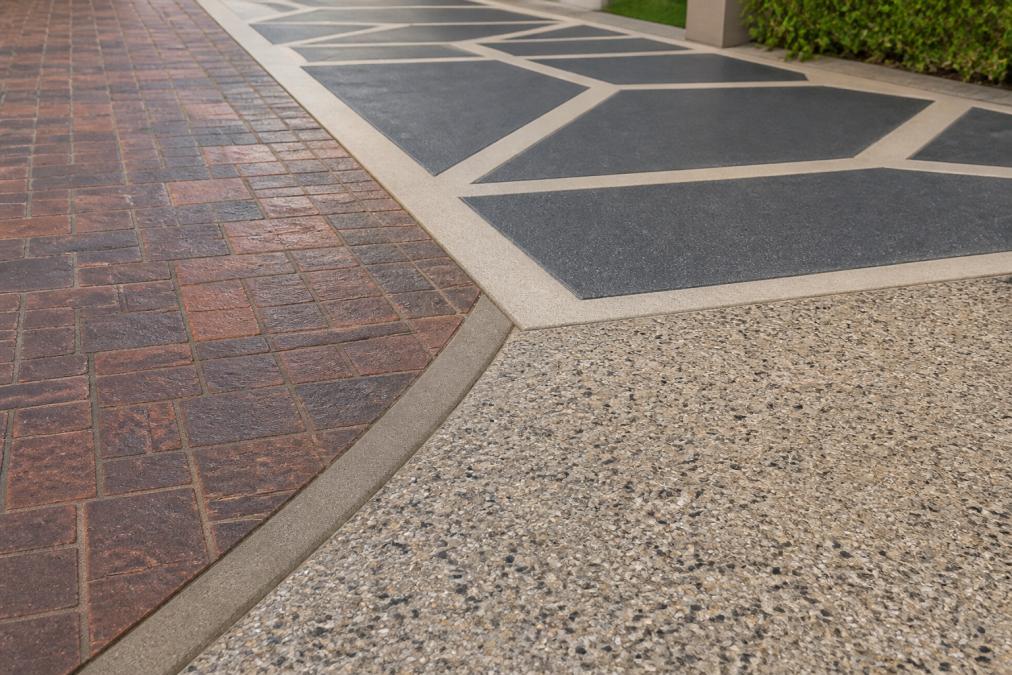
Stencilled concrete uses stencil templates to create decorative patterns or designs on concrete surfaces. This technique allows customisation ranging from geometric patterns to custom logos. Stencilled finishes typically cost less than complex stamped work, depending on pattern complexity.
Honed concrete involves grinding the surface to expose aggregate and create a smooth, refined appearance. This finish offers a modern aesthetic and improved slip resistance. Honed finishes require specialised grinding equipment and skilled operators, making them more expensive than basic applications.
Spray-on concrete provides a seamless, durable finish that bridges minor cracks and offers excellent adhesion to existing concrete. This versatile option accommodates various decorative finishes, making it popular for comprehensive restoration projects.
Epoxy coatings create a glossy, highly durable finish resistant to stains and chemical damage. Epoxy works particularly well for pool surrounds and high-moisture areas. Epoxy finishes cost more than standard applications but offer superior durability and aesthetic appeal.
The cost hierarchy generally follows: standard coloured concrete (lowest), honed concrete, stencilled finishes, stamped concrete, and epoxy coatings (highest). Your selection should balance aesthetic preferences with budget constraints and functional requirements.
Proper maintenance dramatically extends concrete driveway lifespan and preserves the investment made in restoration work. Regular care prevents premature deterioration and reduces the need for costly repairs.
Regular pressure cleaning removes accumulated dirt, algae, and organic growth that trap moisture against concrete surfaces. Schedule pressure cleaning annually or more frequently in humid climates. Avoid excessive pressure that damages surface sealants, 3,000 pounds per square inch represents a safe maximum.
Prompt crack repair prevents water penetration that leads to structural damage. Small cracks under 6 millimetres wide respond well to crack injection using polyurethane or epoxy sealants. Address cracks promptly rather than allowing them to expand.
Resealing schedules depend on climate exposure and product quality. Most sealed driveways benefit from resealing every 2-3 years in moderate climates or annually in harsh conditions with significant UV exposure and moisture stress.
Drainage management protects against moisture accumulation that causes freeze-thaw damage and structural failure. Ensure water drains away from your driveway rather than pooling on the surface. Address low spots where water collects.
Avoid harsh chemicals that damage concrete and sealants. De-icing salts used in winter climates accelerate concrete degradation. Where possible, use sand or non-salt de-icers. If salt application is necessary, rinse the driveway thoroughly when weather permits.
Minimise heavy loads on newly restored concrete. Avoid parking heavy vehicles or equipment on fresh applications until fully cured. Once cured, reasonable vehicle use poses no problems.
Inspect regularly for signs of deterioration including new cracks, spalling, or surface discolouration. Early detection allows prompt intervention before minor issues become expensive repairs.
Maintenance costs pale in comparison to restoration expenses. A modest annual maintenance investment extends driveway life by a decade or more.
A deteriorated concrete driveway compromises both curb appeal and property value. Whether your driveway shows minor surface wear or significant structural damage, professional restoration transforms the appearance and functionality of your outdoor space.
Spray Pave Pro has spent over 23 years delivering superior concrete resurfacing solutions across Perth. The team's expertise spans spray-on concrete applications, high-pressure cleaning, epoxy flooring, and professional sealing, each service designed to restore and protect your concrete investment. Their comprehensive approach addresses both cosmetic improvements and underlying structural concerns.
The restoration process begins with honest assessment. Spray Pave Pro's professionals evaluate your specific situation and recommend solutions matching your budget and long-term goals. Whether resurfacing suits your needs or full replacement offers better value, their guidance prioritises your interests.
Customer testimonials consistently highlight the professionalism and reliability of the Spray Pave Pro team. Rob noted the professional, quick service that made the entire process easy. Simon praised the team's commitment to ensuring every detail was handled correctly from start to finish. Amy Lee emphasised their trustworthy, professional approach to customer service. These experiences reflect the 100% satisfaction guarantee that stands behind every project.
The investment in professional restoration pays dividends through enhanced curb appeal, improved property value, and reduced maintenance requirements. A properly restored driveway using quality materials and expert installation provides decades of reliable service.
Contact Spray Pave Pro for a free quote and professional assessment of your driveway's restoration needs. Their team will evaluate your specific situation, explain available options, and provide transparent pricing for the solution that best matches your requirements and budget.
Transforming a deteriorated driveway requires expertise, quality materials, and professional execution. Spray Pave Pro delivers all three through comprehensive restoration services backed by 23 years of proven experience. Whether you're enhancing curb appeal, preparing to sell, or protecting a commercial property, their spray-on concrete, high-pressure cleaning, and sealing solutions restore both appearance and durability. Get a free quote today and discover how professional restoration can transform your concrete surfaces.
Concrete driveway restoration cost depends on the size of your driveway, the extent of damage, surface preparation requirements, and the finish you choose. Resurfacing typically costs less than full replacement, whilst decorative finishes command higher prices than basic sealant applications. For an accurate quote tailored to your specific driveway condition, contact a professional to assess your site.
Pressure cleaning combined with sealant application is usually the most cost-effective option for driveways with surface staining or minor wear. If structural damage exists, spray-on resurfacing offers better value than full concrete replacement whilst delivering a fresh, durable finish. The cheapest approach depends on your driveway's current condition, a professional site assessment determines the best option.
Yes. A restored driveway significantly improves curb appeal and can increase perceived property value. Buyers notice cracked or stained concrete immediately, whilst a clean, well-maintained surface creates a positive first impression. Resurfacing is often more cost-effective than replacement and delivers measurable returns when selling.
Quality resurfacing with proper sealant protection typically lasts 5-10 years or longer, depending on climate exposure, maintenance, and traffic. Local weather conditions, UV exposure, and moisture penetration affect longevity. Regular maintenance, pressure cleaning annually and resealing every 2-3 years, extends the lifespan significantly.
This article was written using GrandRanker
