
Last Updated: October 25, 2026
Quick Summary
Sealing your alfresco concrete protects the slab from water damage, stains and surface breakdown, and it is far cheaper than replacement. The slab is full of tiny pores that soak up water, so sealing is structural protection rather than a cosmetic extra.
Sealing your alfresco concrete is the single most effective way to protect the slab from water damage, stains, and surface breakdown.
Concrete looks solid. It isn't. The slab is full of tiny pores that soak up water like a sponge. Once moisture gets in, it has to get out.
Here's what most guides get wrong: they treat sealing as cosmetic. It's not.
The benefits of sealing concrete around the home go well beyond looks. You get:
Alfresco areas cop more than most slabs. They sit under cover but still get driven rain, shade that holds damp, and constant foot traffic.
Learning how to seal outdoor concrete comes down to four things: clean it, let it dry, apply thin coats, and protect it while it cures. Skip any step and the sealer will peel, haze, or fail early.
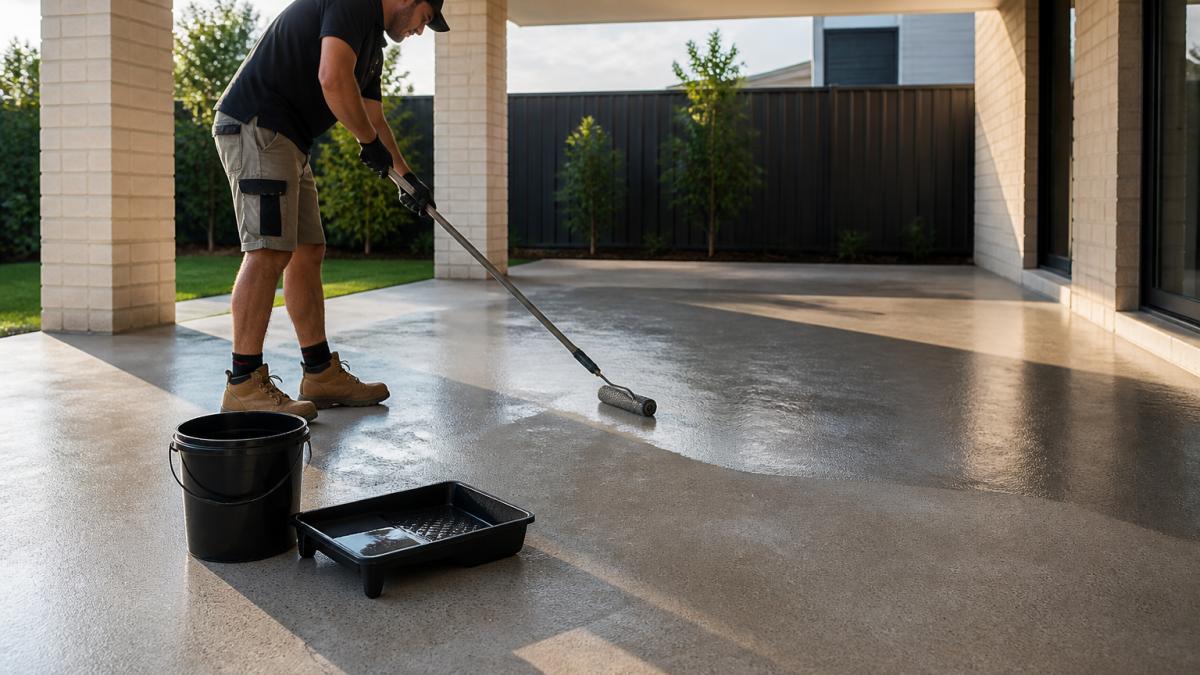
Surface preparation decides whether the sealer sticks. Most failed jobs we see started here, not with the product.
Sealant adhesion depends on a dry, sound surface. Damp concrete traps moisture under the sealer, which leads to white haze and peeling.
Apply the sealer in thin, even coats with a roller or sprayer. Two coats usually beat one thick coat, because heavy coats pool and dry unevenly.
Curing takes longer than drying. Give the slab a few days before heavy use or furniture.
The best concrete sealer for patios depends on how you use the space, what the slab is made of, and what has been applied to it before.
Penetrating sealers soak into the concrete pores and block water from inside. They leave no film, so the slab keeps its natural look and the surface profile stays largely unchanged.
Film-forming sealers sit on top and add a gloss, satin or colour finish.
Before you buy a product, work through these questions in order. The answers narrow the field faster than any product label.
Alfresco areas are not generic outdoor slabs. They combine cooking grease, food and drink spills, furniture legs, foot traffic, pets and often a nearby pool. That mix favours a sealer with good oil and stain resistance and a finish that still grips when wet.
If you are weighing up actual products, a guide to the best concrete sealers for local conditions can compare the options side by side. For most alfresco areas, a penetrating sealer with a non-slip additive is often recommended.
New concrete needs to cure before you seal it. Sealing too early traps moisture inside the slab and causes the finish to fail.
As a rule, wait around 28 days for standard concrete to cure. Some mixes and conditions need longer. Test first: sprinkle a little water on the slab. If it soaks in quickly, the concrete is ready. If it beads on top, wait.
Fresh slabs also shrink and settle in the first month. Sealing after that settling period means fewer cracks under the sealer.
Wet concrete is a genuine slip hazard, and gloss sealers make it worse. A non-slip concrete sealer adds grip while it protects, which matters most around pools, outdoor kitchens and shaded patios that stay damp. This is the gap most sealing guides skip: they cover protection and appearance but say nothing about traction after rain or cleaning.
Non-slip sealers work in three main ways, and the mechanism matters because each behaves differently over time.
| Finish | Wet grip | Appearance | Upkeep |
|---|---|---|---|
| High-gloss film | Lowest | Showroom shine | Regular cleaning; slip risk rises when wet |
| Satin film | Moderate | Subtle sheen | Moderate; recoat as film wears |
| Penetrating natural | Good | Looks like bare concrete | Low; reseal every few years |
| Penetrating with grit | Highest | Slightly textured | Sweep regularly; grit can dull over time |
For pool surrounds and busy entertaining areas, we would call non-slip essential, not optional. The trade-off is that textured finishes collect more debris, so factor in a slightly higher cleaning routine.
Traction is not a one-off purchase. Detergent residue, oil films and worn grit all reduce grip. A common pattern is for a patio to feel safe for the first season and then become slick as the surface film dulls. To retain traction:
If you are unsure whether it is worth the extra cost, a review of non-slip patio coating can break down the trade-offs. For an alfresco area that hosts guests, children or pets, the safety case is stronger than the aesthetic one.
Sealing is not a magic fix. It has real limits, and knowing them saves you from disappointment.
Pros:
Cons:
It helps to know how sealing differs from coating, since the two are often confused. A breakdown of the difference between sealing and coating can explain which suits your slab.
Deciding between a DIY job and professional sealing comes down to time, risk, and finish quality. Prep is the hard part, and it's where most DIY jobs go wrong.
Watch out: sealing over a damp or dirty slab is the fastest way to a peeling, hazy finish. Fixing it means stripping the sealer and starting again.
At Spray Pave Pro, we handle the prep, the right sealer for your slab, and the finish, backed by our 100% satisfaction guarantee. If you want to know whether professional sealing is worth the cost, a guide to professional concrete sealing can cover what's involved.
Not every concrete surface needs sealing, but alfresco concrete usually benefits from it. Sealing protects against water penetration, stains, mould growth and surface deterioration from outdoor exposure. Bare concrete in covered areas with light use may hold up without sealer for a while, but patios, pool surrounds and high-traffic alfresco slabs are exposed to rain, spills and foot traffic that wear down unprotected surfaces faster. If your concrete is decorative or stamped, sealing also helps preserve its colour and finish.
Resealing frequency depends on the sealer type and how much traffic the area gets. Penetrating sealers typically need reapplying every three to five years, while film-forming sealers usually last one to three years before they start to wear, peel or flake. High-traffic areas and slabs exposed to constant moisture may need attention sooner. A simple water test helps: if water soaks in instead of beading on the surface, it is time to reseal.
Some film-forming sealers can increase slipperiness when wet, especially glossy finishes on pool surrounds or shaded alfresco areas. The fix is to choose a non-slip concrete sealer with added grip or a penetrating sealer that leaves the surface texture intact. Always check the slip rating of the product and test a small section first. For areas that stay damp, such as around pools, a textured non-slip finish is the safer choice.
New concrete needs to cure before sealing, which usually takes around 28 days, though this varies with weather and slab thickness. Sealing too early traps moisture inside the concrete and can cause white haze, peeling or poor sealant adhesion. A simple check is to place a plastic sheet on the slab for 24 hours: if moisture forms underneath, it is not ready. Once fully cured and cleaned, the slab can be sealed for long-term protection.
Your alfresco concrete takes a beating from weather, traffic, and moisture every day. Sealing protects that investment and keeps your patio looking sharp for years. Spray Pave Pro brings 23 years of experience, high-pressure cleaning, and professional sealing to every job, with quick installation and a finish built to last. Get started with Spray Pave Pro and protect your alfresco concrete before the next wet season.

