
Last Updated: September 25, 2026
Concrete sealing is the process of applying a protective coating to concrete surfaces to prevent moisture, stains, and chemical damage. For homeowners across Perth, choosing the right concrete sealing service protects one of your most valuable assets: your driveway, patio, or pool surround.
This guide compares concrete sealing services in Perth, covering what each does best, where they fall short, and how to compare them on substance rather than sales pitch. Below, we break down each provider and explain exactly what separates a sealing job that lasts a decade from one that fails in a year.
Spray Pave Pro is a concrete resurfacing and sealing specialist with over 23 years of experience transforming residential and commercial properties across Perth. The team handles spray-on concrete, high-pressure cleaning, epoxy flooring, and professional sealing in one coordinated service.
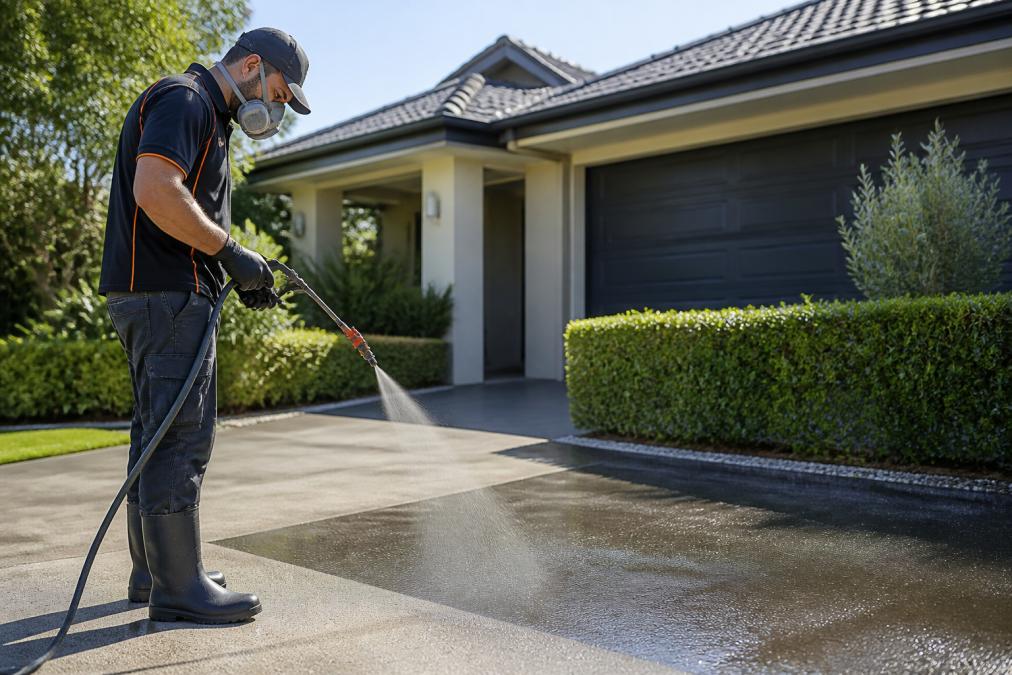
What sets this service apart is the pairing of resurfacing with sealing. If your driveway has cracks, stains, or worn patches, a sealer alone will not fix the surface underneath. Spray Pave Pro addresses the damage first, then applies a protective finish designed for long-term performance.
Pros:
Cons:
Cons:
A sealing-only quote is not the same as a resurfacing quote, and the line items should reflect that. A properly scoped driveway or slab sealing job normally covers:
If a quote lists only "clean and seal" with a single figure, treat it as a starting point rather than a finished scope. The preparation and joint work are where most sealing failures originate, and they are the first items a low quote will quietly drop.
Cons:
Cons:
Cons:
Compare concrete sealing services on four criteria: surface preparation, sealer type, warranty terms, and total resurfacing cost. A cheap quote that skips crack repair or uses a thin acrylic sealer may cost more over five years than a properly prepared job.
Use this checklist when reviewing quotes:
| Provider | Specialisation | Best For | Quote Basis |
|---|---|---|---|
| Spray Pave Pro | Resurfacing and sealing | Cracked, stained driveways and pool surrounds | Free quote |
| PM Industries | Dedicated sealing | Driveways and slabs needing protection only | Free quote after inspection |
| NextGen Concrete Services | Remedial and sealing | Structurally damaged concrete | Custom quote |
| Tuff Cut n Seal | Cutting and sealing | Small residential maintenance | Service-based quote |
| Concrete and Spray Solutions WA | Decorative spraying | Exposed aggregate and coloured concrete | Per square metre |
The best non-slip pool deck coating for wet areas is a textured epoxy or rubberised surface with a verified coefficient of friction rating. Standard smooth sealers become dangerous when wet, which is why pool surrounds need a different specification from driveways.
Rubberised and textured epoxy finishes add grip through surface texture rather than a separate anti-slip treatment that wears off. For pool surrounds, prioritise:
Most pool-deck guides stop at slip ratings and never mention that the surface is sitting in a mild chemical bath for years. Chlorinated water, salt water and pool-balancing chemicals each attack a coating differently, and the wrong sealer will chalk, blister or lift long before its warranty period ends.
A practical test before you commit: ask the provider which sealer chemistry they recommend for your specific pool type, and whether they will warrant the coating against chemical exposure as well as UV. A provider who offers only one product for every pool has not thought about the chemistry.
In full sun, a dark sealed concrete deck can become uncomfortable or unsafe to walk on barefoot, and the difference between coatings is larger than most buyers expect. Colour and finish matter more than the sealer brand.
If cool-underfoot performance matters, the two levers are colour and texture, in that order. A light, textured finish will outperform a dark, smooth one regardless of the sealer chemistry, and no amount of UV additive will fix a black deck in full sun.
Sealed concrete also needs a maintenance schedule to keep performing. Reseal high-traffic areas every two to three years, clean with pH-neutral products rather than harsh acids, and address hairline cracks before they widen. For guidance on surface safety standards, refer to Safe Work Australia's slip and trip prevention guidance.
Rubberised coatings and textured epoxy with non-slip additives offer the best grip when wet. They create a coefficient of friction that meets Australian slip resistance standards, reducing the risk of falls on wet pool surrounds. Spray Pave Pro applies these coatings over existing concrete, so you get a safer surface without full replacement. Regular cleaning and resealing every few years keep the texture effective.
Concrete resurfacing cost depends on the area size, surface condition, and coating type. Most providers quote per square metre after an on-site inspection. Spray Pave Pro offers free quotes and can tailor a solution to your budget. Request a quote to get an accurate figure for your project.
To maintain sealed concrete, sweep or hose it regularly to remove grit, and clean spills promptly with mild detergent. Avoid harsh chemicals that can break down the sealer. Reapply a fresh coat every two to three years, or sooner in high-traffic or coastal areas. Spray Pave Pro can advise on a maintenance schedule suited to your surface and climate.
Professional sealing typically lasts longer and provides better protection than DIY kits. Professionals prepare the surface correctly, use commercial-grade sealers, and apply even coats. While DIY may save money upfront, poor preparation often leads to peeling and early failure. Spray Pave Pro's 23 years of experience and 100% satisfaction guarantee mean you get a durable result.
Choosing the wrong sealing provider costs more than the original quote, because failed coatings mean paying twice. Spray Pave Pro has spent 23 years sealing and resurfacing concrete across Perth, pairing crack repair with durable protective coatings and backing every job with a 100% satisfaction guarantee. Get a free quote from Spray Pave Pro and protect your driveway, patio, or pool surround with a finish built to last.
Last Updated: September 21, 2026
Epoxy has a reputation problem on driveways, and it is deserved. The same hard, glossy finish that works beautifully on a garage floor fails outdoors because epoxy is not UV-stable: sunlight breaks down its chemical bonds, causing yellowing, chalking and eventual delamination. Once water gets under a lifting edge, the coating peels in sheets.
The main alternatives to epoxy for residential driveways are polyaspartic and polyurea coatings, spray-on concrete resurfacing, decorative concrete stains, acrylic and penetrating sealers, and full replacement with pavers or tiles. Each solves a different problem.
| Option | Best For | Upfront Cost | Lifespan | Maintenance |
|---|---|---|---|---|
| Polyaspartic coating | Sun-exposed driveways, hot tyre areas | Higher than epoxy | Long, with UV stability | Low |
| Spray-on concrete | Cracked, stained or patchy concrete | Mid-range, quoted per job | Long | Low |
| Concrete stain | Decorative colour on sound concrete | Lower | Permanent colour | Re-seal periodically |
| Acrylic sealer | Budget protection on good concrete | Low | Short, needs redoing | Frequent |
| Pavers or tiles | Full replacement, high-end finish | Highest | Very long | Occasional re-sanding |
Polyaspartic is a fast-curing aliphatic polyurea coating. The word that matters is aliphatic: its molecular backbone lacks the aromatic rings that epoxy contains, and those rings are exactly what absorb UV energy and break down. That is why epoxy chalks, yellows and eventually delaminates on a sun-facing driveway while polyaspartic holds its colour.
| Property | Epoxy | Polyaspartic |
|---|---|---|
| UV stability | Poor, yellows and chalks | Good, colour-stable |
| Cure time | Slow (often 12-24 hours before traffic) | Fast (often return to service same day) |
| Hot tyre pickup | Common | Rare |
| Flexibility | Rigid, brittle in cold | More flexible |
| Moisture tolerance during cure | Low | Higher |
| Relative material cost | Lower | Higher |
Polyaspartic also tolerates application in a wider band of temperatures and humidity, which matters if you are trying to book a job in a shoulder season. Epoxy is fussier: too cold, too damp, or too humid and the cure goes wrong, which is one of the most common reasons a DIY epoxy driveway fails in its first year.
This is where most guides stop, and where the real decision sits. The same driveway can punish a coating in two completely different ways depending on where you are.
Polyaspartic costs more in materials and installation than epoxy, and it still needs sound, dry concrete underneath. Neither coating fixes a failing slab, and neither will hide structural movement, if the concrete is cracking because the base is moving, the coating will crack with it.
If your slab is sound and sun-exposed, polyaspartic is the strongest coating alternative to epoxy, and it is the option most likely to still look right after several summers. If your slab is sound but shaded, or if you are in a cool, wet climate, a penetrating sealer or a sealed resurfacing system may give you better long-term value for less money.
Spray-on concrete is a resurfacing system that lays a new, bonded concrete layer over your existing slab, rather than a thin film coating. It hides cracks, stains and patchy repairs while restoring a uniform, textured finish.
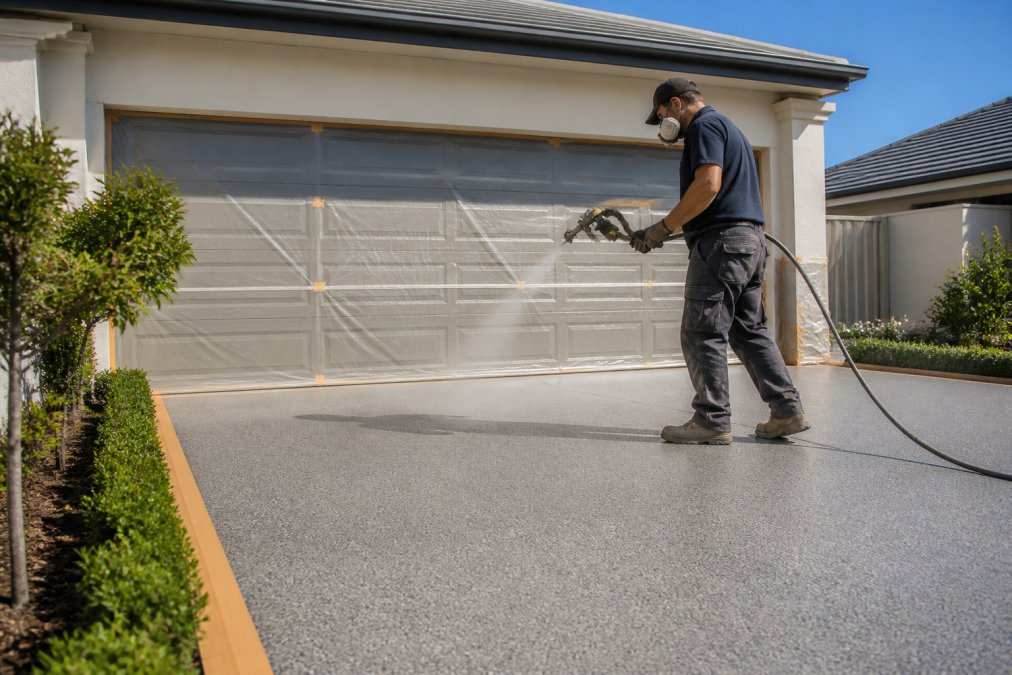
Key advantages include:
Spray-on concrete fixes cosmetic and surface-level damage: cracks, stains, spalling and worn patches. It cannot fix structural failure. If the slab is sinking, heaving or badly broken, resurfacing will crack again. A common mistake is coating over a slab that needed underpinning or replacement first, which wastes the whole job. Get the substrate assessed before committing.
Beyond coatings and spray-on concrete, several options suit specific budgets and goals. The right pick depends on how much you want to spend and how long you plan to stay.
Concrete stain is a penetrating colour treatment that reacts with the slab rather than sitting on top of it, so it cannot peel or flake. It suits sound concrete and pairs well with a sealer for protection.
When a driveway is beyond resurfacing, pavers or tiles are the durable replacement. They handle heavy loads, individual units can be lifted for utility repairs, and permeable options help with stormwater. The catch is cost: this is the most expensive route upfront, and it means the most disruption while the old surface is removed and a new base is laid.
Concrete resurfacing cost is driven by surface area, substrate condition, the system chosen and how much preparation is needed. There is no single national figure, and any guide that quotes one is guessing. What you can do is understand the cost structure, so you can sanity-check a quote instead of trusting it.
1. Size. Material and labour scale roughly with square metres. A double driveway is not double the cost of a single, because setup, masking and travel are largely fixed, but it is close.
This is the strongest argument for choosing the right system the first time. A UV-stable coating on a sun-exposed slab, or a breathable system in a wet climate, avoids the strip-and-replace cycle entirely.
When you have two or three quotes in front of you, compare them on these lines rather than on the headline number:
Because every driveway differs in size, condition and access, a site assessment and written quote is the only reliable way to know your figure. Spray Pave Pro provides free quotes so you can compare options on real numbers rather than guesswork.
The right choice comes down to three factors: your climate, the condition of the substrate, and how long you intend to keep the property. A sun-exposed driveway in a hot climate needs a UV-stable system, which rules epoxy out immediately.
Match the coating to the conditions. In a hot, sunny climate, choose a UV-stable option such as polyaspartic or a properly sealed spray-on concrete surface. If the slab is sound, resurfacing wins on value. If it is failing structurally, replacement is the honest answer.
Polyaspartic coatings are the closest like-for-like substitute, offering faster curing, better UV stability and greater flexibility than standard epoxy. Spray-on concrete resurfacing is another strong option because it rebuilds the worn surface rather than just coating it, and it can hide cracks and stains. Penetrating stains and acrylic sealers suit homeowners who want a lower-cost, no-peel finish, while pavers or interlocking tiles work when the existing slab is too far gone to coat.
Polyaspartic coatings cure much faster than epoxy, often allowing a driveway to be back in use the same day, and they resist UV yellowing that dulls epoxy over time. They also stay flexible through thermal expansion and contraction, which reduces cracking. The trade-off is a higher upfront cost than epoxy. For driveways exposed to strong sun and heat, the longer service life and colour retention usually justify the difference.
For driveways with existing cracks, pitting or staining, spray-on concrete often performs better long term because it adds a new wearing surface rather than sitting on top of a failing one. Epoxy bonds well to sound, dry concrete but can delaminate if moisture vapor transmission is high. Spray-on concrete also gives you control over texture and slip resistance, which matters for pool surrounds and steep driveways.
Acrylic sealers cost the least upfront and are simple to reapply, but they typically need refreshing more often than polyurethane or polyaspartic systems. If you want fewer maintenance cycles, a penetrating sealer paired with a quality topcoat gives better protection against stains and UV. The most cost-effective choice depends on how much traffic the driveway sees and how long you plan to stay in the property.
Polyaspartic and polyurea coatings handle heat well because they stay flexible and resist UV degradation. Light-coloured finishes also help by reflecting rather than absorbing heat, which reduces surface temperature and hot tire pickup. Concrete stains are a good option too, since they penetrate the slab instead of forming a film that can soften or peel in high temperatures.
A cracked, faded driveway drags down the whole look of a property, and patching it yourself rarely lasts. Spray Pave Pro has spent 23 years resurfacing driveways and patios, with spray-on concrete, professional sealing, high-pressure cleaning and epoxy flooring backed by a 100% satisfaction guarantee and a highly professional team. Get a free quote from Spray Pave Pro and transform your driveway with a finish built to handle the sun.
Last Updated: September 20, 2026
Searching for a concrete painter near me usually means your driveway, patio, or pool surround has faded, cracked, or stained, and you want it fixed without a full replacement. Spray Pave Pro has spent 23 years restoring these surfaces across residential and commercial properties.
Residential and commercial jobs differ more in specification than technique. A home driveway needs a hard-wearing surface that resists tyre scuffing and looks sharp from the street. A retail or industrial floor needs a coating that handles foot traffic, trolleys, and cleaning chemicals without losing its slip rating.
For homes, the usual scope covers:
The real differences sit in four areas most service pages never spell out:
| Specification | Residential | Commercial |
|---|---|---|
| Slip rating | Often P3 for wet outdoor areas | Frequently P4 or P5 for kitchens, ramps, and trolley traffic |
| Cure window | Flexible, can stage across days | Tight, often overnight or weekend shutdowns |
| Chemical exposure | Pool chlorine, sunscreen, general cleaning | Degreasers, sanitising agents, hot water wash-downs |
| Coating system | Acrylic sealer, decorative resurfacing, epoxy | High-build epoxy, polyaspartic, urethane cement in wet processing areas |
Spray Pave Pro handles both residential and commercial work, with quick installation that keeps disruption short. The specification is matched to the surface and the traffic it faces, not a one-size-fits-all product.
Proper cleaning is not a formality. Every coating system, from acrylic sealer to full epoxy, needs a clean, sound substrate to bond to. This stage decides whether the finish lasts three years or fifteen, and it is the stage most DIY attempts and cheap quotes skip.
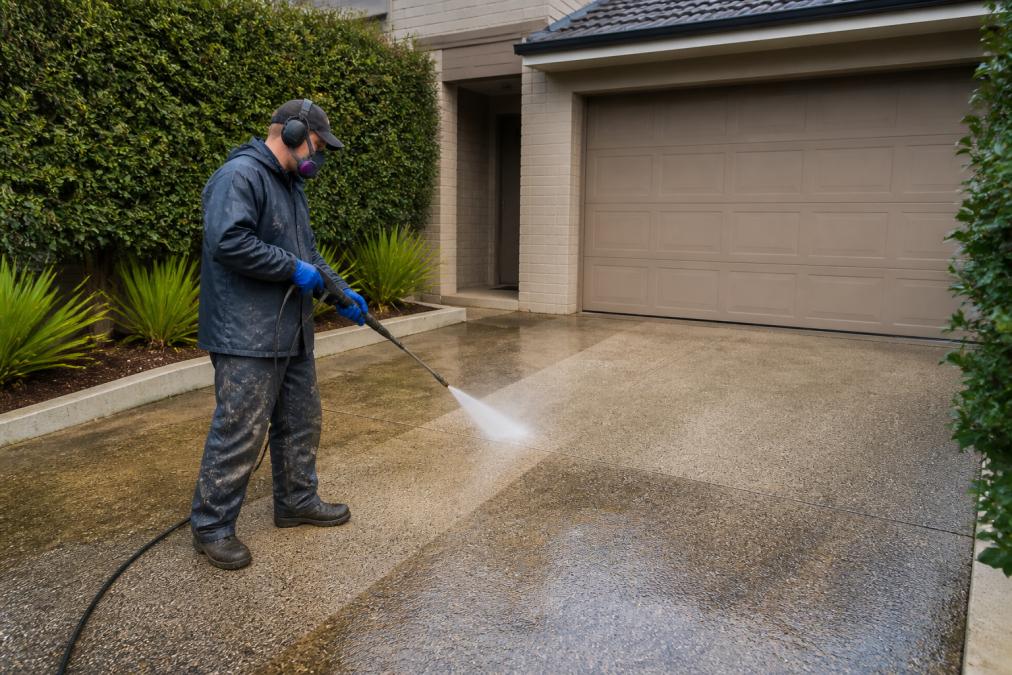
The process starts with pressure cleaning to strip dirt, mould, oil, and old failing coatings. Each contaminant behaves differently:
After cleaning comes concrete repair: filling cracks, patching spalled sections, and grinding back high spots. Concrete etching may open the surface profile so the coating can grip, but grinding or shot blasting is often preferred over acid etching because it produces a more consistent profile and leaves no residue to neutralise.
A common method is the plastic sheet test: plastic taped to the slab for 24 hours, with any condensation underneath indicating moisture vapour rising through the concrete. More accurate readings come from a calibrated moisture meter or calcium chloride test. The result determines whether the slab needs a moisture-tolerant primer, a vapour barrier, or more drying time.
The cleaning routine does not end when the job is done, how you maintain the surface directly affects how long the coating lasts:
Concrete resurfacing cost depends on surface area, slab condition, coating system, and preparation required. There is no flat rate, and any quote given without seeing the site is a guess.
The factors that move a quote most:
| Factor | Why It Matters | Effect on Cost |
|---|---|---|
| Surface area | More square metres, more material and labour | Scales directly |
| Crack and damage repair | Deep cracks need structural patching, not filler | Increases with severity |
| Coating system | Acrylic sealer vs epoxy vs decorative finish | Varies widely |
| Access and drainage | Tight access slows equipment movement | Increases labour time |
| Existing coatings | Old coatings must be stripped first | Adds a preparation stage |
Epoxy flooring installation follows a set sequence, and rushing any stage shortens the coating's life. The process runs across several days, with curing time built in.
The best low maintenance option for non-slip pool surfacing is a textured epoxy or resurfacing system with an integrated slip-resistant aggregate, sealed against moisture. It holds its grip when wet and needs only routine cleaning.
What to look for:
DIY concrete painting looks cheaper on the material receipt. It rarely is once you account for preparation equipment, coating failures, and rework.
Here is the honest comparison:
| Factor | DIY | Professional |
|---|---|---|
| Upfront cost | Lower material cost | Higher, includes labour |
| Equipment | Pressure washer, grinder, applicators | Included |
| Surface preparation | Often underdone | Full prep and repair |
| Coating life | Frequently short | Longer with correct system |
| Rework risk | High if prep is skipped | Low, backed by guarantee |
| Time | Weekends over several weeks | Days |
A correctly applied coating on a well-prepared slab outlasts a cheap coating on a poorly prepared one by a wide margin. Longevity comes from correct specification, proper application, and basic ongoing care.
Keep it simple:
Resurfacing is usually the better choice for driveways and patios with cracks, stains or uneven texture. A concrete painter near me will often recommend a spray-on paving system because it bonds to the existing slab and hides flaws, whereas paint sits on the surface and can peel within a year. Resurfacing also lets you add a slip-resistant coating, which matters around pool areas. If your concrete is structurally sound and only needs a colour refresh, a stain or sealer may be enough, but for long-term durability, resurfacing wins.
A professionally applied coating can last 5 to 10 years or more, depending on the system used and how well it is maintained. Epoxy coatings on garage floors typically last longer than basic acrylic sealers, especially when a protective topcoat is added. The key is surface preparation: if the concrete is properly cleaned, etched and primed, the coating adheres better and resists UV damage. Regular sweeping and occasional re-sealing will extend the life of any coating, particularly in outdoor areas exposed to sun and rain.
No, you should not paint directly over most existing sealers. Paint and epoxy need to bond with the concrete itself, and a sealer creates a barrier that prevents adhesion. If you try to coat over a sealed surface, the new layer will likely peel or flake within months. A professional concrete painter will first test the surface to see if a sealer is present, then remove it using a chemical stripper or mechanical grinding before applying any new coating. Skipping this step is one of the most common reasons DIY coatings fail.
They are strongly recommended for any outdoor concrete that gets wet, especially pool surrounds, driveways and patios. Standard smooth coatings become dangerously slippery when wet, increasing the risk of falls. A slip-resistant coating adds texture that grips even in heavy rain or splashes. Many non-slip systems also include UV resistance to stop fading and a moisture barrier to protect the concrete underneath. If you have children, elderly visitors or a pool, a slip-resistant finish is not optional; it is a safety essential.
