
Last Updated: October 14, 2026
Before committing to patio resurfacing, understand what you're working with. Not every deteriorating slab is a good candidate, some need a different approach entirely.
Examine your slab for structural movement, foundation shifts, or signs the concrete is failing underneath.
Walk the patio and press on different areas. If the concrete moves or sounds hollow, the slab has separated from the base, resurfacing alone won't solve it.
Check edges and corners, which take the most stress.
The concrete must be structurally sound. If the slab is sinking, heaving, or moving, no coating will hold, movement cracks will reappear through the new finish.
Structural problems show up as:
If you see these, call a structural engineer before considering resurfacing. Sometimes the slab needs repair or replacement, not a fresh coat.
Is the concrete just stained and weathered, or actively breaking apart? This distinction changes everything.
Surface-level damage means the concrete is intact but the finish is worn, stains, minor cracks, scaling, and fading. These respond well to patio resurfacing.
Deeper damage, spalling, large cracks, or separating concrete, needs repair before resurfacing can work.
Examine the surface systematically, feeling for rough patches, soft spots, or crumbling areas. Mark problem areas for the preparation phase.
Not all damage is the same, treating a structural problem as cosmetic wastes money and fails within months.
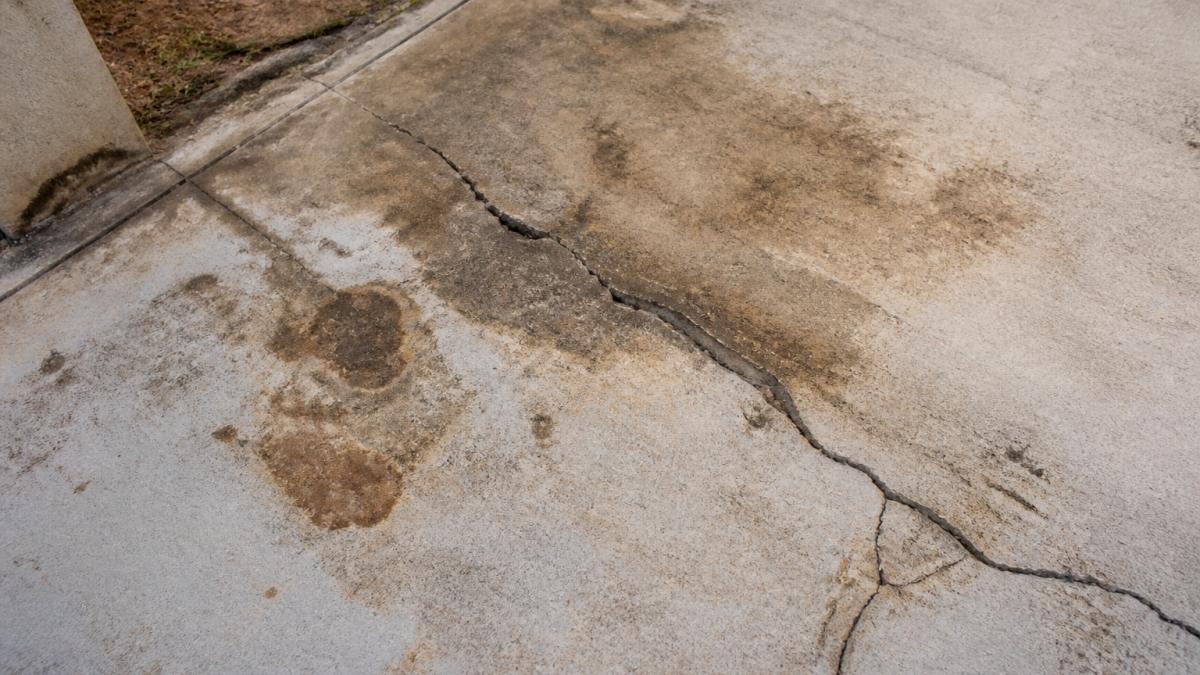
Surface damage stays on top. Structural damage runs deep. The difference determines whether resurfacing will work or whether you need concrete repair first.
Not all cracks are equal. A hairline crack in old concrete is common. A wide, spreading crack suggests movement.
Measure your cracks. Hairlines (under 2mm) are usually cosmetic; cracks wider than 5mm, especially growing ones, signal slab movement and need investigation before resurfacing.
Check if cracks are active: mark one with tape, return after rain or a few weeks.
Spalling is chunks breaking off; scaling is the top layer flaking away. Both look dramatic but are usually surface problems.
If spalled or scaled areas are shallow (under 5mm), resurfacing will cover them; deeper damage (over 10mm) may need grinding or filling first.
Soft spots or crumbling areas indicate lost integrity, test by tapping with a hammer.
Preparation separates success from failure, most contractors spend 40-50% of job time on it, and it's what makes the new surface stick and last.
Your patio must be clean, dry, and repaired before any resurfacing system is applied, dirt, old sealers, and loose concrete prevent bonding.
High-pressure cleaning removes years of dirt, algae, mould, and weathering, and reveals the concrete's true condition underneath.
Professional equipment uses 3000-4000 PSI, strong enough to clean without damaging sound concrete. DIY washers (1500-2500 PSI) work but take longer.
The concrete must then dry completely, moisture under a new coating causes failure.
Remove all dust after cleaning and drying, any left on the surface prevents proper bonding.
Old sealer or coating must be removed or abraded away, new systems won't bond to existing coatings.
If your patio was sealed before, remove the old sealer by grinding, sanding, or chemical stripping, grinding is most reliable for outdoor concrete.
Some stains clean off; others are permanent discolouration that may show through lighter finishes. Your contractor can suggest colours that work with existing staining.
Seal all cracks wider than 2mm before resurfacing to stop water entering and causing problems underneath.
Epoxy injection suits cracks through the slab; polyurethane suits slightly flexing cracks. Both create a waterproof seal.
Spalled areas need filling: your contractor cleans out loose concrete, fills with repair compound, and lets it cure before resurfacing.
Small holes are filled with patching material and larger areas repaired more substantially, aiming for a smooth, even surface for the resurfacing system to bond to.
Water is concrete's enemy. Proper drainage protects your resurfaced patio and makes it last longer.
Check the slope: concrete should fall away from the house at about 1:100 (1 metre per 100 metres).
Note where water currently flows, toward the house, garden, or off the edge, and ensure resurfacing maintains or improves those patterns.
If water pools underneath your patio it will eventually cause failure, discuss any pooling problems with your contractor before resurfacing.
A concrete overlay applies a new layer of concrete or polymer-based coating over your existing slab, the most common resurfacing option for patios.
Overlays add colour, texture, and pattern, and are faster and cheaper than removing and replacing the slab.
But overlays have limitations worth understanding before you decide.
Overlays work best when your existing concrete is structurally sound but cosmetically tired.
They suit quick transformations without major disruption: usually 2-5 days depending on size, versus weeks for removal and replacement.
They're cost-effective: overlays typically cost less than half of a new slab, though budget varies by size and finish.
They allow new finishes, decorative patterns, non-slip textures, custom colours, refreshing your outdoor space without changing the footprint.
Some systems are moisture-sensitive, if your concrete has moisture issues, the overlay may peel or blister, which is why drying time before application is critical.
Overlays don't last forever: expect 5-15 years depending on system and climate, good value, but not permanent like replacement.
Poor preparation is the most common cause of premature failure, if the surface isn't properly cleaned, repaired, and dried, the overlay won't bond.
Understanding what affects cost and timeline helps you plan and budget realistically.
Pricing depends on patio size, existing concrete condition, chosen finish, and job complexity. Spray Pave Pro provides free quotes so you can understand the specific cost for your project.
Size is the biggest factor: larger patios cost more in total but less per square metre.
Existing condition matters: a clean patio needing minimal repair costs less than one requiring extensive crack sealing, grinding, or filling.
Finish affects price: solid colours cost less than decorative patterns or textures, and non-slip coatings add cost.
Access and logistics matter, difficult-to-reach patios needing special equipment cost more.
Timing can affect cost: off-season work (autumn and winter) is sometimes cheaper than peak summer demand.
Most residential patios take 2-5 days to resurface, including cleaning, repair, application, and curing.
Day 1 is cleaning and preparation: pressure cleaning, drying, and repairs.
Days 2-3 are application, spray-on concrete, epoxy, or another system, with drying time varying by product.
Rain or extreme heat can delay work; your contractor will schedule around forecast conditions for the best results.
Understanding the process and finish options helps you make informed decisions.
Several resurfacing systems are available. Each has different properties, durability, and appearance.
Spray-applied concrete is a popular choice: polymer-modified concrete sprayed onto the slab, bonding strongly with good durability and decorative options.
Acrylic sealers are the most affordable option, thinner but still protective, lasting 2-5 years and best for light-traffic areas.
Your contractor can recommend which system suits your climate, traffic level, and budget.
Resurfacing offers creative freedom: solid colours, patterns, or textured finishes that transform your patio's appearance.
Solid colours are simplest and cheapest: pick one complementing your home and garden.
Patterns, stencilled designs, faux stone, geometric, add interest and a custom look at higher cost than solid colours.
Decorative aggregates (small stones or glass) can be embedded for sparkle and texture, extra cost, distinctive look.
Ask your contractor for samples or examples of past finishes to visualise the result.
Safety matters: slip resistance is especially important around pools, in wet climates, or with elderly relatives or young children.
Dark colours absorb heat and get hot underfoot in summer; light colours stay cooler. Consider this if your patio is in full sun.
For mobility challenges or wheelchair use, smooth level surfaces are easier to navigate than textured or sloped ones, discuss accessibility needs during planning.
Before committing to patio resurfacing, work through this checklist to confirm it's the right choice and you're ready to proceed.
Structural assessment:
Damage evaluation:
Drainage and water management:
Practical considerations:
Contractor selection:
At Spray Pave Pro, our team assesses your patio thoroughly, explains exactly what needs to happen before resurfacing can begin, and is transparent about costs, timeline, and what to expect from your new surface.
Your patio is a good candidate for resurfacing if the structural slab is stable, cracks are non-structural (less than 3 mm wide and not actively moving), and the surface can be properly cleaned and prepared. Inspect for active movement, major heaving, or subsidence, these signal deeper problems requiring replacement rather than resurfacing. A professional assessment can determine whether your existing slab will support an overlay or coating system.
Repairable damage includes surface cracks, spalling, staining, and worn coatings that affect appearance but not the slab's integrity. Structural problems involve active cracking, heaving, settlement, or movement that indicates foundation issues. If cracks recur after filling or the slab is visibly moving, resurfacing will fail, the underlying cause must be fixed first. A structural engineer can assess whether damage is cosmetic or foundational.
Most patio resurfacing projects take 2-5 days depending on size, surface condition, and preparation needs. High-pressure cleaning and crack repair can add 1-2 days. Curing time for coatings varies by system, typically 24-72 hours before light use, though full hardness may take 7-14 days. Spray-on systems often cure faster than traditional overlays, minimising downtime for residential and commercial properties.
Overlays can fail if the base slab is poorly prepared, unstable, or has moisture issues. They add height, potentially creating trip hazards at edges or affecting drainage. Some overlay systems are less durable in high-traffic areas or under extreme weather. If the underlying slab continues to crack or move, the overlay will follow suit. Quality preparation and choosing the right system for your climate and use are essential to avoid premature failure.
Ready to transform your patio? Spray Pave Pro specialises in concrete resurfacing that enhances curb appeal, delivers high durability, and requires minimal maintenance. With 23 years of experience and a 100% satisfaction guarantee, we'll assess your patio, explain your options, and deliver results that last. Get a free quote and discover how resurfacing can restore your outdoor space.
