
Last Updated: October 6, 2026
Spray-on concrete and stamped concrete are two fundamentally different approaches to resurfacing and finishing concrete.
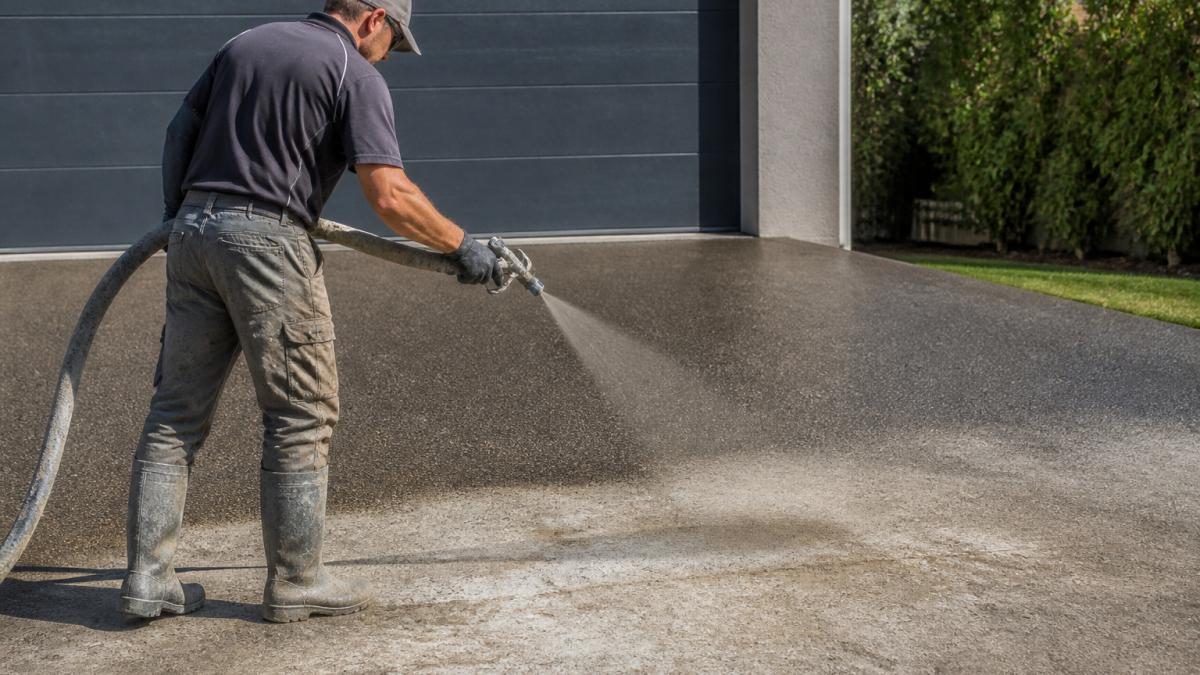
Spray-on concrete (also called spray-applied coating or spraycrete) is a liquid coating sprayed onto existing concrete, bonding to the substrate and hardening into a new wearing layer.
The key difference is application: spray-on concrete works over what's already there, while stamped concrete requires new pouring or significant preparation. That affects cost, timeline, durability, and suitability.
Spray-on concrete excels when restoring deteriorating surfaces quickly without demolition; stamped concrete suits fresh installations where you want intricate patterns built into the surface.
The choice comes down to your situation: resurfacing existing concrete with cracks and stains, or installing a brand-new decorative surface? That answer usually determines which option suits your budget and timeline.
The two finishes are priced on different bases. Spray-on concrete is a coating over an existing slab, so you pay for preparation, product and labour.
Because rates move with product choice, slab condition and access, treat any single national figure with suspicion. Rely on the structure of the quote instead.
What drives a spray-on concrete quote
What drives a stamped concrete quote
Timeline and what it means for cost
Stamped concrete is a construction project. A new pour needs formwork, reinforcement, the pour, a window to apply colour and stamp the pattern before the concrete sets, then curing.
Lifecycle cost, not just upfront cost
A spray-on coating is a recurring cost: reseal every two to three years and recoat when the coating wears through.
A practical way to compare is to add up, over a ten-year window:
For a sound existing slab, spray-on usually wins on total ten-year cost because you avoid demolition and a new pour.
For a site-specific figure, book an on-site assessment. A photo or phone description cannot reveal slab condition, drainage fall or access constraints, the variables that move the number most.
Lifespan figures only help if you understand what ends a surface's life. Spray-on coatings and stamped concrete fail differently, and that matters more than any single number of years.
How a spray-applied coating ages
A spray-on coating is a thin wearing layer bonded to the slab beneath it. Its life is governed by three things:
A well-prepped, well-sealed coating on a stable slab commonly gives five to ten years before a recoat, with resealing every two to three years.
How stamped concrete ages
Stamped concrete is a structural slab with a decorative surface, so its failure modes are those of concrete plus those of a finish:
A properly built and maintained stamped slab can last fifteen to twenty-five years or more, assuming correct base compaction, reinforcement, cut joints and maintained sealer.
Repairability is the real durability difference
Stamped concrete is far less forgiving. A crack through a stamped pattern cannot be hidden by filling it, because the repair won't match the surrounding texture and colour.
What to check in a warranty
Warranties on decorative concrete vary widely, and the wording matters more than the length. Look for:
Climate and site factors
Durability is not just about the product. Intense UV accelerates sealer breakdown and colour fade.
Guide to concrete sealing and maintenance intervals
The honest summary: a spray-on coating is a renewable surface with a shorter cycle and easier repairs, while stamped concrete lasts longer but costs more to replace when it fails.
Stamped concrete offers distinctive visual appeal. Its patterns convincingly mimic brick, tile, cobblestone or custom designs, giving your driveway or patio a high-end look that's hard to achieve with other finishes.
Stamped concrete pros:
Stamped concrete cons:
Stamped concrete suits new builds or major renovations where you'll invest time and money upfront for a distinctive, long-lasting finish. If your existing concrete is structurally sound but aesthetically tired, spray-on concrete often delivers better value.
Concrete resurfacing applies a new wearing surface over existing concrete that's still structurally sound but damaged, stained or worn. Spray-on concrete is the most practical option because it bonds directly to the old surface without removal.
Resurfacing works best when the underlying concrete is not severely cracked or heaving. Minor cracks (under 6mm) can be filled before coating. Significant structural damage may require removal and replacement rather than resurfacing.
The advantage over replacement is cost and speed: you avoid demolition and disposal, and your driveway is restored in days rather than weeks. For homeowners selling up or facility managers minimising downtime, resurfacing is a practical middle ground.
Spray Pave Pro specialises in assessing whether your concrete suits resurfacing or whether replacement is the better long-term investment. In most cases, resurfacing delivers excellent results.
Spray-on concrete is significantly easier to maintain than stamped concrete. Regular pressure washing keeps it fresh, most stains wash away easily, and the non-porous sealed surface resists dirt better than traditional concrete.
Sealer maintenance is key to longevity. A quality sealer should be reapplied every 2-3 years, depending on exposure and traffic, a straightforward process that extends coating life and maintains appearance and slip resistance.
Repairs are simple: small chips or worn areas can be spot-repaired with fresh coating, without patching the entire surface.
Stamped concrete needs more intensive maintenance. Sealer must be reapplied regularly to prevent pattern fade and protect the concrete from water infiltration. Stains are harder to remove from textured surfaces, and cracks are difficult to repair without affecting the pattern.
For pool decks and wet areas, spray-on concrete with non-slip additives is easier to keep safe and clean, the smooth, sealed surface resists algae and mould better than textured stamped concrete.
If you're preparing to sell, curb appeal matters. Both spray-on and stamped concrete improve your property's presentation, but return on investment depends on your market and the condition of existing surfaces.
Stamped concrete creates a distinctive, high-end look that appeals to buyers seeking premium finishes, adding perceived value particularly in competitive markets.
Freshly applied spray-on concrete with a quality finish presents a clean, well-maintained appearance that signals the property has been cared for.
Buyers also value durability and low maintenance. An easy-to-clean spray-on surface may appeal more to busy households than a stamped finish needing frequent sealing and careful upkeep.
For maximum curb appeal and value, focus on the condition of your existing surfaces. A freshly restored driveway, spray-on or stamped, beats a neglected one every time.
Choosing between spray-on and stamped concrete comes down to your situation: the condition of your existing surfaces, your timeline, your budget and your aesthetic.
Our team can assess your concrete, discuss the pros and cons of each approach, and recommend the solution that delivers the best value for your needs. Get a free quote today and discover how we can restore your driveway or outdoor surface to like-new condition.
Spray-on concrete lifespan typically ranges from 5 to 10 years, depending on climate, traffic, and maintenance. High-quality sealing and regular cleaning extend this period. Factors like UV exposure, freeze-thaw cycles, and moisture affect durability. With professional maintenance and resealing every 2-3 years, spray-on concrete can maintain its appearance and protective qualities well into its second decade.
Spray-on concrete cost per square metre depends on surface area, existing concrete condition, design complexity, and sealer type. Smaller projects typically cost more per square metre than larger ones. For an accurate quote tailored to your driveway or patio, contact Spray Pave Pro directly. They can assess your site and provide pricing based on your specific needs and budget requirements.
Yes, concrete resurfacing over existing concrete is one of spray-on concrete's key advantages. It works well on driveways with minor cracks, stains, or surface wear. However, deep structural damage or severely compromised foundations may require repair first. Proper surface preparation, cleaning, patching, and priming, is essential for adhesion and longevity. Spray Pave Pro assesses each surface to determine suitability before resurfacing.
Spray-on concrete generally requires less maintenance than stamped concrete. Its smooth, sealed surface resists staining and is easier to clean with high-pressure water. Stamped concrete has textured grout lines that trap dirt and require more frequent scrubbing. Both benefit from regular sealing, but spray-on's simpler surface makes routine care faster and less labour-intensive over time.
