
Last Updated: October 23, 2026
Quick Summary
An epoxy floor coating costs more and demands better preparation, but it lasts longer and resists vehicle traffic, chemicals and abrasion. Paint suits light pedestrian use and tight budgets, while epoxy wins on durability for driveways, car parks, garages and commercial floors.
Choosing between an epoxy floor coating and paint for concrete floors comes down to one question: how hard will the surface work? Epoxy is a polymer-modified concrete coating that bonds to a prepared substrate and forms a thick, traffic-rated film.
The short answer: epoxy costs more and demands better preparation, but it lasts longer and resists vehicle traffic, chemicals and abrasion. Paint suits light pedestrian use and tight budgets.
| Factor | Epoxy Floor Coating | Concrete Paint |
|---|---|---|
| Film thickness | Thick, buildable | Thin, single layer |
| Best for | Driveways, car parks, garages, commercial floors | Sheds, light foot traffic, low-cost refreshes |
| Preparation needed | High (grinding, crack repair, moisture check) | Moderate |
| Vehicle traffic | Withstands | Not recommended |
| Service life | Long, repairable | Short, recoats needed |
| Slip resistance | Tunable with texture and finish | Limited |
Epoxy floor coating is a two-part resin system that cures into a hard, bonded surface. Paint is a pigment-and-binder film that dries on top of the concrete. The difference is structural, not cosmetic.
Paint is easy to apply, cheap to buy and quick to dry. For a shed floor or a low-traffic utility area, it lifts appearance without much fuss. The catch: it cannot bridge movement, so cracks telegraph through and wear shows fast.
Epoxy sticks hard to a properly prepared substrate, builds thickness and resists abrasion. It handles vehicle traffic, chemical spills and heavy foot traffic. It also accepts decorative finishes, textures and colour sealing for a stone finish look.
Most epoxy failures are preparation failures, not product failures. A sound install means grinding or etching the surface, repairing cracks, checking moisture and cleaning off contaminants before any resin goes down.
Skip that and the coating delaminates, bubbles or peels within a season. A common mistake is coating over a damp slab or a dusty, sealed surface. Adhesion depends on an open, profiled substrate.
Epoxy flooring durability is not a single property, it is the product of film build, substrate condition, traffic loading and exposure. Two floors coated with the same product can perform completely differently if one slab is sound and dry and the other is damp, dusty or moving.
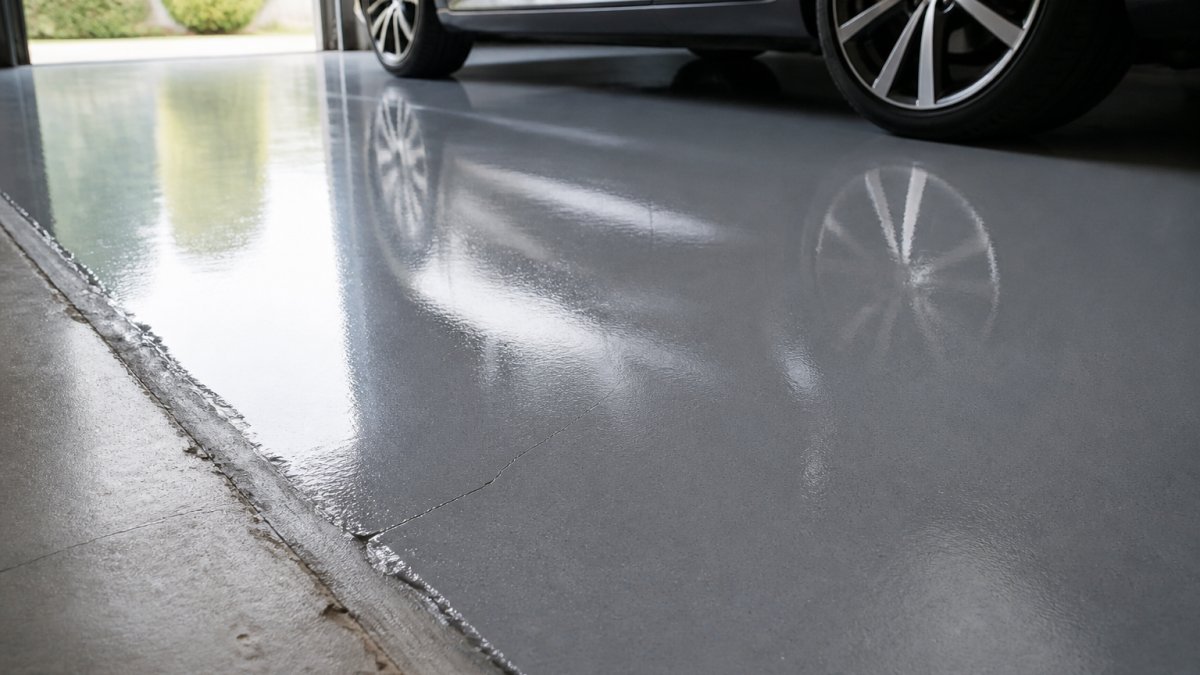
Foot traffic and vehicle traffic impose different demands, and the coating must be selected accordingly.
Paint is not recommended for any vehicle-bearing surface. Its thin film cannot distribute point loads, and hot tyres can lift it.
Most durability failures trace back to one of five causes:
Manufacturers quote strength and adhesion figures from laboratory tests. Those numbers are useful for comparing products, but they do not predict real-world wear. A high laboratory bond strength means little if the slab was damp or dusty at install. Treat ratings as a filter for shortlisting products, then let substrate condition, preparation quality and exposure decide the specification.
Outdoor and high-use surfaces face conditions that indoor floors do not: temperature swings, UV, rain and, in some regions, freeze-thaw cycles. For these areas, specify a system with a UV-stable topcoat, adequate drainage and a texture that maintains grip when wet. Slip resistance is tunable with aggregate and finish choice, it should be selected for the likely contaminant (water, oil, dust), not added as an afterthought.
That is why we specify systems by exposure and traffic, not by habit, and why the preparation stage deserves more attention than the product label.
A concrete floor coating for high traffic areas needs abrasion resistance and grip, not just good looks. Epoxy, with texture added, is the stronger choice where feet, trolleys and vehicles cross daily.
Pedestrian areas like walkways, patios and retail floors need slip resistance and cleanability. Vehicle areas like driveways and car parks need impact and point-load resistance. Paint fails under vehicle traffic. Epoxy handles both, provided the substrate is sound.
| Traffic Type | Epoxy | Paint |
|---|---|---|
| Foot traffic (walkway, patio) | Strong | Adequate |
| Trolleys and heavy foot traffic | Strong | Weak |
| Cars and light vehicles | Strong | Not suitable |
| Commercial car park | Strong | Not suitable |
Most comparisons stop at the sticker price of the tin. That is the wrong number to judge. The figure that matters is cost per year of service, and that means adding the initial install, the maintenance regime, the recoat interval and the cost of localised repairs across the life of the floor.
Any honest epoxy versus paint comparison should put four numbers side by side:
A common pattern in residential and commercial work is that the lowest purchase price belongs to the product with the shortest service life and the highest recoating frequency.
A simple way to frame it: divide total lifetime spend by years of service. If paint needs recoating several times over the period a sound epoxy system lasts, the annualised figure usually favours epoxy, even before you count downtime, furniture removal and disruption.
Epoxy flooring maintenance is genuinely low: sweep, mop with a neutral cleaner, and keep grit off the surface so it does not act as an abrasive. Recoat when wear shows in high-traffic lanes, not across the whole floor. Paint demands more care, scuffs, hot-tyre marks and chemical spills mark it more readily, and once the film breaks down, water gets under the edge and lifts it.
Pricing depends on area, slab condition, moisture readings and the system specified, so a per-square-metre figure quoted without a site check is guesswork. For current rates on your floor, request a quote and ask for the maintenance schedule and recoat interval to be included.
Judge a floor by lifecycle cost, not sticker price. A cheap coating that fails in a year costs more than a durable system that lasts and can be repaired.
Epoxy wins on garages, driveways, car parks, commercial kitchens and pool surrounds where moisture and traffic are constant. Paint wins on low-traffic sheds and quick cosmetic refreshes on a tight budget.
If you are selling and want curb appeal, a resurfaced, sealed floor photographs well and reads as maintained. If the slab is deeply cracked, neither paint nor a thin coat fixes it; crack repair comes first.
For most floors that see regular use, yes. An epoxy floor coating bonds chemically to prepared concrete and builds a thicker film than paint, so it resists abrasion, impact and chemical spills better. Paint sits on the surface as a thin layer and wears through faster under vehicle tyres or heavy foot traffic. The trade-off is that epoxy demands more surface preparation and longer curing before use, which is why DIY paint jobs sometimes look fine for a season and then peel.
Epoxy flooring durability typically runs several years longer than paint when the slab is properly prepared. Paint on a busy garage floor often shows scuffs, hot-tyre marks and worn patches within a year or two. A correctly applied epoxy system with a topcoat holds up considerably longer, though service life depends on traffic type, UV exposure and whether the surface was ground or etched before coating. Maintenance and touch-ups extend both finishes, but epoxy tolerates more abuse.
Epoxy floor preparation is the step that decides whether the coating sticks. The slab needs to be clean, dry and free of oil, grease and old sealers, with cracks repaired and filled first. Most installers grind or shot-blast the surface to open the concrete's pores, then check moisture levels before applying primer. Paint needs a similar clean surface but tolerates less rigorous profiling, which is part of why it bonds less strongly over the long term.
Only if the existing paint is sound and well bonded. Epoxy needs to reach the concrete to form a mechanical and chemical bond, so flaking or peeling paint must be removed first, usually by grinding. A simple adhesion test, pressing tape onto the paint and pulling it off, shows whether the old coating is holding. If it lifts, the paint has to come off before any new epoxy floor coating goes down, otherwise the new layer fails with it.
A concrete floor coating for high traffic areas should be epoxy-based, ideally with a urethane or polyaspartic topcoat for extra wear and UV resistance. Vehicle traffic, such as driveways and car parks, needs a heavier build than a walkway or patio. For commercial kitchens, retail floors and pool surrounds, slip resistance matters as much as hardness, so ask for an anti-slip aggregate in the final coat rather than a smooth gloss finish.
Concrete that is cracked, stained or worn does not have to stay that way. If you are weighing a coating against a full resurface, Spray Pave Pro can assess your slab and recommend the right system. With 23 years of experience, quick installation and durable, low-maintenance results, we make old concrete look new again. Get a free quote from Spray Pave Pro and transform your floors.

