
Last Updated: October 23, 2026
Quick Summary
Choosing a concrete resurfacing company starts with assessing your slab's condition, verifying the contractor holds current licences and insurance, and reviewing their past projects and references. The right concrete resurfacing company will test moisture on-site, explain their preparation process, provide a detailed written quote, and offer realistic warranty coverage for your specific needs.
Not every slab is suitable for resurfacing. Choosing the right concrete resurfacing company starts with an honest assessment of your existing surface.
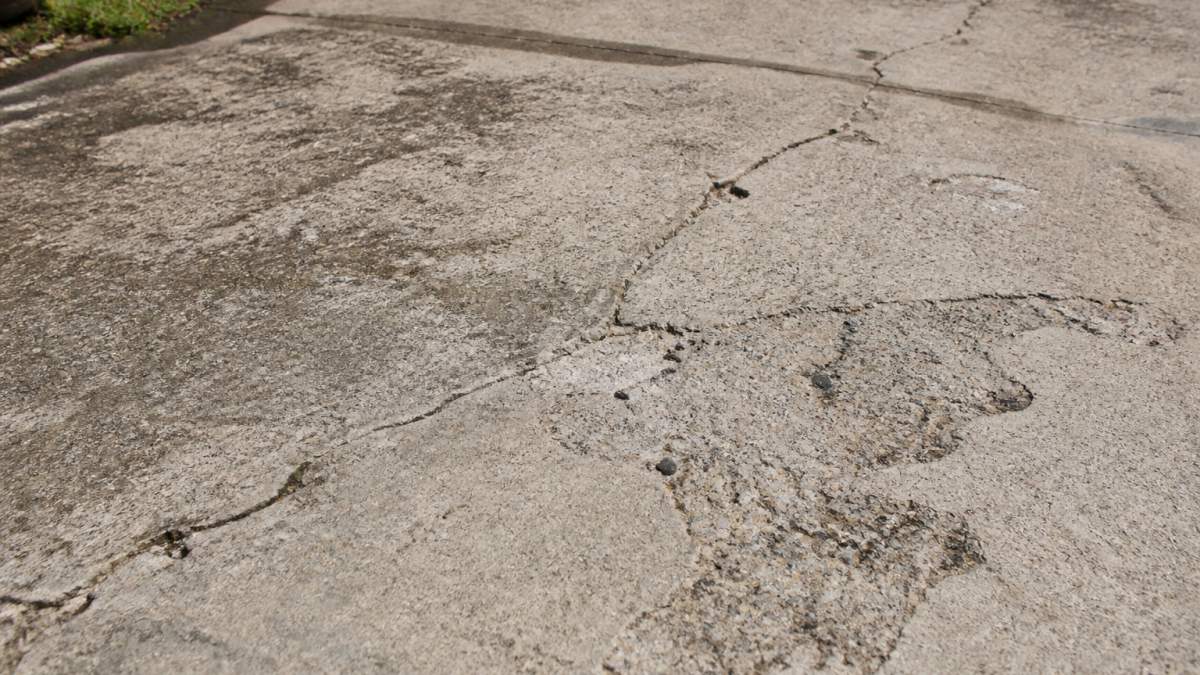
Walk your driveway or patio in daylight. Hairline cracks differ from deep structural cracks; stains, discolouration, and algae are cosmetic, while spalling (concrete chipping away in layers) and large cracks signal deeper problems.
Your contractor should diagnose the cause: edge cracks often point to poor drainage or soil movement, centre cracks to subgrade settlement or freeze-thaw damage, and stains to rust, oil, or minerals. Understanding why concrete resurfacing fails helps you recognize which damage types are suitable for resurfacing and which signal deeper problems.
Document the damage with wide shots and close-ups to give the contractor information before they visit and a baseline afterwards.
Moisture is the silent killer of concrete coatings and overlays; if your slab holds too much, even the best resurfacing will fail within months.
A concrete resurfacing company worth hiring will test moisture on-site with meters.
Ask how they'll assess your site: ponding water, drainage, subgrade, flooding history, coastal salt spray, and shaded damp areas.
If a contractor quotes over the phone without visiting, move on.
Resurfacing isn't always the answer. Sometimes replacement is the better choice, even at higher upfront cost. A concrete resurfacing company should be honest about this.
Resurfacing works when the slab is structurally sound: stable base, no movement, mostly cosmetic or surface-level damage. It typically costs less than replacement and takes days rather than weeks.
Replacement is necessary for severe structural damage: wide cracks that keep growing, significant settlement, or a slab that's heaving or sinking. Resurfacing won't fix these, it'll just hide them temporarily. Learn what to consider before deciding between resurfacing and replacement to make an informed choice.
If your slab is under 10 years old with recent damage, resurfacing often makes sense. If it's 20+ years old with settlement and spreading cracks, replacement may be the better long-term investment. A contractor who understands this will give honest advice instead of pushing the cheaper option.
A concrete resurfacing company operating in Australia should hold relevant licences and insurance.
Check whether the contractor holds a Home Warranty Insurance (HWI) licence for residential work.
Ask about public liability insurance. Request a copy of their current certificate of currency in writing, not verbal assurances.
Some contractors hold accreditation through industry bodies such as the Decorative Concrete Association.
Check the contractor's licence status online.
A concrete resurfacing company's track record matters. You want to see what they've actually delivered, not just hear promises.
Ask for a portfolio, including photos of work completed at least 12 months ago, not just fresh installations.
Ask for at least three references and call them. Ask: Did the work finish on time? Did the crew respect the property? Has the resurfacing held up?
Visit past projects in person if possible.
Be sceptical of contractors who won't provide references or photos. They might be new to the industry, which isn't necessarily bad, but you should know that.
Before hiring, have a detailed conversation. Your questions reveal whether the contractor understands the technical side and will set realistic expectations.
Ask how they'll prepare the surface. Learn the step-by-step resurfacing process so you understand what proper preparation and application look like and can verify the contractor follows industry best practices.
A good contractor will explain their process: high-pressure cleaning, grinding or shot-blasting to profile the surface for grip, and repair of deep cracks or spalling before the overlay goes on.
Ask what grit or profile they'll achieve (rough enough for mechanical bonding) and whether they'll use primer and what type. Some coatings require primer; others don't.
Ask how they'll repair cracks: concrete filler, epoxy injection, or another method, and whether repairs are cosmetic or structural. Deep cracks through the slab may need structural repair before resurfacing.
Different coatings have different properties. Epoxy coatings are durable and chemical-resistant. Polyaspartic coatings cure faster and tolerate moisture better.
Ask what coating or overlay system they recommend for your use case.
Ask about build-up thickness. Thicker isn't always better, but it matters: a 2mm overlay differs from a 5mm overlay in durability and cost.
Ask about finish options: smooth and glossy or textured and slip-resistant? What colours and patterns are available? Some contractors offer stencil finishes or decorative effects.
How long will the work take? Surface preparation and repair might take a day, application another.
Ask about weather restrictions. Most coatings can't be applied in rain or extreme heat, so rain during your scheduled window may force a reschedule.
Ask what access restrictions you'll face during curing. Can you park on the driveway after 24 hours or wait a week?
Ask whether the contractor will handle cleanup and equipment removal, and pressure-wash surrounding areas if overspray occurs.
A quote is your protection. It should be detailed and specific, not vague.
A proper quote includes the scope of work, exactly what will and won't be done.
The quote should state the timeline: start date, expected completion, and any weather contingencies.
A good quote also specifies what's not included. Extra repairs discovered during prep, asbestos or hazardous materials, and changes requested after work starts are typically extra.
Ask whether the quote is fixed or an estimate.
The contract should detail the scope clearly. "Resurface the driveway" is too vague.
Ask about the payment schedule. Some contractors ask for a deposit upfront (typically 25-50%) and the balance on completion.
Ask about warranty and dispute protections. If the coating fails, what will the contractor do?
Ask about dispute resolution. If you're unhappy with the work, what's the process?
Request a written contract that includes all of this. Verbal agreements are unenforceable.
Warranty terms vary. Understand what you're actually covered for.
A typical warranty covers defects in workmanship and materials for a set period, often 2-5 years for residential work. If the coating peels, cracks, or fails due to poor application, the contractor will repair or replace it at no cost.
Warranty usually doesn't cover normal wear and tear: a coating wearing thin in high-traffic areas after five years is normal wear, not a defect. It also typically excludes damage from accidents, improper maintenance, or use beyond what was specified.
Ask what maintenance keeps the warranty valid. Most coatings need regular cleaning, and some need resealing every 2-3 years.
Durability depends on the coating type, surface preparation, climate, and how heavily the surface is used.
Ask the contractor what durability you can realistically expect. A promise of 10 years on a commercial kitchen floor is unrealistic; 5-7 years with proper maintenance is more credible.
Warranty coverage and realistic durability timelines vary by coating type, climate, and maintenance.
| Factor | Typical Coverage | Notes |
|---|---|---|
| Warranty period | 2-5 years | Residential work; covers defects in workmanship and materials |
| What's covered | Peeling, cracking, coating failure | Due to poor application or material defects |
| What's excluded | Normal wear and tear | Fading and thinning in high-traffic areas after years |
| Maintenance requirement | Regular cleaning; resealing every 2-3 years | Skipping maintenance may void warranty |
| Driveway durability | Varies by climate and UV intensity | Fades faster in hot climates with intense UV |
| Pool surround durability | Shorter lifespan | Constantly wet conditions cause faster wear |
| Commercial kitchen floor | 5-7 years realistic | Heavy use reduces durability versus residential |
The right contractor for your project combines technical knowledge, honest communication, proven track record, and fair pricing.
Start by narrowing your options.
Check credentials. Verify licences, insurance, and accreditations. Call references. Look at past projects.
Ask about their experience with your specific situation. Have they resurfaced driveways in your area?
At Spray Pave Pro, we've been resurfacing concrete in Perth for over 23 years. If you want a contractor who'll be honest about what's possible and deliver results that last, get a free quote and see how we can help.
The concrete resurfacing company you choose will determine whether your investment pays off or disappoints.
Choosing a concrete resurfacing company affects your property's durability and appearance for years.
Prioritise verifying licences, insurance, and accreditation with relevant industry bodies. Review their past projects and contact references to see how their work holds up over time. Request a written quote that clearly outlines surface preparation, coating type, build-up thickness, and warranty terms. Ask about their experience with your specific concrete condition, whether it's cracked, moisture-prone, or heavily stained, and confirm they conduct proper moisture testing and site assessment before work begins.
Resurfacing works well for surface-level damage like stains, minor cracks, and cosmetic wear. If your slab has structural issues, severe cracking throughout, or persistent moisture problems that resurfacing won't solve, replacement may be necessary. A qualified contractor will assess your concrete slab condition during a site inspection and advise whether resurfacing or replacement offers better long-term value. Resurfacing is typically more cost-effective and disruptive than full replacement when the underlying slab is structurally sound.
Ask about their surface preparation process, the specific coating type and primer they'll use, and the expected build-up thickness in millimetres. Confirm the project timeline, curing time before the surface is usable, and any access restrictions during work. Request details on their warranty coverage, maintenance requirements, and how they handle disputes. Ask for references from similar projects completed in the past two years and whether they carry public liability and professional indemnity insurance.
A solid warranty should cover adhesion failure, peeling, cracking, and colour fading for a specified period, typically 2-5 years depending on the coating type and application. It should outline maintenance obligations required to keep the warranty valid, such as regular sealing or cleaning schedules. The warranty should specify what constitutes normal wear versus defects, whether it covers labour and materials, and the process for making a claim. Ensure the warranty is in writing and clearly states exclusions, such as damage from extreme weather or failure to follow care instructions.

