
Last Updated: October 12, 2026
Standard epoxy is not the right product for an open patio, and that is the single most important thing to know before you spend money on durable epoxy flooring for outdoor patios. Epoxy flooring is a two-component resin coating that bonds to concrete and forms a hard, seamless, easy-to-clean surface. It performs brilliantly indoors. Outside, under direct sun and rain, a standard epoxy coating will chalk, fade and eventually peel.
This guide covers what actually holds up on an outdoor patio, which systems suit which conditions, and how to avoid the failure that gives epoxy its bad reputation outdoors.
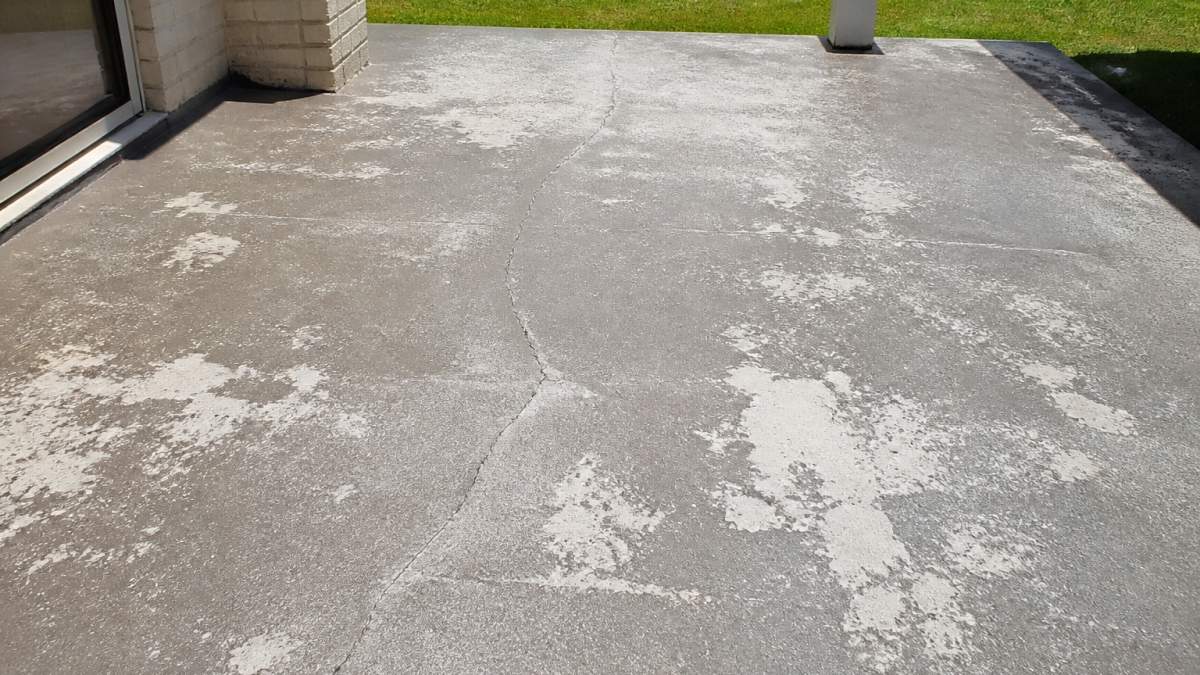
The problem is chemistry, and it shows up fast. Standard epoxy is not UV stable. Prolonged sun exposure breaks down the resin at the surface, which causes ambering, chalking and a dull, powdery finish. Once the surface degrades, water gets underneath and the coating lifts.
Two other factors accelerate failure. Concrete slabs move with temperature, and epoxy is rigid, so it cracks under that movement. Moisture rising through a slab with no vapour barrier pushes the coating off from below.
Yes, but only with the right formulation, and plain epoxy is rarely it. A UV-stable topcoat makes an epoxy base viable outdoors. Without that topcoat, the answer is no.
Three things decide whether a coating survives on an outdoor surface:
If your slab is cracked, spalling or holding moisture, no coating will last until that is addressed. This is where a proper assessment saves money.
Outdoor flooring is not one product category. Epoxy, aliphatic topcoats, polyaspartic and resin-bound permeable systems differ in UV stability, permeability, appearance and maintenance, and those differences decide which one suits your patio. Here is how the main options compare.
| System | Chemistry | UV Stability | Permeability | Best For | Main Trade-Off |
|---|---|---|---|---|---|
| Standard epoxy | Two-part amine-cured resin | Poor, ambers and chalks | Sealed, not permeable | Covered areas only | Fades and peels in direct sun |
| Epoxy + aliphatic topcoat | Epoxy base, aliphatic polyurethane or acrylic topcoat | Good | Sealed, not permeable | Patios, garages, alfresco | Needs correct prep and a sound slab |
| Polyaspartic coating | Polyurea-based, aliphatic backbone | Excellent | Sealed, not permeable | Full-sun patios, coastal exposure | Faster cure, higher material cost |
| Resin-bound paving | Aggregate bound in clear resin | Excellent | Permeable when laid over open-graded base | Permeable surrounds, tree roots, drainage-sensitive sites | Different look and build; not a seamless coating |
Why the chemistry matters. Standard epoxy cures into a rigid, UV-reactive film. Sunlight breaks the amine linkages at the surface, which is why it ambers and chalks rather than simply wearing thin. An aliphatic topcoat replaces that exposed surface with a resin that resists UV degradation, so the colour underneath is protected.
Permeability is the patio-specific variable. Epoxy, aliphatic and polyaspartic systems are all sealed surfaces. They shed water, which is fine on a slab with correct fall and drainage. Resin-bound paving is different, it is laid over an open-graded base and lets water pass through, which suits surrounds where pooling, tree roots or local stormwater rules make a permeable surface preferable.
Maintenance differences. Sealed coatings are cleaned with mild detergent and water and need a light recoat every few years. Resin-bound surfaces need periodic re-grading of the aggregate and are harder to spot-repair. Neither is maintenance-free, but the upkeep profile is different.
The pattern is clear: the systems built for sun, weather and drainage cost more upfront and last considerably longer. For a patio in direct light all day, a UV-stable system is not an upgrade, it is the baseline.
Polyaspartic patio flooring is a polyurea-based coating that resists UV fading, abrasion and weather far better than standard epoxy. That combination is exactly what an exposed patio needs.
It also cures quickly, which matters if you want the space back in use fast. The trade-off is cost and a narrower application window. Polyaspartic sets fast, so it rewards an experienced applicator and punishes a slow one.
For durable epoxy flooring for outdoor patios that take full sun, coastal salt air or heavy temperature swings, a polyaspartic or aliphatic system is the sensible choice. For a covered alfresco area, a well-built epoxy base with a UV-stable topcoat performs well and costs less.
A non-slip outdoor floor coating is a coating with an aggregate or texture added to the surface so it grips when wet. On a patio beside a pool, this is not a nice-to-have. It is the difference between a safe surface and a slip hazard.
Wet, smooth coatings are genuinely dangerous. The fix is straightforward:
Epoxy flooring maintenance is simple, which is one of the real advantages of a coated surface. Sweep or blow off loose dirt, wash with mild detergent and water, and rinse. No sealing, no scrubbing, no re-grouting.
A few habits extend the life of any outdoor coating:
Most coatings need only a light recoat every few years to stay fresh.
A coating is only as good as the preparation underneath it. This checklist outlines the steps for a successful job.
Realistic timeline: most residential patios are prepped and coated in one to two days, with light foot traffic after 24 hours and full use after the cure period. Larger or heavily damaged slabs take longer because the prep does. Be wary of anyone promising a same-day result on a slab that clearly needs repair.
Pricing depends on area, slab condition and system, so any single figure will mislead. What is useful is a framework for comparing quotes and understanding what drives the number.
What drives cost. Four variables dominate:
Lifecycle value, not sticker price. A common pattern is that the cheapest quote fails first. A low-cost coating that chalks and peels within two summers costs more over a decade than a UV-stable system that lasts considerably longer, because the failed coating must be stripped before the correct one can be applied. When comparing quotes, ask each applicator:
Expected service life by system. These are typical ranges, not guarantees, slab condition and climate move them significantly:
Match the system to the conditions:
The coating matters, but the preparation decides the lifespan. A premium product on a badly prepped slab will fail before a mid-range product on a properly prepared one, and the failed premium job costs more to fix.
Standard epoxy can go outside, but it will not last in direct sun. UV exposure breaks down the resin, causing it to yellow and chalk within a year or two. For patios that get full sun, you need a UV-stable topcoat such as an aliphatic polyurethane or a polyaspartic system. These cost more upfront but keep their colour and finish far longer. Spray Pave Pro can assess your patio's sun exposure and recommend the right system.
A properly installed outdoor epoxy system with a UV-stable topcoat will handle foot traffic, patio furniture and occasional machinery. The base epoxy provides the hardness and chemical resistance, while the topcoat protects against sun damage. Expect five to ten years before a recoat is needed, depending on traffic, sun exposure and how well you maintain it. Coastal areas with salt spray may need more frequent attention.
Smooth epoxy is slippery when wet, which is a real concern around pools and in rainy weather. The fix is a non-slip outdoor floor coating with an anti-slip additive mixed into the topcoat or broadcast onto the surface. This creates texture without ruining the finish. For pool surrounds and shaded patios that stay damp, a slip-resistant finish is essential, not optional.
Epoxy flooring maintenance is straightforward: sweep or blow off loose dirt weekly, wash with a mild detergent and a soft broom or mop, and rinse clean. Avoid harsh acids or abrasive pads that dull the finish. For stubborn stains, a diluted ammonia solution works well. Reapply a protective topcoat every few years to extend the life of the system, especially in high-traffic areas.
Polyaspartic patio flooring cures faster and resists UV fading better than standard epoxy, making it a strong choice for sun-exposed patios. Epoxy is harder and more chemical-resistant, so it works well as a base coat under a polyaspartic or aliphatic topcoat. Many professional systems combine both. The best choice depends on your patio's sun exposure, traffic and budget. Spray Pave Pro can advise on the right combination.
A patio that fades, chalks or peels is almost always a system problem, not a maintenance problem, and it is fixable. At Spray Pave Pro, we bring 23 years of resurfacing experience to every job, from high-pressure cleaning and crack repair to epoxy flooring and professional sealing. We back our work with a 100% satisfaction guarantee and a finish built for the conditions your patio actually faces. Get your free quote and transform that tired concrete into a surface that lasts.
