
Last Updated: October 24, 2026
Quick Summary
Spray-on concrete gives a smooth, uniform colour and is typically the lower-cost option per square metre, while stencil concrete uses a paper or plastic pattern laid into a fresh overlay to leave a brick or paver effect. Choose spray-on for long driveways and modern homes, and stencil concrete for period homes, courtyards and paths.
Choosing between spray on concrete vs stencil concrete Perth homeowners face a genuine trade-off, not a marketing one.
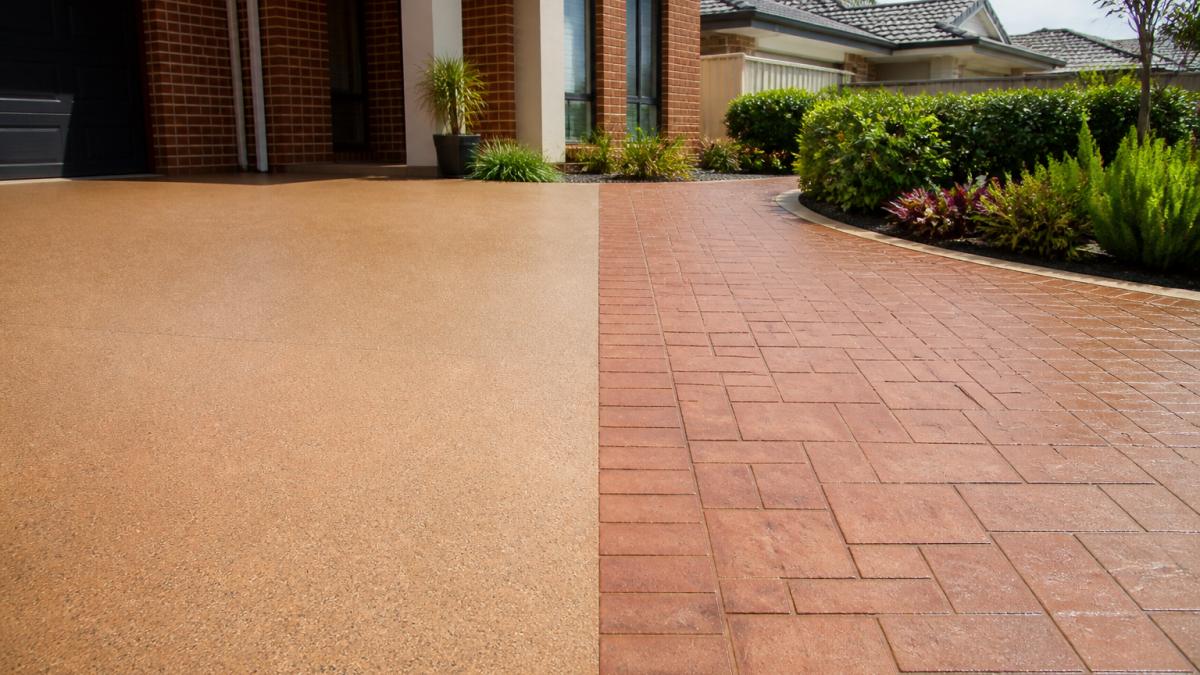
Spray-on concrete is a decorative overlay sprayed over cleaned, repaired existing concrete, then sealed. The process starts with high-pressure cleaning and an acid etch or grinding pass to give the coating a key. Cracks and spalls are filled first. The coloured coating goes on in thin, even passes, and a sealer locks in the colour and helps resist staining. Because the finish is sprayed, colour can be matched closely to roofs, fences and brickwork. Read how spray-on concrete works and whether it suits your surface.
Stencil concrete is a patterned decorative finish created by laying stencil paper into a wet overlay and colouring around it. The stencil is positioned, a coloured surface coating is sprayed over the top, and the paper is peeled away to reveal the pattern beneath. Common patterns mimic brick, slate or pavers, and a stencil tile layout can follow curves and borders. The catch is timing: the overlay must still be workable when the stencil goes down, so this is a job for a crew that does it often. Pattern choice, colour matching and layout all affect the final look.
There is no single rate for concrete resurfacing cost per square metre, because price depends on area, surface condition, pattern complexity and access. What most quotes do not make clear is how the two finishes compare on a like-for-like basis, including preparation and sealing. That is the comparison worth having before you commit.
A fair comparison puts both finishes on the same footing: strip and clean, repair, prime, apply the finish, then seal. Spray-on concrete is typically the lower-cost option per square metre because there is no stencil material and no laying and lifting labour. Stencil concrete carries a premium for the stencil paper or plastic, the extra crew time to position and lift it while the overlay is still workable, and the care needed to keep pattern edges crisp.
A spray-on finish and a stencil finish both need resealing to protect the colour and surface. Resealing is the main recurring cost, and high-traffic driveways need it sooner than a shaded patio. Cleaning is broadly similar, though stencil pattern edges can collect dirt and may need a little more attention over the years. When you compare quotes, ask for preparation, coating and sealing as separate line items so you can see what is actually included, a cheap quote that skips grinding or repair is not cheaper over the life of the surface.
We quote each job after inspecting the surface, because the base decides the preparation scope and therefore the price.
Good concrete resurfacing preparation decides whether the finish lasts five years or fifteen. A coating bonds to what is underneath it, so the base has to be sound, clean and dry. Our process covers:
Skip any of these and the overlay can lift, blister or flake, no matter how good the colour looks on day one. This is the step most cheap quotes cut, and it is the step that matters most.
Both finishes are durable when applied over a sound base and sealed properly, but they wear differently and suit different sites. The deciding factors are sun and UV exposure, heat, rain, slope, traffic and how the surface drains.
Spray-on concrete is a coloured coating over prepared concrete, sealed to lock in colour and resist staining. The sealer is the sacrificial layer: it takes the UV and traffic wear so the colour underneath does not. In strong sun and long dry spells, a quality sealer is what prevents fading and chalking, and it is the first thing to fail if the wrong product is used or the recoat interval is stretched.
Texture matters more than pattern for grip. A textured spray-on finish can be specified for pool surrounds, sloping paths and driveways where wet-weather traction is the priority. Stencil finishes can also be textured, but the pattern itself does not guarantee slip resistance, the surface profile and sealer do. For wet areas and slopes, ask specifically about the texture and the sealer's slip rating rather than assuming a pattern provides grip. A dedicated non-slip coating is often the better answer for pool decks, so it is worth reading a review of non-slip patio coatings before you commit.
Both finishes are long-lived when the base is sound and the sealer is maintained. Resealing is the main task, and how often depends on traffic, sun exposure and the sealer used. A typical approach is to reseal every few years, with high-traffic driveways needing it sooner than a shaded patio. Day to day, sweep regularly, clean spills promptly and avoid harsh chemicals that strip the sealer. If you want to plan ahead, our guide on how long concrete sealing lasts explains the signs that a reseal is due.
Concrete resurfacing maintenance is simple but not optional. Resealing is the main task, and how often depends on traffic, sun exposure and the sealer used. A typical approach is to reseal every few years, with high-traffic driveways needing it sooner than a shaded patio. Day to day, sweep regularly, clean spills promptly and avoid harsh chemicals that strip the sealer. If you want to plan ahead, our guide on how long concrete sealing lasts explains the signs that a reseal is due.
Resurfacing wins when the existing concrete is structurally sound but tired, stained or cracked at the surface. Replacement is the right call when the slab is heaving, badly broken or draining poorly. For most Perth driveways and patios, resurfacing is the cheaper, faster option and avoids the mess of demolition. Once you have decided to resurface rather than replace, the next job is picking the right crew, and our guide on how to choose a concrete resurfacing company covers the questions worth asking.
Spray-on concrete suits homeowners who want a clean, modern look with colour matched to the house, and it works well on long driveways where a pattern would look busy. If you are still weighing spray-on against stencil, our spray-on concrete driveway resurfacing service shows the finishes we apply and how they look on local homes.
| Factor | Spray-On Concrete | Stencil Concrete |
|---|---|---|
| Look | Smooth, uniform colour | Patterned, brick or paver effect |
| Best for | Long driveways, modern homes | Period homes, courtyards, paths |
| Relative cost | Lower | Higher, due to stencil labour |
| Maintenance | Reseal every few years | Reseal plus careful cleaning of pattern edges |
| Slip resistance | Texture can be specified | Depends on finish and sealer |
Choosing a finish is easy. Choosing a crew that prepares the base properly is the hard part, and it is what separates a finish that lasts from one that peels within a season.
Spray-on concrete applies a coloured surface coating over prepared existing concrete, giving a smooth, uniform finish with a broad colour range. Stencil concrete lays a pattern template into a new overlay, then sprays colour across it to leave a brick, tile or paver look. The practical difference is appearance and application: spray-on suits existing slabs and cleaner modern looks, while stencil concrete creates pattern and texture, usually as part of a new pour or full overlay.
Concrete resurfacing cost per square metre depends on the finish, the size of the area, how much surface preparation and repair is needed, and whether you choose spray-on, stencil or another decorative concrete option. Cracked or contaminated slabs need more prep work, which adds to the total. For a current figure on your driveway or patio, request a free quote so the price reflects your actual site conditions rather than a generic rate.
Both can go over existing concrete, but the slab has to be sound. Concrete resurfacing preparation typically involves high-pressure cleaning, grinding or acid etch to open the surface, and repair of cracks, spalling and movement joints. If the slab is structurally failing, resurfacing will not fix it, and replacement becomes the better option. A site inspection confirms whether your existing concrete is a suitable base before any coating or overlay goes down.
Spray-on concrete is generally the simpler surface to live with: a smooth finish sweeps and hoses clean, and there are no pattern lines to trap dirt. Stencil concrete needs a little more attention because grit collects in the pattern grooves. Both rely on a sealer to protect colour and resist staining, and concrete resurfacing maintenance usually means resealing every few years depending on foot and vehicle traffic, plus prompt cleaning of oil and leaf tannin.
It can be, if the cracks are surface-level and the slab is stable. Hairline cracks, staining and worn colour are exactly what resurfacing is designed to address, and it costs far less than removing and repouring concrete. Deep cracks, sinking sections or widespread structural cracking point to a base problem that a coating will not solve. Have the driveway assessed first so you know whether concrete resurfacing vs replacement is the right call for your property.

