
Last Updated: September 19, 2026
Concrete sealing applies a protective coating that blocks water, UV rays, stains and chemicals from reaching the slab beneath. Perth's long dry summers, intense sunlight and heavy downpours age bare concrete fast.
Sealing slows concrete's two biggest killers: water ingress and surface erosion. Water soaks into porous concrete, expands as it heats, and breaks the surface apart. Sealing blocks that path.
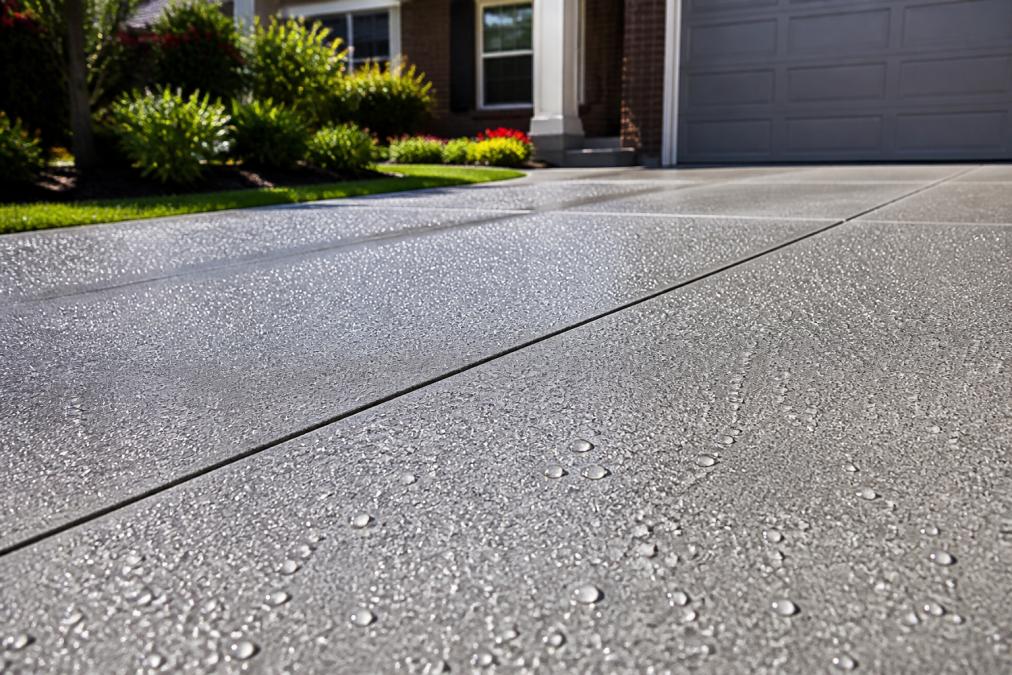
Perth gets more sunny days than almost any capital city in the country, and that sunlight breaks down bare concrete. UV degradation fades colour, chalks the surface and turns the top layer powdery. A sealer with UV blockers acts like sunscreen for your slab.
Bare concrete is porous, so oil, grease, wine and rust soak straight in. Once a stain reaches the substrate, scrubbing will not remove it. A penetrating sealer lines the pores and makes the surface hydrophobic, so spills sit on top.
Sealed concrete needs less work to keep clean: dirt, leaves and grime sit on the surface rather than bonding to it, so a hose-down or quick pressure clean does most of the job.
Wet concrete around pools, paths and patios is a genuine hazard. The right sealer adds a slip-resistant finish with better grip when wet, without making the surface rough.
| Surface area | Slip risk when wet | Best sealer approach |
|---|---|---|
| Pool surrounds | High | Slip-resistant topical sealer |
| Driveways | Medium | Penetrating sealer |
| Patios and paths | Medium | Matte sealer with grip additive |
| Garage floors | Low to medium | Epoxy with anti-slip aggregate |
A sealed, well-kept driveway changes how a home looks from the street: richer colour, an even surface, and a property that reads as well maintained. That first impression counts when selling.
Water is concrete's quietest enemy: it seeps into pores, carries dissolved salts, and causes efflorescence, the white powdery bloom on the surface, plus moisture ingress that weakens the slab over time.
There are two families of concrete sealer, and they work in completely different ways. Picking the wrong one is the most common reason a sealing job fails within a year.
| Feature | Penetrating sealer | Topical sealer |
|---|---|---|
| Chemistry | Silane, siloxane, silicate | Acrylic, polyurethane, epoxy |
| Where it sits | Inside the pores | Film on the surface |
| Look | Natural, matte, slight darkening | Glossy, satin or coloured |
| Breathability | High, moisture escapes | Low, can trap moisture |
| UV behaviour | Stable, does not chalk | Acrylics can yellow and chalk |
| Wear pattern | Wears evenly, no peeling | Scuffs, scratches, peels at edges |
| Salt-air performance | Excellent | Varies; cheap acrylics fail fast |
| Best for | Driveways, paths, exposed aggregate | Decorative patios, garage floors, showpiece areas |
| Maintenance | Reapply when water stops beading | Clean regularly; strip and recoat when worn |
You can seal concrete yourself, but the result depends almost entirely on surface preparation. Most failed DIY jobs skip cleaning and repair, and the sealer peels or fails within a year.
Safe Work Australia guidance on outdoor surface safety
Cost per square metre is the first thing most homeowners want to know, and the number most articles dodge. The honest answer is a range, driven by four things: surface area, condition, sealer type and access.
As a general guide, most residential sealing work falls into these bands per square metre:
| Job type | Typical band (per m²) | Notes |
|---|---|---|
| Reseal over sound, previously sealed concrete | Lowest band | Minimal prep, single coat |
| First seal on clean, sound bare concrete | Mid band | Pressure clean, dry, one or two coats |
| First seal with crack repair and stain treatment | Upper-mid band | Prep dominates the cost |
| Decorative or coloured finish with topical sealer | Upper band | Film-forming product, more care required |
| Epoxy garage coating system | Separate bracket | Not a sealer; includes grinding and multi-coat build |
When you get quotes, ask each provider to break the price into four parts: preparation, repairs, product (brand and type), and number of coats. A dramatically cheaper quote almost always means less prep, a thinner product or a single coat, the job that fails first.
Also ask:
A failed seal is more expensive than a correct one. If a cheap job peels within a year, you pay for stripping, surface repair and a second application, often more than the original professional quote. That is the real cost comparison.
Master Builders Australia guide to home improvement work
How long a concrete sealer lasts depends on the type, surface and local climate. Penetrating sealers generally last longer between coats than topical film-forming sealers, which wear and peel.
Several factors shorten the lifespan of any sealer:
CSIRO research on building materials and durability
The seven benefits stack up: longer life, UV protection, stain resistance, easier cleaning, better safety, stronger curb appeal and a moisture barrier. Together they turn a tired slab into a surface that looks good and lasts.
Resealing frequency depends on the sealer type and how much traffic the surface gets. Penetrating sealers typically need reapplying every 3 to 5 years, while topical sealers may need refreshing every 1 to 2 years. High-traffic driveways and pool surrounds wear faster, so check the surface annually for dullness, water absorption or colour fade. A simple water test, where you splash water on the concrete and see if it soaks in rather than beading, tells you when it is time to reseal.
Sealing does not stop structural cracking caused by ground movement or tree roots, but it does protect against surface-level cracking and spalling. By forming a moisture barrier, a sealer stops water from soaking into the concrete and expanding during temperature changes, which is a common cause of surface deterioration. For existing cracks, a professional resurfacing service can fill and repair them before sealing so the finished surface is smooth and protected.
Yes, sealing old concrete is often worth it, especially if the surface is structurally sound but looks tired or stained. Sealing locks in the existing surface, prevents further UV degradation and makes cleaning easier. It also improves slip resistance when the right product is used. If the concrete has deep cracks or major spalling, resurfacing before sealing delivers a better long-term result. Speak to a specialist to assess whether sealing alone will meet your needs.
You can seal concrete yourself if the surface is clean, dry and in good condition, and you use a quality product suited to the job. However, professional concrete sealing delivers more consistent coverage, better surface preparation and access to commercial-grade sealers that last longer. Professionals also know how to handle moisture issues, apply the right number of coats and avoid common mistakes like trapping moisture under the sealer. For driveways with stains, cracks or high-traffic use, hiring a professional is usually the more cost-effective choice.
