
Last Updated: September 19, 2026
Concrete sealing applies a protective coating that blocks water, UV rays, stains and chemicals from reaching the slab beneath. Perth's long dry summers, intense sunlight and heavy downpours age bare concrete fast.
Sealing slows concrete's two biggest killers: water ingress and surface erosion. Water soaks into porous concrete, expands as it heats, and breaks the surface apart. Sealing blocks that path.
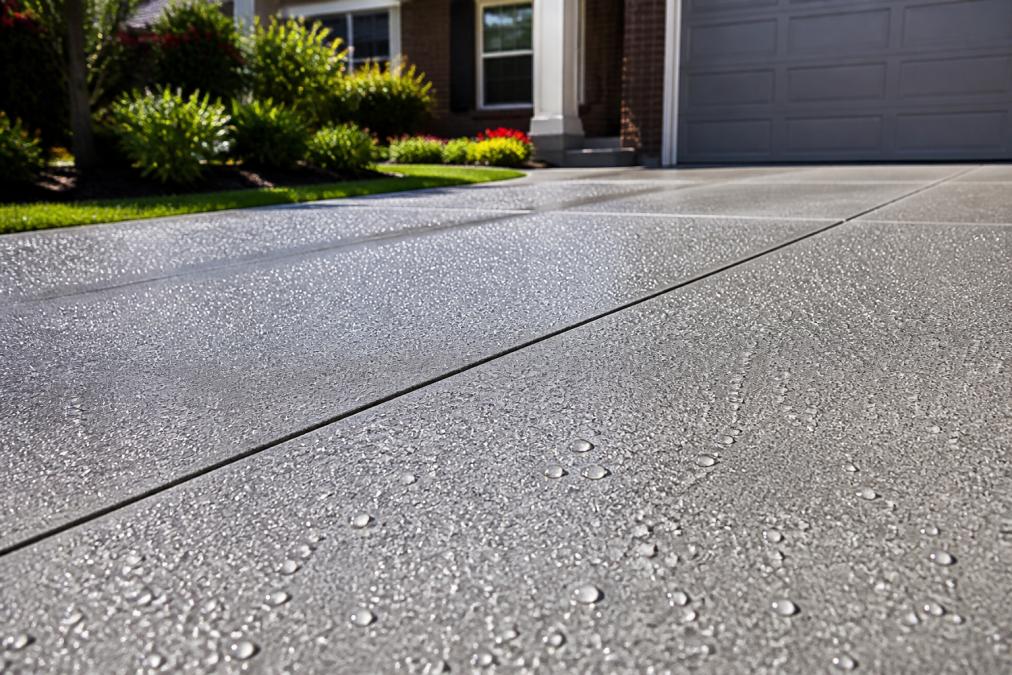
Perth gets more sunny days than almost any capital city in the country, and that sunlight breaks down bare concrete. UV degradation fades colour, chalks the surface and turns the top layer powdery. A sealer with UV blockers acts like sunscreen for your slab.
Bare concrete is porous, so oil, grease, wine and rust soak straight in. Once a stain reaches the substrate, scrubbing will not remove it. A penetrating sealer lines the pores and makes the surface hydrophobic, so spills sit on top.
Sealed concrete needs less work to keep clean: dirt, leaves and grime sit on the surface rather than bonding to it, so a hose-down or quick pressure clean does most of the job.
Wet concrete around pools, paths and patios is a genuine hazard. The right sealer adds a slip-resistant finish with better grip when wet, without making the surface rough.
| Surface area | Slip risk when wet | Best sealer approach |
|---|---|---|
| Pool surrounds | High | Slip-resistant topical sealer |
| Driveways | Medium | Penetrating sealer |
| Patios and paths | Medium | Matte sealer with grip additive |
| Garage floors | Low to medium | Epoxy with anti-slip aggregate |
A sealed, well-kept driveway changes how a home looks from the street: richer colour, an even surface, and a property that reads as well maintained. That first impression counts when selling.
Water is concrete's quietest enemy: it seeps into pores, carries dissolved salts, and causes efflorescence, the white powdery bloom on the surface, plus moisture ingress that weakens the slab over time.
There are two families of concrete sealer, and they work in completely different ways. Picking the wrong one is the most common reason a sealing job fails within a year.
| Feature | Penetrating sealer | Topical sealer |
|---|---|---|
| Chemistry | Silane, siloxane, silicate | Acrylic, polyurethane, epoxy |
| Where it sits | Inside the pores | Film on the surface |
| Look | Natural, matte, slight darkening | Glossy, satin or coloured |
| Breathability | High, moisture escapes | Low, can trap moisture |
| UV behaviour | Stable, does not chalk | Acrylics can yellow and chalk |
| Wear pattern | Wears evenly, no peeling | Scuffs, scratches, peels at edges |
| Salt-air performance | Excellent | Varies; cheap acrylics fail fast |
| Best for | Driveways, paths, exposed aggregate | Decorative patios, garage floors, showpiece areas |
| Maintenance | Reapply when water stops beading | Clean regularly; strip and recoat when worn |
You can seal concrete yourself, but the result depends almost entirely on surface preparation. Most failed DIY jobs skip cleaning and repair, and the sealer peels or fails within a year.
Safe Work Australia guidance on outdoor surface safety
Cost per square metre is the first thing most homeowners want to know, and the number most articles dodge. The honest answer is a range, driven by four things: surface area, condition, sealer type and access.
As a general guide, most residential sealing work falls into these bands per square metre:
| Job type | Typical band (per m²) | Notes |
|---|---|---|
| Reseal over sound, previously sealed concrete | Lowest band | Minimal prep, single coat |
| First seal on clean, sound bare concrete | Mid band | Pressure clean, dry, one or two coats |
| First seal with crack repair and stain treatment | Upper-mid band | Prep dominates the cost |
| Decorative or coloured finish with topical sealer | Upper band | Film-forming product, more care required |
| Epoxy garage coating system | Separate bracket | Not a sealer; includes grinding and multi-coat build |
When you get quotes, ask each provider to break the price into four parts: preparation, repairs, product (brand and type), and number of coats. A dramatically cheaper quote almost always means less prep, a thinner product or a single coat, the job that fails first.
Also ask:
A failed seal is more expensive than a correct one. If a cheap job peels within a year, you pay for stripping, surface repair and a second application, often more than the original professional quote. That is the real cost comparison.
Master Builders Australia guide to home improvement work
How long a concrete sealer lasts depends on the type, surface and local climate. Penetrating sealers generally last longer between coats than topical film-forming sealers, which wear and peel.
Several factors shorten the lifespan of any sealer:
CSIRO research on building materials and durability
The seven benefits stack up: longer life, UV protection, stain resistance, easier cleaning, better safety, stronger curb appeal and a moisture barrier. Together they turn a tired slab into a surface that looks good and lasts.
Resealing frequency depends on the sealer type and how much traffic the surface gets. Penetrating sealers typically need reapplying every 3 to 5 years, while topical sealers may need refreshing every 1 to 2 years. High-traffic driveways and pool surrounds wear faster, so check the surface annually for dullness, water absorption or colour fade. A simple water test, where you splash water on the concrete and see if it soaks in rather than beading, tells you when it is time to reseal.
Sealing does not stop structural cracking caused by ground movement or tree roots, but it does protect against surface-level cracking and spalling. By forming a moisture barrier, a sealer stops water from soaking into the concrete and expanding during temperature changes, which is a common cause of surface deterioration. For existing cracks, a professional resurfacing service can fill and repair them before sealing so the finished surface is smooth and protected.
Yes, sealing old concrete is often worth it, especially if the surface is structurally sound but looks tired or stained. Sealing locks in the existing surface, prevents further UV degradation and makes cleaning easier. It also improves slip resistance when the right product is used. If the concrete has deep cracks or major spalling, resurfacing before sealing delivers a better long-term result. Speak to a specialist to assess whether sealing alone will meet your needs.
You can seal concrete yourself if the surface is clean, dry and in good condition, and you use a quality product suited to the job. However, professional concrete sealing delivers more consistent coverage, better surface preparation and access to commercial-grade sealers that last longer. Professionals also know how to handle moisture issues, apply the right number of coats and avoid common mistakes like trapping moisture under the sealer. For driveways with stains, cracks or high-traffic use, hiring a professional is usually the more cost-effective choice.
Last Updated: September 18, 2026
Professional concrete sealing is the process of applying a protective coating to concrete surfaces to prevent water, oil, and stain penetration. The sealer bonds with the concrete's porous surface, creating a barrier that extends the material's lifespan and maintains its appearance.
Unsealed concrete absorbs moisture, dirt, and oils like a sponge. Sealed concrete resists these contaminants, stains don't stick, water doesn't pool, and cleaning becomes easier.
There are two main types of sealers: penetrating sealers and topical coatings. Penetrating sealers work by bonding at a molecular level within the concrete, maintaining the surface's natural texture and slip-resistance. Topical coatings like polyurethane and epoxy sit on top of the concrete, creating a glossy finish. Each serves different purposes depending on your climate and intended use.
The difference between amateur and professional sealing comes down to surface preparation, sealer selection, and technique. Rushing prep work or choosing the wrong sealer type undermines the entire investment.
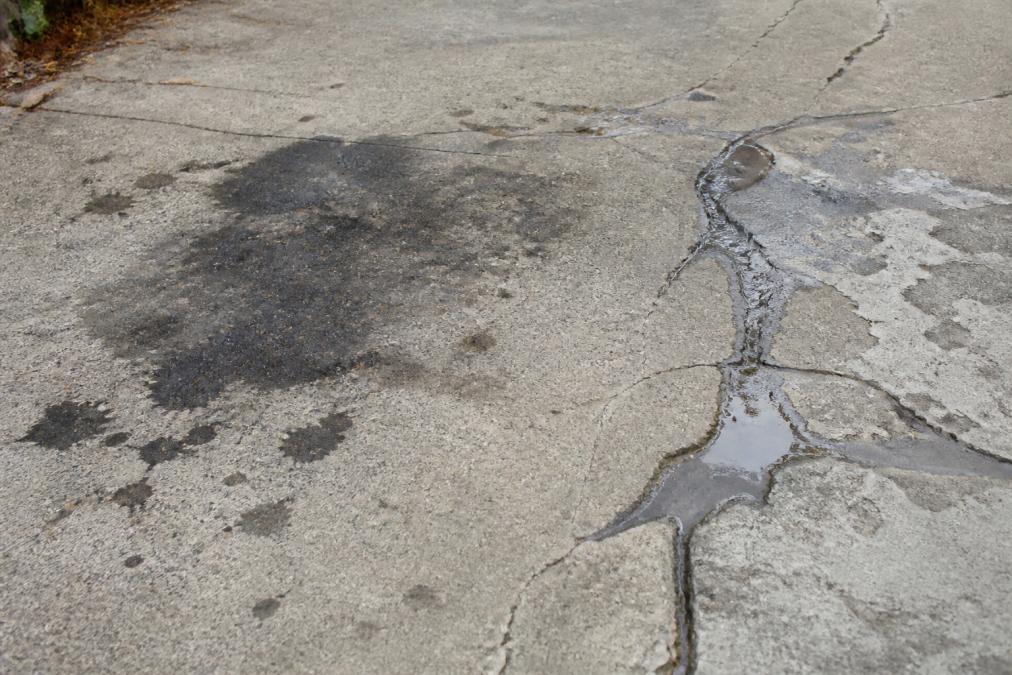
Your concrete tells you when it needs attention. Dark stains that won't wash away indicate the sealer has failed and water is penetrating the surface. Efflorescence, that white, chalky powder on the concrete, means moisture is rising from below, carrying salts to the surface. Both signal that resealing is due.
Spalling, where the concrete surface flakes or peels in chunks, means freeze-thaw cycles have already damaged the structure. Once spalling starts, sealing alone won't reverse it, though it can prevent further deterioration. Cracks wider than 3mm should be repaired before sealing, as water will still penetrate through them.
Discolouration and UV degradation signal worn protection. Most concrete needs resealing periodically, depending on traffic, weather exposure, and sealer type.
Water beading is a quick test. Splash water on your concrete. If it beads up and rolls off, the sealer is still working. If water soaks in and darkens the surface, resealing is overdue.
Concrete sealer durability varies significantly based on climate, traffic, and sealer type. Penetrating sealers typically last several years under normal conditions. Topical coatings like polyurethane and epoxy can last longer, though high-traffic areas wear faster.
Freeze-thaw cycles are the sealer's biggest enemy. Winter moisture that penetrates and refreezes expands, pushing the sealer away from concrete, making resealing frequency critical in regions with temperature swings.
UV exposure degrades sealers over time. UV-stable sealers last longer, but shaded areas still outlast sun-exposed sections by several years.
Professional application extends sealer life through proper surface preparation, correct thickness, and quality products. Rushed application or poor prep cuts lifespan in half.
Professional concrete sealing costs depend on surface condition. Heavily stained or cracked concrete requires more prep work and costs more than clean surfaces.
Sealer type matters significantly. Penetrating sealers cost less than topical coatings. Epoxy and polyurethane finishes command higher prices due to their durability and the skill required for application. The size of the area also influences per-square-metre pricing, larger projects typically cost less per unit than small ones.
Labour costs vary by region and contractor expertise, reflecting quality of results and warranty backing.
Surface preparation is where costs can surprise you. If your concrete requires grinding, crack filling, or extensive cleaning before sealing, that adds to the total. Some contractors bundle this into a quote; others charge separately.
A professional site assessment provides accurate cost estimates accounting for concrete condition, sealer type, and property size.
DIY sealing can appear cheaper upfront compared to professional services, but most DIY sealing fails within 12-18 months, costing more in total.
Why DIY Sealing Fails: A Failure Analysis
Most DIY sealing fails within 12-18 months due to one or more of these issues:
1. Inadequate Surface Preparation
Concrete must be clean, dry, and free of loose material for sealer adhesion. Pressure washing alone isn't enough. Common mistakes include:
2. Incorrect Sealer Selection
DIYers often buy shelf sealers without considering concrete type, climate, or intended use. Common mistakes:
3. Application Technique Errors
Application technique determines success: uneven coverage leaves thin spots that fail first; over-application becomes slippery and traps moisture; under-application fails prematurely; wrong weather prevents curing; inadequate curing time before use weakens the bond.
4. Timing and Curing Issues
New concrete must cure 28 days before sealing; existing concrete requires 48-72 hours drying after cleaning. Professionals schedule around weather windows; DIYers often seal concrete that's too wet or in poor conditions.
Identifying a Failed DIY Seal Job
If you're considering whether a previous seal job failed, look for these signs:
Failed sealers require professional stripping (costly), re-preparation, and correct resealing.
The Real Cost Comparison
| Approach | Upfront Cost | Expected Lifespan | Prep Work Quality | Risk of Failure | Total Cost Over 10 Years |
|---|---|---|---|---|---|
| DIY Sealing | $200-$400 | 12-18 months | Often inadequate | High (60-80%) | $1,200-$2,000 (multiple failed attempts + eventual professional fix) |
| Professional Sealing | $800-$1,600 | 5-10 years | Thorough | Low (5-10%) | $1,600-$3,200 (initial + one resealing cycle) |
Failed DIY sealing requiring professional stripping and resealing costs more than professional sealing from the start.
Professional Sealing Advantages
Professional sealing includes expertise in sealer selection, proper surface preparation with professional-grade equipment, correct application technique, 2-5 year warranty backing, and optimal scheduling during weather windows.
Professional concrete sealing delivers measurable return on investment over time, but the calculation requires actual numbers, not vague promises. The real ROI isn't just about avoiding resealing; it's about protecting the underlying concrete asset and avoiding catastrophic repair costs.
The Cost of Neglect vs. Maintenance
Consider a typical driveway:
Unsealed concrete scenario: Develops visible damage (staining, efflorescence, minor spalling) over time. Repair costs for crack filling, spalling removal, and resurfacing can be significant. Full replacement (if damage is extensive) can be very costly. Total cost over 20 years can be substantial, including multiple repair cycles.
Sealed concrete scenario: Professional sealing costs vary initially. Resealing periodically incurs further costs. Total cost over 20 years is generally lower than the unsealed scenario.
Curb Appeal and Property Value
Maintenance Cost Reduction
Sealed concrete requires less aggressive maintenance:
ROI Timeline
The payback period depends on your situation:
The Hidden Cost of Delay
Your climate determines which sealer performs best. Freeze-thaw cycles are the primary concern, water that penetrates and refreezes expands, causing spalling and cracking. Freeze-thaw-rated sealers are essential in regions with winter temperature swings.
Professional concrete sealing typically lasts several years depending on the sealer type and environmental conditions. Penetrating sealers generally last longer than acrylic options. High-traffic areas and exposure to freeze-thaw cycles shorten the lifespan. Regular maintenance and timely resealing extend the protection and prevent moisture ingress that causes spalling and staining.
Pricing depends on sealer type, surface preparation requirements, concrete condition, and local labour rates. Professional application includes pressure washing and surface preparation before sealing, which affects total cost. For accurate pricing tailored to your driveway or patio size, obtain a quote from a professional service provider who can assess your specific surface.
DIY sealing is possible for small areas, but professional application delivers superior results. Professionals ensure proper surface preparation, even coverage, and correct product selection based on porosity and exposure. Poor DIY application leads to patchy protection, premature failure, and wasted money. Professional sealing provides durability guarantees and saves time, making it cost-effective for most homeowners.
Unsealed concrete absorbs water, leading to staining, efflorescence, spalling, and cracks. Freeze-thaw cycles accelerate damage by expanding water trapped in pores. Oil stains become permanent. UV degradation dulls the surface. These issues reduce curb appeal, lower property value, and eventually require expensive repairs or replacement. Sealing prevents moisture barrier failure and extends concrete lifespan significantly.
Last Updated: September 13, 2026
Choosing the best sealers for spray on concrete comes down to matching the formula to the surface, the finish you want, and how much traffic the slab takes. This guide from Spray Pave Pro breaks down solvent versus water-based options, four proven products, and the spray technique that separates a ten-year coating from a one-year failure.
Concrete sealer is a protective coating or penetrating treatment applied to a concrete substrate to resist water, salt, oil, and UV damage while extending the surface's service life.
The table below summarises the four products covered in this guide before we examine each in detail.
| Product | Type | Finish | Best For |
|---|---|---|---|
| Foundation Armor AR350 | Solvent-based acrylic | Satin wet-look | Decorative driveways |
| Foundation Armor SX5000WB | Water-based silane-siloxane | Natural, invisible | Exposed aggregate, pavers |
| Ghostshield Siloxa-Tek 8500 | Water-based penetrating | Matte, natural | High-traffic, oil-prone areas |
| Super Seal 30 | High-solids acrylic | High-gloss | Stamped concrete |
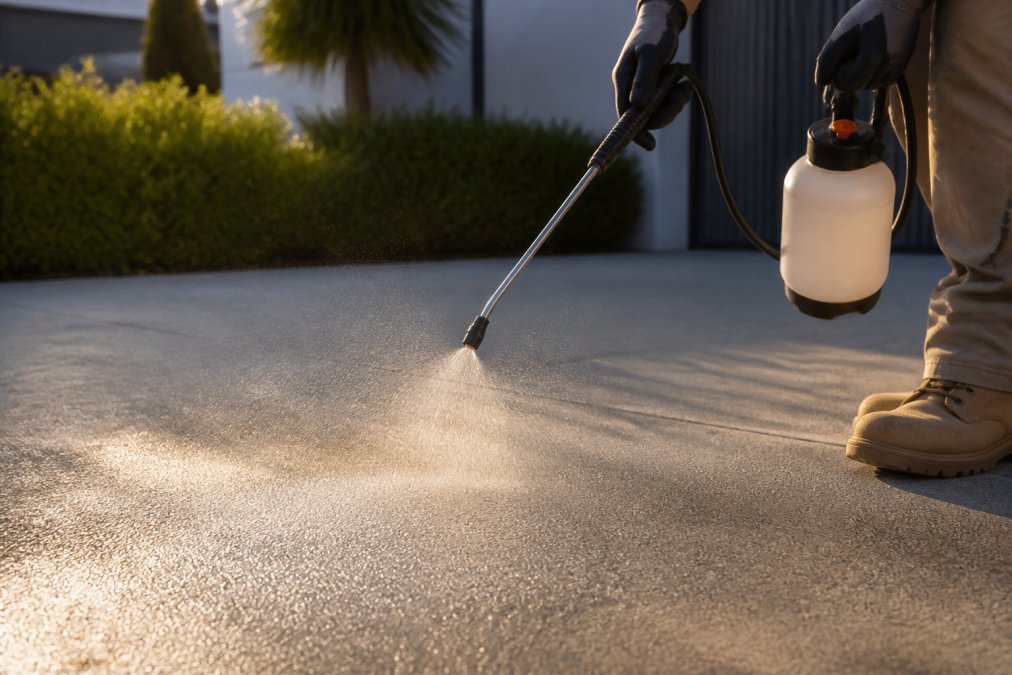
Solvent-based sealers cure faster and produce a richer wet-look finish, while water-based formulas carry lower VOC levels, dry with less odour, and suit surfaces where a natural appearance matters more than shine. The right choice depends on your finish goal, ventilation, and the sealer's re-coat window.
VOC compliance matters here. Water-based products generally meet stricter volatile organic compound limits, which makes them the practical default for occupied homes and commercial premises where fumes are a concern.
Solvent-based acrylics like AR350 flash off quickly and bond aggressively to porous concrete, but they demand solvent-safe spray equipment and proper ventilation. Water-based penetrating sealers such as SX5000WB soak into the substrate and react within the pores rather than sitting on top.
A common mistake is assuming one type is universally superior. It isn't. For a stamped concrete patio where colour depth is the priority, solvent-based wins. For a driveway that must stay slip-resistant when wet, a non-film-forming water-based sealer is the safer call.
Spray compatibility is not universal. Some sealers are formulated for airless sprayers and pump sprayers, while others clog fine nozzles or flash off before they reach the surface. The four products below are all designed with spray application in mind, but each demands different equipment and technique.
A solvent-based acrylic sealer built for a wet-look finish, AR350 enhances colour while forming a breathable film. It resists UV light and chemicals, and it sprays cleanly through compatible equipment. Best for decorative and spray-on concrete where aesthetic depth matters. The trade-off: solvent handling requires care.
Spray equipment notes: AR350's solvent carrier demands solvent-resistant seals, hoses, and gaskets. Standard pump sprayers with Viton or PTFE seals work well; natural rubber components degrade quickly. An airless sprayer with a tip size between 0.015 and 0.017 inches at 1,500-2,000 psi delivers an even mist without atomising too finely, which can cause overspray drift. Keep the wand moving; solvent-based acrylics tack up fast, and a stationary pass leaves lap marks that cure into visible ridges.
This water-based penetrating sealer uses a silane-siloxane formula to reduce water and salt absorption without changing the surface appearance. Non-film-forming and low-VOC, it maintains a natural look and won't make the slab slippery. The limitation is obvious: no gloss, no colour enhancement.
Spray equipment notes: SX5000WB is thin, similar in viscosity to water, so it sprays through most pump sprayers with a fan nozzle. The risk here is over-application, not clogging. Because it penetrates rather than films, excess product pools in low spots and cures as a white residue. Use a lower pressure setting and maintain a consistent walking pace. A tip size between 0.011 and 0.013 inches on an airless unit works, but reduce pressure to avoid splashing.
An industrial-grade penetrating sealer offering hydrophobic and oleophobic properties, meaning it repels both water and oil. It resists mould and mildew while remaining breathable. For high-traffic areas prone to oil staining, this is the strongest performer in the group. It costs more than standard acrylics.
Spray equipment notes: This product is formulated for spray application but requires thorough agitation before and during use, as silane-siloxane blends separate over time. A pump sprayer with a Viton seal kit handles it well. Clean the sprayer immediately after use; once the silane begins to react, it leaves a gummy residue that clogs nozzles and lines. Do not let it sit in the sprayer between coats.
A high-solids acrylic delivering a high-gloss finish with UV resistance to prevent yellowing. It sprays well and suits stamped and spray-on concrete that needs a vibrant, polished look. The catch: high gloss can become slippery when wet, so consider a slip-resistant additive on pool surrounds.
Spray equipment notes: High-solids acrylics are thicker and demand an airless sprayer with a larger tip size between 0.017 and 0.021 inches and higher pressure, typically 2,000-2,500 psi. Pump sprayers struggle with the viscosity and produce an uneven, spitting pattern. Keep the nozzle 25-30 cm from the surface and overlap each pass by 50 per cent to avoid striping. Re-coat within the manufacturer's window; once the first coat cures fully, the second coat may not bond and can delaminate.
Sealing spray on concrete correctly requires a clean, dry, properly prepared substrate and a sprayer matched to the sealer's viscosity. Rushing preparation is the single biggest reason coatings fail early. This section covers the full process, including the safety and equipment details most guides skip.
Surface preparation determines adhesion. Concrete porosity varies, and a dirty or damp slab will reject the sealer.
For solvent-based products, use solvent-resistant seals and hoses. Water-based sealers are gentler on standard pump sprayer components.
Equipment matching by sealer type:
| Sealer Type | Recommended Sprayer | Tip Size | Pressure |
|---|---|---|---|
| Solvent-based acrylic | Airless or pump with solvent-safe seals | 0.015-0.017 inch | 1,500-2,000 psi |
| Water-based penetrating | Pump sprayer or low-pressure airless | 0.011-0.013 inch | 800-1,200 psi |
| High-solids acrylic | Airless only | 0.017-0.021 inch | 2,000-2,500 psi |
Aerosolised solvent-based sealers present inhalation and flammability hazards that water-based products do not. The fine mist can carry solvent vapour well beyond the immediate work area, and ignition sources, including pilot lights, power tools, and vehicle exhausts, must be eliminated before spraying begins (WorkSafe guidance on hazardous chemicals(https://www.worksafe.qld.gov.au/safety-and-prevention/hazards/hazardous-chemicals/specific-hazchem-risks/controlling-fire-and-explosion-risks)).
Minimum PPE for solvent-based spray application:
For water-based sealers, a dust mask and safety glasses are usually sufficient, but ventilation remains important. Spray outdoors or with cross-flow ventilation. Never spray solvent-based products in a closed garage; vapour accumulation can reach flammable concentrations.
Apply in even, overlapping passes, keeping the nozzle a consistent distance from the surface. Work in manageable sections so you maintain a wet edge and avoid lap marks.
The re-coat window depends on the formula. Solvent-based sealers typically accept a second coat sooner than water-based products, but always follow the manufacturer's stated interval. Applying too early traps solvent and causes blushing, a cloudy white haze across the finish.
Climate timing: In hot, dry conditions above 30°C, solvent-based sealers can flash off before levelling, leaving streaks. Spray early morning when the slab is cool and humidity is higher. In humid coastal conditions, water-based sealers need longer to cure between coats; extend the re-coat window by 50 per cent if relative humidity is above 70 per cent. Avoid spraying if rain is forecast within 24 hours for water-based products or 12 hours for solvent-based.
A quality concrete sealer lasts between two and five years on exterior surfaces, with penetrating sealers often outlasting film-forming acrylics because they don't wear away as a surface layer. Longevity depends on traffic, UV exposure, and re-coat timing.
Driveways under constant vehicle traffic degrade faster than patios. High-gloss film-forming sealers show wear as dull patches and scratches, while penetrating sealers fade gradually and are harder to spot until water stops beading. Re-coat before the surface stops repelling water, not after stains appear.
Most sealer failures trace back to four errors: inadequate surface preparation, spraying in the wrong climate conditions, applying too thick, and skipping the re-coat window. Each has a visible symptom and a fix.
| Problem | Likely Cause | Fix |
|---|---|---|
| Blushing (white haze) | Moisture trapped under film | Strip and reapply in dry conditions |
| Delamination | Dirty or damp substrate | Pressure-clean, dry, and re-coat |
| Uneven finish | Overlapping passes too slowly | Maintain wet edge, even speed |
| Slippery surface | High-gloss film when wet | Add slip-resistant aggregate |
Climate matters more than most guides admit. In hot, dry conditions, solvent-based sealers can flash off before levelling, leaving streaks. In humid coastal conditions, water-based sealers need longer to cure. Spraying early morning or late afternoon avoids the worst of both.
Professional sealing delivers a more consistent finish and a longer service life because it pairs the right sealer with the right spray equipment and climate timing. DIY kits rarely account for concrete porosity, moisture content, or VOC-compliant product selection.
Spray Pave Pro brings over 23 years of experience to concrete resurfacing and sealing across residential and commercial properties. The team handles surface preparation, selects the correct sealer for the substrate and finish goal, and applies it with professional spray equipment for an even, durable result. A 100% satisfaction guarantee backs the work, and customers consistently note the professionalism and speed of the process.
As one customer, Rob, put it: "We are so pleased with the work that was done by this team. They were professional and quick during their visit, which made for an easy process overall!"
For homeowners preparing to sell, a properly sealed driveway or patio improves curb appeal and protects the surface against staining during the sales period. For facility managers, professional sealing reduces long-term maintenance and keeps floors easier to clean.
Yes, many concrete sealers are formulated for spray application. Solvent-based acrylics and water-based penetrating sealers work well with airless sprayers or pump sprayers. Always check the product label for spray compatibility. For best results, use the correct tip size and maintain consistent pressure to avoid uneven coverage. Spraying is faster than rolling for large areas like driveways and patios.
Solvent-based sealers often provide a wet-look finish and deeper colour enhancement but require careful handling due to fumes and flammability. Water-based sealers are low in VOCs, easier to clean up, and ideal for natural-look protection. Water-based penetrating sealers like silane-siloxane formulas resist water without changing the surface appearance. Your choice depends on the finish you want and the surface type.
Resealing frequency depends on the sealer type and traffic. Acrylic sealers typically need reapplication every 1 to 3 years, while penetrating silane-siloxane sealers can last 5 to 10 years. High-traffic driveways or pool areas may require more frequent recoating. Test by dripping water on the surface: if it absorbs instead of beading, it is time to reseal.
Penetrating silane-siloxane sealers offer the best waterproofing because they chemically bond inside the concrete pores and become hydrophobic. They do not form a surface film, so they will not peel or blister. For exterior driveways and pool surrounds, a breathable penetrating sealer prevents water ingress while allowing moisture vapour to escape, reducing damage from freeze-thaw cycles and salt exposure.
Sealing concrete yourself is achievable, but the margin for error is narrow, and a failed coat costs more to fix than to prevent. Spray Pave Pro delivers durable, high-quality sealing and resurfacing backed by more than two decades of hands-on work, a 100% satisfaction guarantee, and a team that handles preparation through to the final coat. Get a free quote from Spray Pave Pro and protect your concrete with a finish built to last.
