
Last Updated: September 26, 2026
Working out the pressure cleaning cost in Perth for 2026 starts with understanding that no single rate exists. Every quote reflects the size of the job, the surface type, how much grime has built up, and how easily the crew can access the area. This guide from Spray Pave Pro breaks down what moves the number up or down.
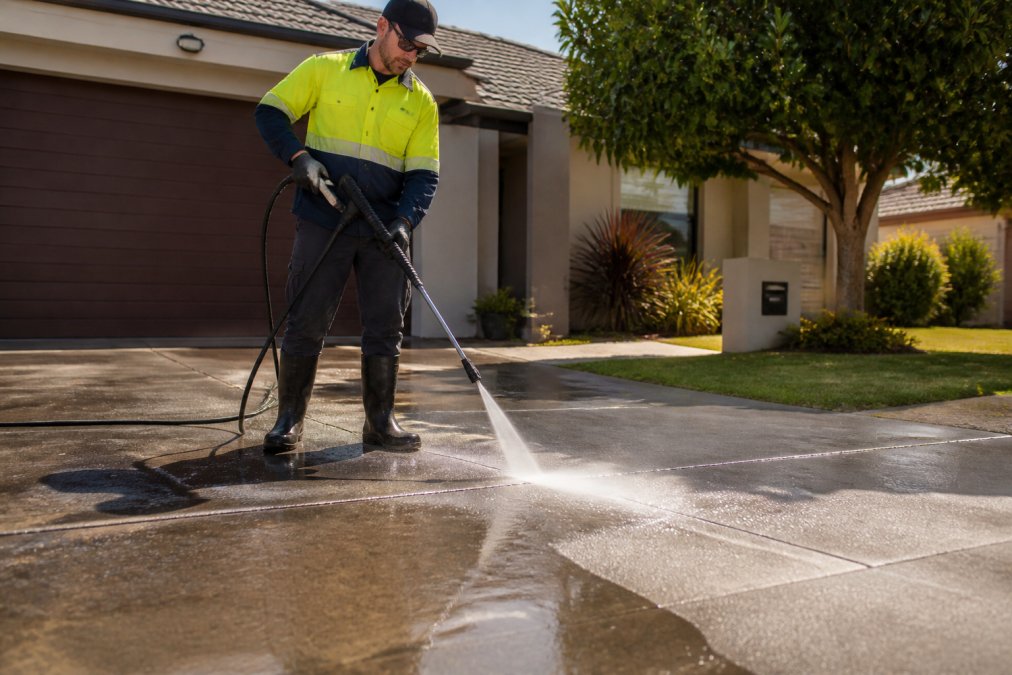
Most established operators quote per square metre rather than by the hour, because it gives you a fixed number to compare. Square metre pricing bundles labour, equipment, water, and detergents into one rate, so a larger driveway costs more but the rate per square metre often drops as the job scales.
| Pricing Method | Best For | Watch Out For |
|---|---|---|
| Per square metre | Driveways, patios, large flat areas | Minimum charges on small jobs |
| Hourly rate | Stain removal, tight access, unknown scope | Costs can creep if the job runs long |
| Fixed-price quote | Most residential and commercial work | Make sure inclusions are in writing |
A fixed-price quote locks in your total before work starts. A thorough quote should list the areas covered, the cleaning method, whether stain treatment or sealing is included, and how runoff will be managed.
Most guides still quote 2024 or 2025 figures, which understate what a contractor must now charge because every major input into an exterior cleaning job has moved. Understanding the drivers lets you sanity-check a quote instead of guessing.
The figures below are typical ranges for a standard single-storey residential job with reasonable access, quoted per square metre. They are indicative only, every operator's minimum charge, travel zone, and inclusions differ, and a firm quote depends on an on-site assessment.
| Surface / Job Type | Typical 2026 Range (per m²) | Notes |
|---|---|---|
| Concrete driveway or path (light soiling) | Lower end of the residential band | Fastest job; surface cleaner does most of the work |
| Concrete driveway (heavy or oil-stained) | Mid to upper residential band | Pre-treatment and repeat passes add time |
| Exposed aggregate or pavers | Mid residential band | Joint sand and loose aggregate need care |
| Limestone or sandstone paving | Upper residential band | Requires soft wash or reduced pressure |
| Painted render or timber | Upper residential band | Soft wash only; detergent dwell time |
| Roof (tiled or metal, soft wash) | Quoted per roof, not per m² | Access, height, and runoff control dominate |
| Commercial hardstand or loading dock | Quoted per site | Frequency, after-hours access, and runoff plan |
Treat the ranges as a filter, not a quote. If a figure sits well below the band for your surface, ask what is excluded, pre-treatment, stain removal, sealing, and runoff management are the usual omissions. If it sits well above, ask what extra work is included, such as crack treatment, re-sanding of joints, or a post-clean sealer.
Water Corporation, waterwise and outdoor water use guidance
Soft washing and pressure washing are not interchangeable, and choosing wrong is how surfaces get damaged. Soft washing is a low-pressure method that relies on specialised detergents to break down mould, algae, and grime, then rinses them away gently. Pressure washing uses high-pressure water to blast away dirt mechanically.
| Method | Pressure Level | Best For | Avoid On |
|---|---|---|---|
| Soft washing | Low | Render, painted walls, timber, aged stone | Heavy oil or deep-set stains |
| Pressure washing | High | Concrete, pavers, brick, driveways | Soft stone, painted or cracked surfaces |
When a surface cannot handle high pressure, several gentler options still deliver a clean result. Soft washing is the primary alternative, but not the only one.
Different surfaces fail in different ways under pressure, and knowing the risks prevents an expensive mistake.
Sealing is the step most homeowners skip, and it determines how long a clean actually lasts. The concrete sealing cost per square metre depends on the sealer type, the surface condition, and whether preparation is needed.
Hiring a machine and doing it yourself looks cheaper on paper, and for a small, lightly soiled path it genuinely can be. The maths changes once you price the full job, not just the hire fee.
The repair bill is where DIY stops being cheap. Common outcomes:
A professional job bundles commercial-grade equipment, the correct detergent for each surface, the judgement to know what pressure a surface can take, insurance cover, and a result you can hold the operator to. It also includes runoff containment and disposal, which DIY rarely does properly.
DIY is reasonable when the job is small, the surface is hard-wearing concrete or brick, the soiling is light, and you already own or can cheaply hire the right machine. A single concrete path or small paved courtyard fits that description.
Professional cleaning wins on ROI when any of the following apply:
Getting the pressure cleaning cost right comes down to matching the method and quote to your actual surface, not chasing the lowest number. The cheapest quote is rarely the best value once inclusions, sealing, and surface risk are factored in.
Pressure cleaning cost in Perth depends on the surface area, level of grime, and accessibility. Most providers quote per square metre or offer a fixed price after a site inspection. Larger driveways, heavy oil stains, and delicate surfaces requiring soft washing will sit at the higher end. Request a free quote for an accurate figure based on your property.
Key factors include total square metres, surface type (concrete, pavers, brick), severity of stains or mould, access for equipment, and whether sealing is added. A simple concrete driveway with light grime costs less than a paver surface with oil stains and moss. Water consumption and eco-friendly detergent use also affect the final quote.
No. High-pressure cleaning can damage delicate surfaces like rendered walls, timber decking, and aged mortar. For these, soft washing or chemical treatments are safer alternatives. A professional site inspection determines the correct method to protect surface integrity while still removing grime and mould effectively.
Standard pressure cleaning uses high-pressure water to blast away dirt, ideal for concrete and pavers. Soft washing uses low pressure with specialised detergents to kill mould and algae at the root, making it safer for render, timber, and painted surfaces. The right choice depends on the material and the type of buildup.
Sealing is recommended after pressure cleaning to protect against future stains, UV damage, and moisture. Concrete sealing cost per square metre varies with the sealer type and surface condition, but it typically extends the life of the clean and reduces long-term maintenance. It also enhances curb appeal and property value.
Most residential driveways benefit from professional cleaning every 12 to 18 months, depending on tree cover, traffic, and weather exposure. Commercial premises with high foot traffic may need quarterly or half-yearly servicing. Regular cleaning prevents grime and mould from bonding to the surface, which keeps costs lower over time.
Last Updated: September 22, 2026
Choosing the right concrete sealers in Western Australia means matching the product to your surface, climate exposure, and desired finish. Long dry summers, intense UV, and coastal salt spray all attack an unsealed slab. This guide from Spray Pave Pro compares five proven options, from full-service professional application to DIY penetrating formulas.
| Sealer | Type | Finish | Best For | Starting Price |
|---|---|---|---|---|
| Spray Pave Pro | Full-service sealing | Custom | Driveways, patios, commercial | Free quote |
| Avista Concrete Sealer | Solvent-based acrylic | High gloss | Decorative concrete | Contact for pricing |
| Crommelin DiamondCoat | Tinted acrylic | Charcoal matte | Faded or tired slabs | $75.90 |
| Foundation Armor SX5000WB | Silane-siloxane penetrating | Natural | Driveways, walkways | Contact for pricing |
| Deco Crete D-ONE | High-solids topical | Satin | High-traffic surfaces | Contact for pricing |
Penetrating sealers soak into the concrete and react below the surface; topical sealers form a film on top. The choice shapes appearance, slip resistance, maintenance, and longevity.
Penetrating sealers, typically silane-siloxane or siliconate formulas, bond chemically with the substrate inside the pores, leaving the surface almost unchanged while making it hydrophobic so water beads and runs off.
Film-forming sealers, acrylic, polyurethane, and epoxy coatings, sit on top of the concrete as a continuous membrane. They deliver gloss or matte finishes, deepen decorative concrete colour, and resist oil and chemical stains more aggressively.
Work through these questions in order; the first that applies usually settles the choice.
Not every product fits one camp. Some penetrating sealers have a slight sheen, and some topical acrylics are more breathable than a traditional membrane. Lithium silicate densifiers harden rather than waterproof the surface and are usually a preparatory step before a sealer. If a technical data sheet does not state whether a product is breathable or film-forming, ask the supplier before you buy.
Our top pick for most homeowners is Spray Pave Pro, because the job is only as good as the preparation and application behind it. With 23 years of experience, the team handles high-pressure cleaning, crack repair, and professional sealing as a complete package, backed by a 100% satisfaction guarantee.
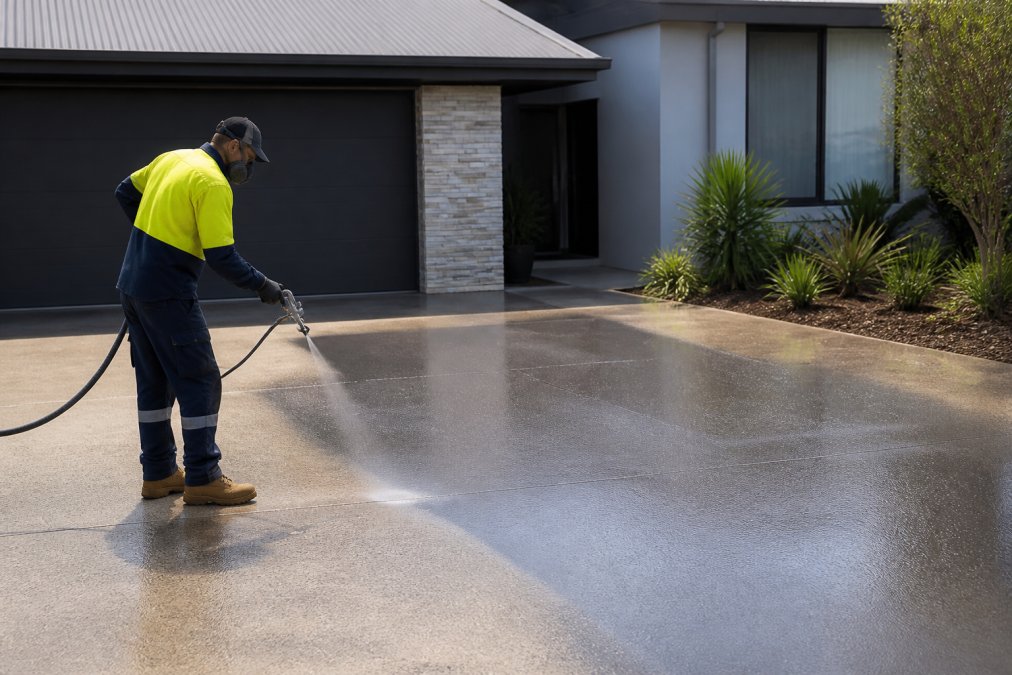
Pros:
Cons:
Avista Concrete Sealer is a solvent-based acrylic for decorative concrete that needs to look as good as it performs. The high-gloss finish deepens colour and adds a wet-look sheen suited to exposed aggregate and stamped surfaces.
Pros:
Cons:
Crommelin DiamondCoat Charcoal Tint protects the slab and refreshes its colour at once. If your concrete has faded to patchy grey, this tinted acrylic sealer gives a uniform charcoal finish while blocking water and oil penetration.
Pros:
Cons:
Foundation Armor SX5000WB is a water-based, high-solids silane-siloxane penetrating sealer for protection without changing how the concrete looks. It soaks deep into the substrate, reducing water absorption and salt damage while staying non-yellowing and UV stable.
Pros:
Cons:
Deco Crete D-ONE is built for surfaces that take a pounding: commercial entries, industrial floors, and busy residential driveways. Its high-solids content delivers better coverage per litre, and enhanced chemical resistance holds up against fuel, oil, and cleaning agents.
Pros:
Cons:
Proper preparation is the difference between a sealer that lasts years and one that fails within months. These steps apply to penetrating and film-forming products alike.
Concrete sealing cost per square metre varies with surface area, sealer type, and preparation required. A simple penetrating sealer on a clean slab sits at the lower end; decorative coatings, crack repair, and high-traffic commercial products push it higher.
Use the table below as a starting point, not a rule, the complexity of your slab should override the square metreage.
| Situation | Recommended approach | Why |
|---|---|---|
| Small patio or path, under roughly 30 m², sound and clean | DIY with a quality penetrating sealer | Low risk, low material cost, easy to recoat |
| Standard driveway, 30-80 m², no major defects | Either, depending on confidence and tools | Prep is the deciding factor; a pressure cleaner and roller are the main requirements |
| Driveway with oil stains, cracks, or an existing failed coating | Professional | Stripping, degreasing, crack repair, and profiling are skilled work |
| Decorative concrete (exposed aggregate, stamped, coloured) | Professional | Lap marks and uneven gloss are almost impossible to fix after the fact |
| Commercial or high-traffic surface | Professional | Downtime, abrasion resistance, and documented slip resistance all matter |
| Slab within a few kilometres of the coast | Professional assessment first | Salt exposure and moisture testing change the product choice |
| Any slab showing moisture, efflorescence, or spalling | Professional assessment first | Sealing over an active moisture problem guarantees failure |
A failed sealer is not just a wasted tin. Stripping a peeling coating, re-etching, and starting again can cost several times the original job. The common causes are predictable: sealing a damp slab, skipping prep, applying in direct heat, and choosing a film-forming product where a breathable one was needed.
Solvent-based acrylic sealers and UV-stable penetrating sealers hold up best under strong sun. Look for products labelled non-yellowing and UV resistant, such as Avista Concrete Sealer or Foundation Armor SX5000WB. These resist the chalking and colour fade that cheaper sealers develop after a summer or two, keeping your concrete looking consistent for longer.
It depends on the finish you want. Penetrating sealers soak into the concrete, keep a natural matte look, and resist moisture without trapping vapour, which suits driveways and paths. Topical sealers sit on the surface and add gloss or colour, but they can peel if moisture gets underneath. For most outdoor slabs, a penetrating sealer is the lower-maintenance choice.
Most driveways need resealing every two to five years, depending on the product and traffic. Penetrating sealers often last longer than film-forming ones because they do not wear away as a visible layer. Test by dripping water on the surface: if it soaks in instead of beading, it is time to reseal.
Hot summers, intense UV, and coastal salt spray all shorten sealer life. Sealers that resist UV degradation and moisture vapour transmission cope better with these conditions. Applying at the right temperature and preparing the surface properly also matters more than the brand name, since poor adhesion causes most early failures.
Professional sealing protects against stains, oil, and water damage while making the surface easier to clean. It also extends the life of the slab and improves appearance. A specialist can match the sealer to the concrete's porosity and the conditions it faces, which reduces the risk of peeling, efflorescence, or patchy finishes.
Last Updated: September 19, 2026
Concrete sealing applies a protective coating that blocks water, UV rays, stains and chemicals from reaching the slab beneath. Perth's long dry summers, intense sunlight and heavy downpours age bare concrete fast.
Sealing slows concrete's two biggest killers: water ingress and surface erosion. Water soaks into porous concrete, expands as it heats, and breaks the surface apart. Sealing blocks that path.
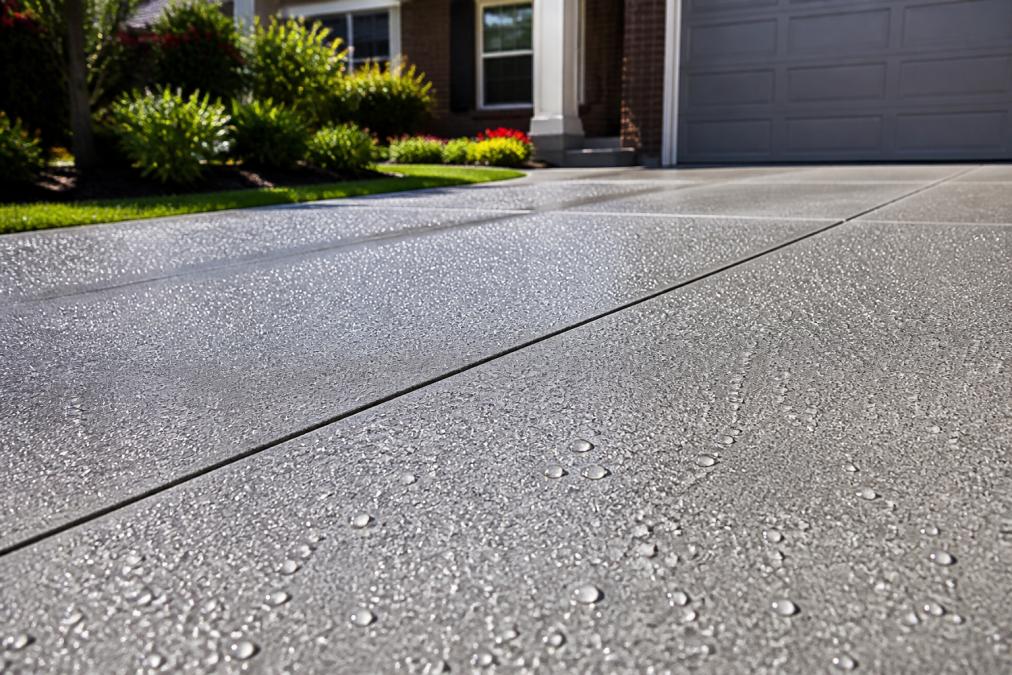
Perth gets more sunny days than almost any capital city in the country, and that sunlight breaks down bare concrete. UV degradation fades colour, chalks the surface and turns the top layer powdery. A sealer with UV blockers acts like sunscreen for your slab.
Bare concrete is porous, so oil, grease, wine and rust soak straight in. Once a stain reaches the substrate, scrubbing will not remove it. A penetrating sealer lines the pores and makes the surface hydrophobic, so spills sit on top.
Sealed concrete needs less work to keep clean: dirt, leaves and grime sit on the surface rather than bonding to it, so a hose-down or quick pressure clean does most of the job.
Wet concrete around pools, paths and patios is a genuine hazard. The right sealer adds a slip-resistant finish with better grip when wet, without making the surface rough.
| Surface area | Slip risk when wet | Best sealer approach |
|---|---|---|
| Pool surrounds | High | Slip-resistant topical sealer |
| Driveways | Medium | Penetrating sealer |
| Patios and paths | Medium | Matte sealer with grip additive |
| Garage floors | Low to medium | Epoxy with anti-slip aggregate |
A sealed, well-kept driveway changes how a home looks from the street: richer colour, an even surface, and a property that reads as well maintained. That first impression counts when selling.
Water is concrete's quietest enemy: it seeps into pores, carries dissolved salts, and causes efflorescence, the white powdery bloom on the surface, plus moisture ingress that weakens the slab over time.
There are two families of concrete sealer, and they work in completely different ways. Picking the wrong one is the most common reason a sealing job fails within a year.
| Feature | Penetrating sealer | Topical sealer |
|---|---|---|
| Chemistry | Silane, siloxane, silicate | Acrylic, polyurethane, epoxy |
| Where it sits | Inside the pores | Film on the surface |
| Look | Natural, matte, slight darkening | Glossy, satin or coloured |
| Breathability | High, moisture escapes | Low, can trap moisture |
| UV behaviour | Stable, does not chalk | Acrylics can yellow and chalk |
| Wear pattern | Wears evenly, no peeling | Scuffs, scratches, peels at edges |
| Salt-air performance | Excellent | Varies; cheap acrylics fail fast |
| Best for | Driveways, paths, exposed aggregate | Decorative patios, garage floors, showpiece areas |
| Maintenance | Reapply when water stops beading | Clean regularly; strip and recoat when worn |
You can seal concrete yourself, but the result depends almost entirely on surface preparation. Most failed DIY jobs skip cleaning and repair, and the sealer peels or fails within a year.
Safe Work Australia guidance on outdoor surface safety
Cost per square metre is the first thing most homeowners want to know, and the number most articles dodge. The honest answer is a range, driven by four things: surface area, condition, sealer type and access.
As a general guide, most residential sealing work falls into these bands per square metre:
| Job type | Typical band (per m²) | Notes |
|---|---|---|
| Reseal over sound, previously sealed concrete | Lowest band | Minimal prep, single coat |
| First seal on clean, sound bare concrete | Mid band | Pressure clean, dry, one or two coats |
| First seal with crack repair and stain treatment | Upper-mid band | Prep dominates the cost |
| Decorative or coloured finish with topical sealer | Upper band | Film-forming product, more care required |
| Epoxy garage coating system | Separate bracket | Not a sealer; includes grinding and multi-coat build |
When you get quotes, ask each provider to break the price into four parts: preparation, repairs, product (brand and type), and number of coats. A dramatically cheaper quote almost always means less prep, a thinner product or a single coat, the job that fails first.
Also ask:
A failed seal is more expensive than a correct one. If a cheap job peels within a year, you pay for stripping, surface repair and a second application, often more than the original professional quote. That is the real cost comparison.
Master Builders Australia guide to home improvement work
How long a concrete sealer lasts depends on the type, surface and local climate. Penetrating sealers generally last longer between coats than topical film-forming sealers, which wear and peel.
Several factors shorten the lifespan of any sealer:
CSIRO research on building materials and durability
The seven benefits stack up: longer life, UV protection, stain resistance, easier cleaning, better safety, stronger curb appeal and a moisture barrier. Together they turn a tired slab into a surface that looks good and lasts.
Resealing frequency depends on the sealer type and how much traffic the surface gets. Penetrating sealers typically need reapplying every 3 to 5 years, while topical sealers may need refreshing every 1 to 2 years. High-traffic driveways and pool surrounds wear faster, so check the surface annually for dullness, water absorption or colour fade. A simple water test, where you splash water on the concrete and see if it soaks in rather than beading, tells you when it is time to reseal.
Sealing does not stop structural cracking caused by ground movement or tree roots, but it does protect against surface-level cracking and spalling. By forming a moisture barrier, a sealer stops water from soaking into the concrete and expanding during temperature changes, which is a common cause of surface deterioration. For existing cracks, a professional resurfacing service can fill and repair them before sealing so the finished surface is smooth and protected.
Yes, sealing old concrete is often worth it, especially if the surface is structurally sound but looks tired or stained. Sealing locks in the existing surface, prevents further UV degradation and makes cleaning easier. It also improves slip resistance when the right product is used. If the concrete has deep cracks or major spalling, resurfacing before sealing delivers a better long-term result. Speak to a specialist to assess whether sealing alone will meet your needs.
You can seal concrete yourself if the surface is clean, dry and in good condition, and you use a quality product suited to the job. However, professional concrete sealing delivers more consistent coverage, better surface preparation and access to commercial-grade sealers that last longer. Professionals also know how to handle moisture issues, apply the right number of coats and avoid common mistakes like trapping moisture under the sealer. For driveways with stains, cracks or high-traffic use, hiring a professional is usually the more cost-effective choice.
Last Updated: September 18, 2026
Professional concrete sealing is the process of applying a protective coating to concrete surfaces to prevent water, oil, and stain penetration. The sealer bonds with the concrete's porous surface, creating a barrier that extends the material's lifespan and maintains its appearance.
Unsealed concrete absorbs moisture, dirt, and oils like a sponge. Sealed concrete resists these contaminants, stains don't stick, water doesn't pool, and cleaning becomes easier.
There are two main types of sealers: penetrating sealers and topical coatings. Penetrating sealers work by bonding at a molecular level within the concrete, maintaining the surface's natural texture and slip-resistance. Topical coatings like polyurethane and epoxy sit on top of the concrete, creating a glossy finish. Each serves different purposes depending on your climate and intended use.
The difference between amateur and professional sealing comes down to surface preparation, sealer selection, and technique. Rushing prep work or choosing the wrong sealer type undermines the entire investment.
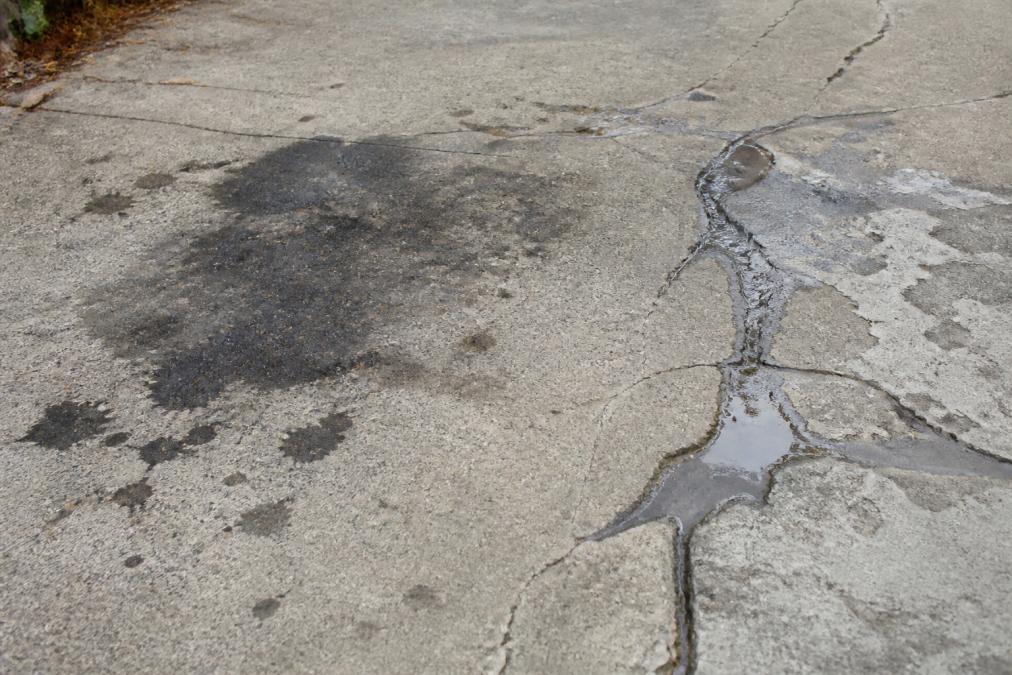
Your concrete tells you when it needs attention. Dark stains that won't wash away indicate the sealer has failed and water is penetrating the surface. Efflorescence, that white, chalky powder on the concrete, means moisture is rising from below, carrying salts to the surface. Both signal that resealing is due.
Spalling, where the concrete surface flakes or peels in chunks, means freeze-thaw cycles have already damaged the structure. Once spalling starts, sealing alone won't reverse it, though it can prevent further deterioration. Cracks wider than 3mm should be repaired before sealing, as water will still penetrate through them.
Discolouration and UV degradation signal worn protection. Most concrete needs resealing periodically, depending on traffic, weather exposure, and sealer type.
Water beading is a quick test. Splash water on your concrete. If it beads up and rolls off, the sealer is still working. If water soaks in and darkens the surface, resealing is overdue.
Concrete sealer durability varies significantly based on climate, traffic, and sealer type. Penetrating sealers typically last several years under normal conditions. Topical coatings like polyurethane and epoxy can last longer, though high-traffic areas wear faster.
Freeze-thaw cycles are the sealer's biggest enemy. Winter moisture that penetrates and refreezes expands, pushing the sealer away from concrete, making resealing frequency critical in regions with temperature swings.
UV exposure degrades sealers over time. UV-stable sealers last longer, but shaded areas still outlast sun-exposed sections by several years.
Professional application extends sealer life through proper surface preparation, correct thickness, and quality products. Rushed application or poor prep cuts lifespan in half.
Professional concrete sealing costs depend on surface condition. Heavily stained or cracked concrete requires more prep work and costs more than clean surfaces.
Sealer type matters significantly. Penetrating sealers cost less than topical coatings. Epoxy and polyurethane finishes command higher prices due to their durability and the skill required for application. The size of the area also influences per-square-metre pricing, larger projects typically cost less per unit than small ones.
Labour costs vary by region and contractor expertise, reflecting quality of results and warranty backing.
Surface preparation is where costs can surprise you. If your concrete requires grinding, crack filling, or extensive cleaning before sealing, that adds to the total. Some contractors bundle this into a quote; others charge separately.
A professional site assessment provides accurate cost estimates accounting for concrete condition, sealer type, and property size.
DIY sealing can appear cheaper upfront compared to professional services, but most DIY sealing fails within 12-18 months, costing more in total.
Why DIY Sealing Fails: A Failure Analysis
Most DIY sealing fails within 12-18 months due to one or more of these issues:
1. Inadequate Surface Preparation
Concrete must be clean, dry, and free of loose material for sealer adhesion. Pressure washing alone isn't enough. Common mistakes include:
2. Incorrect Sealer Selection
DIYers often buy shelf sealers without considering concrete type, climate, or intended use. Common mistakes:
3. Application Technique Errors
Application technique determines success: uneven coverage leaves thin spots that fail first; over-application becomes slippery and traps moisture; under-application fails prematurely; wrong weather prevents curing; inadequate curing time before use weakens the bond.
4. Timing and Curing Issues
New concrete must cure 28 days before sealing; existing concrete requires 48-72 hours drying after cleaning. Professionals schedule around weather windows; DIYers often seal concrete that's too wet or in poor conditions.
Identifying a Failed DIY Seal Job
If you're considering whether a previous seal job failed, look for these signs:
Failed sealers require professional stripping (costly), re-preparation, and correct resealing.
The Real Cost Comparison
| Approach | Upfront Cost | Expected Lifespan | Prep Work Quality | Risk of Failure | Total Cost Over 10 Years |
|---|---|---|---|---|---|
| DIY Sealing | $200-$400 | 12-18 months | Often inadequate | High (60-80%) | $1,200-$2,000 (multiple failed attempts + eventual professional fix) |
| Professional Sealing | $800-$1,600 | 5-10 years | Thorough | Low (5-10%) | $1,600-$3,200 (initial + one resealing cycle) |
Failed DIY sealing requiring professional stripping and resealing costs more than professional sealing from the start.
Professional Sealing Advantages
Professional sealing includes expertise in sealer selection, proper surface preparation with professional-grade equipment, correct application technique, 2-5 year warranty backing, and optimal scheduling during weather windows.
Professional concrete sealing delivers measurable return on investment over time, but the calculation requires actual numbers, not vague promises. The real ROI isn't just about avoiding resealing; it's about protecting the underlying concrete asset and avoiding catastrophic repair costs.
The Cost of Neglect vs. Maintenance
Consider a typical driveway:
Unsealed concrete scenario: Develops visible damage (staining, efflorescence, minor spalling) over time. Repair costs for crack filling, spalling removal, and resurfacing can be significant. Full replacement (if damage is extensive) can be very costly. Total cost over 20 years can be substantial, including multiple repair cycles.
Sealed concrete scenario: Professional sealing costs vary initially. Resealing periodically incurs further costs. Total cost over 20 years is generally lower than the unsealed scenario.
Curb Appeal and Property Value
Maintenance Cost Reduction
Sealed concrete requires less aggressive maintenance:
ROI Timeline
The payback period depends on your situation:
The Hidden Cost of Delay
Your climate determines which sealer performs best. Freeze-thaw cycles are the primary concern, water that penetrates and refreezes expands, causing spalling and cracking. Freeze-thaw-rated sealers are essential in regions with winter temperature swings.
Professional concrete sealing typically lasts several years depending on the sealer type and environmental conditions. Penetrating sealers generally last longer than acrylic options. High-traffic areas and exposure to freeze-thaw cycles shorten the lifespan. Regular maintenance and timely resealing extend the protection and prevent moisture ingress that causes spalling and staining.
Pricing depends on sealer type, surface preparation requirements, concrete condition, and local labour rates. Professional application includes pressure washing and surface preparation before sealing, which affects total cost. For accurate pricing tailored to your driveway or patio size, obtain a quote from a professional service provider who can assess your specific surface.
DIY sealing is possible for small areas, but professional application delivers superior results. Professionals ensure proper surface preparation, even coverage, and correct product selection based on porosity and exposure. Poor DIY application leads to patchy protection, premature failure, and wasted money. Professional sealing provides durability guarantees and saves time, making it cost-effective for most homeowners.
Unsealed concrete absorbs water, leading to staining, efflorescence, spalling, and cracks. Freeze-thaw cycles accelerate damage by expanding water trapped in pores. Oil stains become permanent. UV degradation dulls the surface. These issues reduce curb appeal, lower property value, and eventually require expensive repairs or replacement. Sealing prevents moisture barrier failure and extends concrete lifespan significantly.
