
Last Updated: October 15, 2026
Standard concrete driveways deliver functional surfaces, but they come with real limitations. Cracks appear within years. Stains become permanent. The grey monotony ages fast. Homeowners seeking durability, aesthetics, or better performance now have genuine alternatives to standard concrete driveway finishes that can transform both curb appeal and long-term value.
The shift away from plain concrete isn't about luxury, it's about solving problems that plain concrete can't. A cracked, stained driveway signals deferred maintenance to buyers and neighbours alike. Water pooling in low spots invites damage. Slip hazards develop around pool areas and in wet climates.
At Spray Pave Pro, we've spent over 23 years helping homeowners and businesses move beyond standard finishes. Whether your driveway is deteriorating, you're preparing to sell, or you simply want a surface that performs better and looks sharper, understanding your options is the first step.
Resurfacing transforms an existing concrete base without demolition. This approach saves time, disruption, and money compared to full replacement. The key is matching the resurfacing method to your driveway's current condition and your aesthetic goals.
Spray-on concrete is a liquid coating applied directly over existing surfaces. It bonds to the substrate, creating a unified, seamless finish. This method works on concrete, asphalt, and even aged limestone.
Spray-on systems offer flexibility in colour and texture. You can achieve smooth, polished looks or textured surfaces that add grip. Installation is fast, with minimal disruption to daily life. The surface hardens quickly, often ready for light traffic within 24 hours.
The real advantage lies in transformation speed and cost-effectiveness. Rather than removing and replacing, you're adding a protective, aesthetic layer over what exists. For homeowners with sound underlying concrete that simply looks tired, spray-on finishes deliver dramatic visual change at a fraction of replacement cost.
Durability depends on the product quality and surface preparation. Poor preparation, failing to clean and prime the substrate, leads to premature failure. This is why professional application matters more than the product itself.
Exposed aggregate reveals the decorative stones embedded in concrete. The finish is created by removing the top layer of cement paste, exposing coloured pebbles or gravel beneath. The result is visually striking, each driveway is unique based on the aggregate selected.
Pros of exposed aggregate:
Cons of exposed aggregate:
Exposed aggregate performs exceptionally well in climates with moderate rainfall. In very wet regions, water can penetrate beneath the surface if sealing lapses. In arid climates, it resists UV fade better than many alternatives.
Imprinted concrete uses stamps or moulds pressed into fresh concrete to create patterns, brick, stone, tile, or geometric designs. Broom finish involves dragging a broom across wet concrete to create linear texture and grip.
Imprinted finishes offer design flexibility and dramatic visual impact. You can replicate expensive stone or brick at a fraction of the cost. Broom finish is simpler and more affordable, providing texture and safety without pattern complexity.
Both methods apply to new concrete or resurfaced driveways. Installation requires precision timing, the concrete must be at exactly the right stage of cure for patterns to set properly. This makes professional application essential.
Durability is solid when sealed regularly. The main risk is UV fade on lighter colours and seal breakdown in high-traffic areas.
Permeable surfaces allow water to drain through rather than pooling on top. This approach reduces runoff, supports drainage systems, and qualifies for environmental incentives in some areas. Block paving systems use individual units set in sand or mortar, creating flexibility in design and repair.
Concrete pavers are individual units laid in patterns. Stone pavers, natural slate, sandstone, or granite, offer premium aesthetics. Both are highly customisable in colour, size, and layout.
Advantages:
Disadvantages:
Concrete pavers suit driveways where design matters and you're willing to invest in appearance. Stone pavers are ideal for properties where curb appeal directly impacts value, heritage homes, premium neighbourhoods, properties preparing for sale.
Durability varies by material. The substrate preparation, proper road base, compaction, and drainage, determines longevity more than the paver itself.
Resin-bound surfaces combine decorative aggregate with clear resin binder, creating a seamless, permeable finish. The surface is smooth underfoot, available in unlimited colours, and drains water effectively.
Advantages:
Disadvantages of resin-bound paving:
Resin-bound paving works best in temperate climates and moderate-use residential settings. In intense sun or heavy commercial traffic, performance degrades faster. The aesthetic and drainage benefits justify it for many homeowners.
Not every driveway needs a premium finish. Budget alternatives exist and serve specific purposes well.
Asphalt and tarmac are cost-effective and quick to install. They provide a dark, clean appearance and grip well in most conditions. The trade-off is maintenance, asphalt requires resealing every 2-3 years and can soften in extreme heat.
Gravel and loose-stone surfaces are the most affordable option. Installation is straightforward, and repairs are simple, add more gravel. The downside is obvious: dust, loose stones scattered onto neighbouring properties, and frequent raking required to maintain appearance.
Gravel works for rural properties, temporary solutions, or low-traffic areas. For primary residential driveways, especially those visible from the street, gravel signals poor maintenance and reduces curb appeal. If budget is the only constraint, a basic concrete finish or asphalt outperforms gravel in every way except initial cost.
Sealing protects concrete and decorative finishes from water penetration, UV damage, and staining. It's not optional for long-term durability, it's essential.
Sealing extends the life of virtually every surface discussed here. Unsealed concrete develops stains within months and cracks accelerate as water enters and freezes. Sealed surfaces resist these problems and remain cleaner longer.
The type of sealer matters. Penetrating sealers protect without changing appearance but offer less stain resistance.
Maintenance between sealings is straightforward: regular cleaning with pressure washing (at moderate pressure to avoid damage) and prompt stain removal. Most stains, oil, rust, organic growth, are easier to remove when fresh. Neglected stains become permanent.
Resealing timing depends on traffic, climate, and seal type. In wet climates, annual inspection catches seal breakdown early. In drier regions, every 2-3 years often suffices. When water no longer beads on the surface, sealing is overdue.
Different finishes perform differently depending on your climate and how the driveway is used.
In wet regions, permeable surfaces and excellent drainage become critical. Water pooling leads to freeze-thaw damage in winter, algae growth year-round, and accelerated deterioration of unsealed surfaces.
In hot, dry climates, UV fade and heat softening are concerns. Dark asphalt can become uncomfortably hot. Resin can soften. Light-coloured concrete and stone pavers handle heat better.
In freeze-thaw climates (where temperatures regularly cross 0°C), water infiltration is the enemy. Sealed surfaces outperform unsealed ones dramatically. Permeable surfaces need careful design to prevent ice buildup.
Vehicle load matters too. Heavy trucks or frequent parking of heavy vehicles accelerate deterioration of softer surfaces like asphalt and resin. Concrete, stone pavers, and properly compacted block paving handle heavy loads better.
Long-term value includes both durability and resale appeal. A well-maintained driveway adds perceived value to a property, buyers notice curb appeal immediately. Cracked, stained, or deteriorating driveways signal deferred maintenance throughout the home.
The best finish depends on your priorities, budget, and timeline. Start by assessing what's driving your decision.
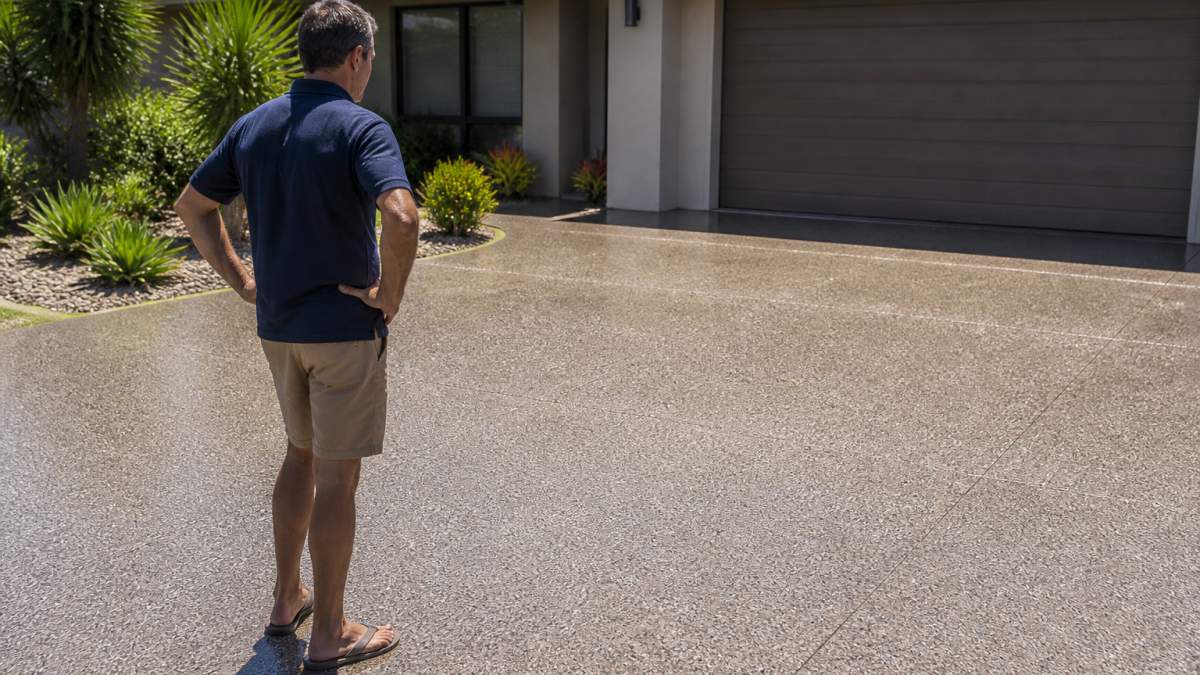
Is the current driveway structurally sound but visually tired? Resurfacing with spray-on concrete or decorative finishes delivers transformation quickly and affordably. Is the foundation cracked or failing?
Are you selling soon? Curb appeal is the priority. Exposed aggregate, stone pavers, or imprinted concrete make strong first impressions. Sealed concrete or quality asphalt work if budget is tight. Avoid gravel and heavily deteriorated surfaces.
Is durability the main concern? Stone pavers and properly sealed concrete lead the field. Resin-bound surfaces offer modern durability if maintained. Asphalt requires commitment to regular sealing.
Is drainage a requirement? Permeable options, resin-bound, permeable pavers, or block paving with sand joints, address this directly. Standard concrete and asphalt require sloped design to shed water.
Match your choice to your climate. Consult local builders and property managers about what performs well in your region, they've seen real results over years, not just promises.
The best alternatives to standard concrete driveway finishes address specific problems, poor aesthetics, water damage, slip hazards, or maintenance burden. Your choice depends on your current situation, climate, and priorities.
At Spray Pave Pro, we specialise in spray-on concrete resurfacing, high-pressure cleaning, epoxy flooring, and professional sealing. Our 23-year track record reflects our commitment to transforming driveways and outdoor spaces with durable, high-quality results. Whether your driveway needs restoration, you're preparing to sell, or you're upgrading for safety and appearance, we deliver solutions tailored to your needs.
Get your free quote today and discover how resurfacing can restore your driveway's appeal and longevity.
Yes. Resurfacing is a cost-effective alternative to full replacement, especially when your existing concrete has surface cracks, stains, or minor damage. Spray-on concrete and decorative overlays bond to your current slab, transforming its appearance and durability without the disruption and expense of removal. This approach works well when the base remains structurally sound. Professional assessment determines whether your driveway is suitable for resurfacing or requires deeper repairs.
Sealed concrete and spray-on finishes rank among the lowest-maintenance options. A quality concrete driveway sealing and maintenance routine, typically annual or biennial resealing, keeps surfaces protected from stains, moisture, and UV damage. Resin-bound paving requires minimal maintenance but can show wear in high-traffic areas. Gravel and loose-stone surfaces demand regular raking and topping. Permeable paving systems need occasional weed control but reduce drainage issues.
Resin driveway disadvantages include UV sensitivity (colours fade in strong sunlight), and poor performance in freeze-thaw climates where moisture penetrates cracks. Resin can soften in extreme heat, develop surface stickiness, and show wear patterns under heavy vehicle use. Repairs are difficult because patches rarely match the original finish seamlessly. In wet conditions, some resin surfaces become slippery. Longevity depends heavily on installation quality and climate.
A well-installed concrete driveway resurfacing depends on climate, traffic, and maintenance. Lifespan shortens in areas with heavy freeze-thaw cycles, intense UV exposure, or high vehicle loads. Professional installation and quality materials are critical; poorly prepared surfaces or inadequate sealing reduce durability substantially.
